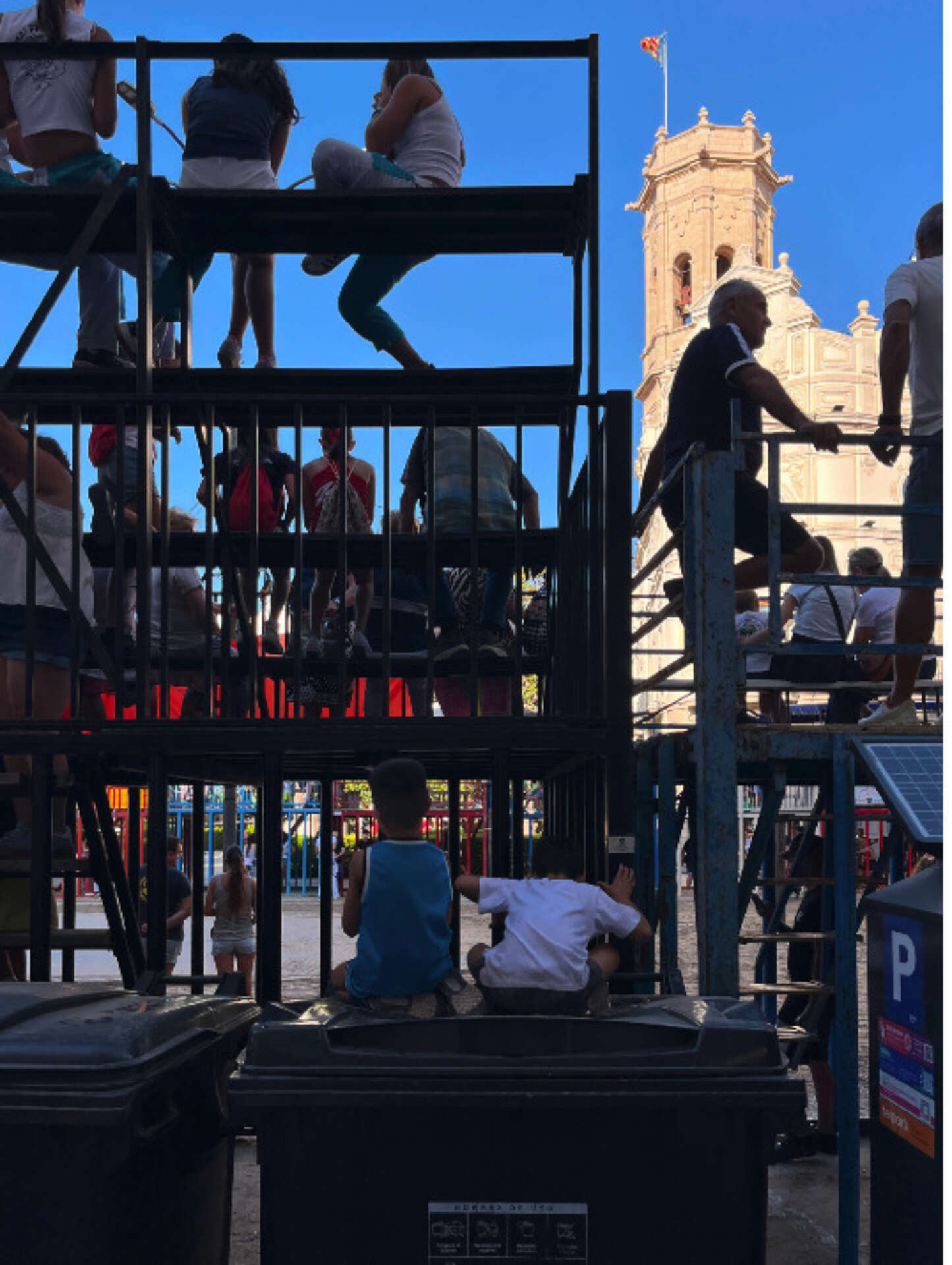
Designing Post-Taurine Futures for Mediterranean Spain
Abstract
The tradition of Bous al Carrer, a four-century-old practice involving the running of bulls through urban streets, remains culturally significant in Mediterranean Spain, particularly in Valencian society. While these events foster community bonds and celebration, they also pose challenges to animal welfare and urban design. The infrastructure for these festivals includes modular barriers, protective ground-floor structures, and steel viewing platforms, creating pedestrianized spaces while prioritizing taurine requirements over climate-adaptive design. As climate change, demographic decline, rising insurance costs, and ethical concerns pressurize this tradition, a reevaluation of its spatial and social implications is crucial. This research explores how historical design threads can inform speculative post-taurine futures that prioritize sustainable urban spaces while respecting cultural heritage.