
Archiving perception with spatial drawing
Introduction
Expanded Glitch: forging digital materiality is an artistic research project at the intersection of design, craft and sculpture. It came about through an open call aiming to experiment with new forms in blacksmithing. Organized by the metal workshop Bernd Euler GmbH, under the framework of the September Workshop, entitled ‘Neue Formen für eine Alte Kunst’.
The selected design proposal was to be produced by the blacksmith Georg Reinking, supported by Ida Fröhlich. The open call framework was organised by Senta Hoppe and sponsored by Bernd Euler.
Together with designer, Lucas Macabéo, we proposed a sculptural furniture piece EXPANDED GLITCH I (2024), intended for showing experimental jewellery by Goze.ws. Intentionally exploring new design and creation strategies through spatial drawing in virtual space, the project addresses the materiality of drawing spatially in VR, connecting digitized bodily intelligence with the implicit knowledge of blacksmithing. Through the concept of an expanded glitch, drawing from existing theories of Glitch in video games, media art and cinema(Betancourt 2023) we examine how 3D glitches — digital distortions and mesh irregularities in spatial drawing practice — resonate with complex artisanal techniques and the physical effects of heat, force and repetition. With this project, we demonstrate how a ‘new’ kind of digital materiality – one that is directly, structurally linked to the body - can be translated into tangible forms.
The sculpture / furniture hybrid EXPANDED GLITCH I is part of a collection of similar sculptures that continue exploring themes of collaboration, materiality and production at the intersection of crafting with forged metal, industry and technology.
In the process of archiving and making sense of the project experience, a new artwork was created, collaging key images and drawings as visual milestones of the project. In this process I had the possibility of working with textile designer and maker Lilo Ming Kiefer on a jacquard interpretation of the drawing-image. The artwork LIMBS (2025), was created, depicting spatial drawings from the EXPANDED GLITCH project and working with textile yarns for a 3D interpretation of the image.
LIMBS archives the resonance experienced from a concentrated and compelling process of making: negotiating, sensing and translating with a myriad of hi-tech digital and analog media, with a dedicated team of practitioners intending to push the limits of their craft.
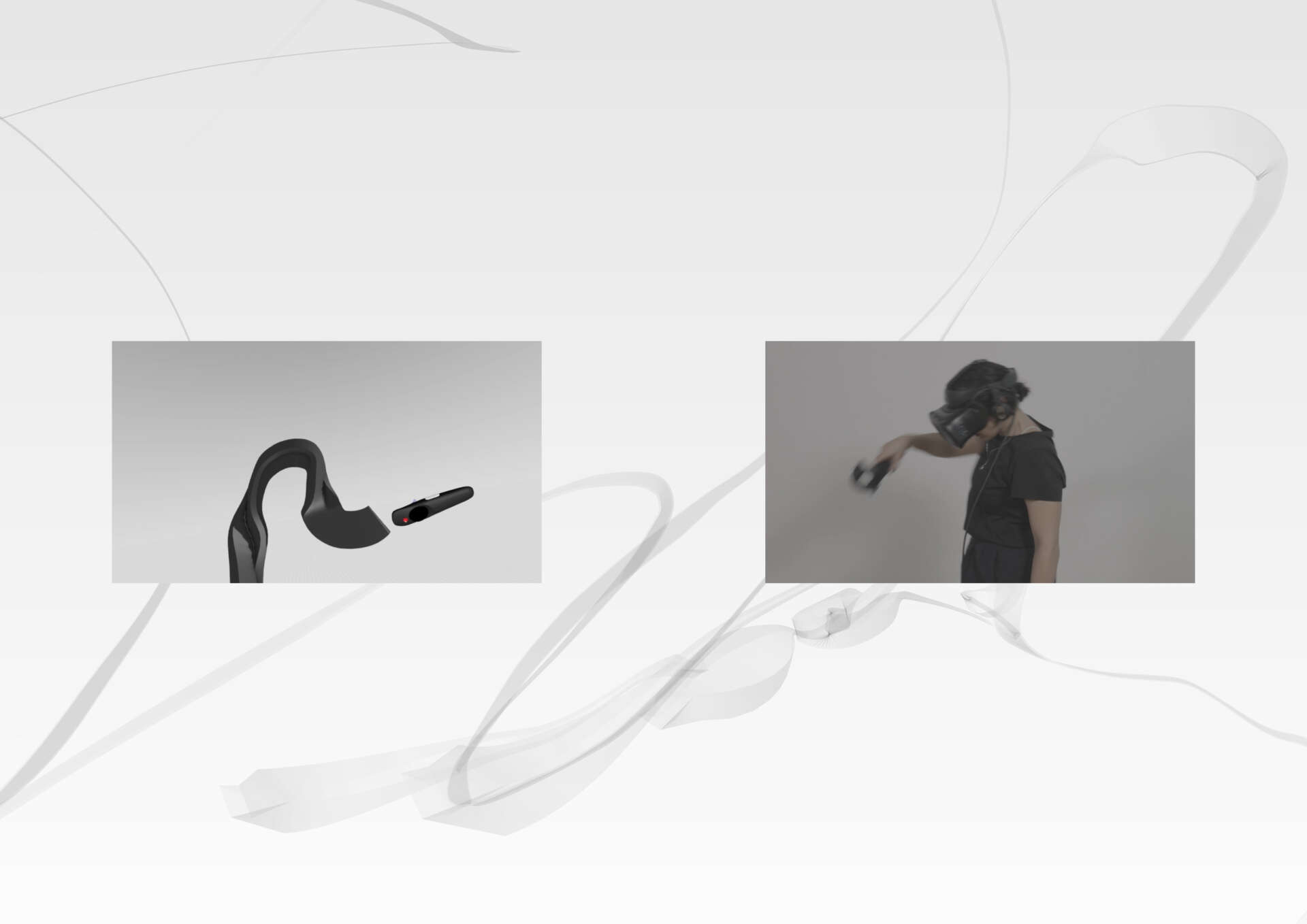
Figure 1: Process images from the project EXPANDED GLITCH: forging digital materiality using VR sketching as a design method. Summary video of the project in collaboration with Euler Workshop can be seen here. 2024 © Aleksandra Kononchenko, Image © Atelier Crossover (Lucas Macabéo & Elaine Bonavia)
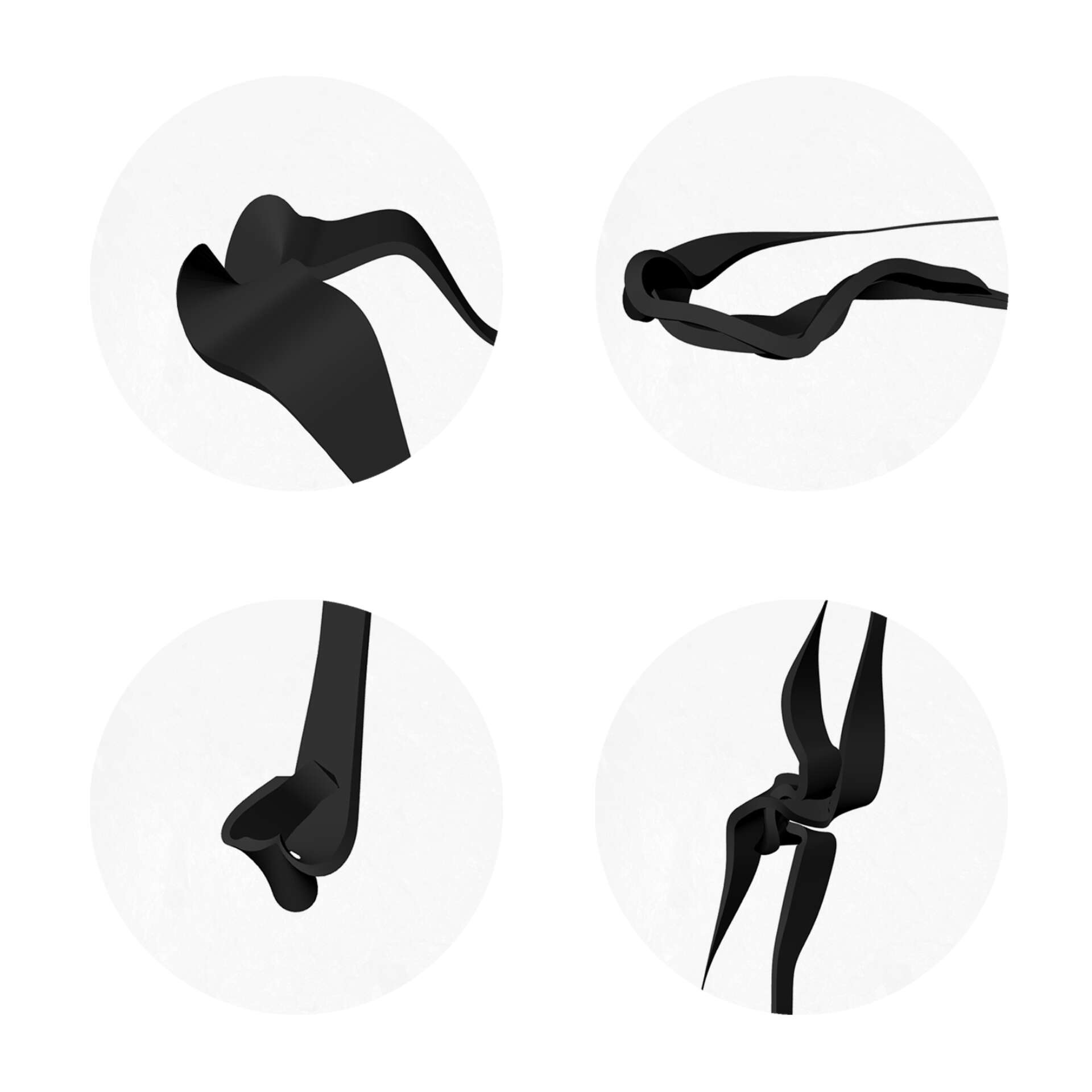
Figure 2: Examples of glitches showing digital materiality of spatial drawings in the EXPANDED GLITCH: forging digital materiality project, 2024 © Atelier Crossover
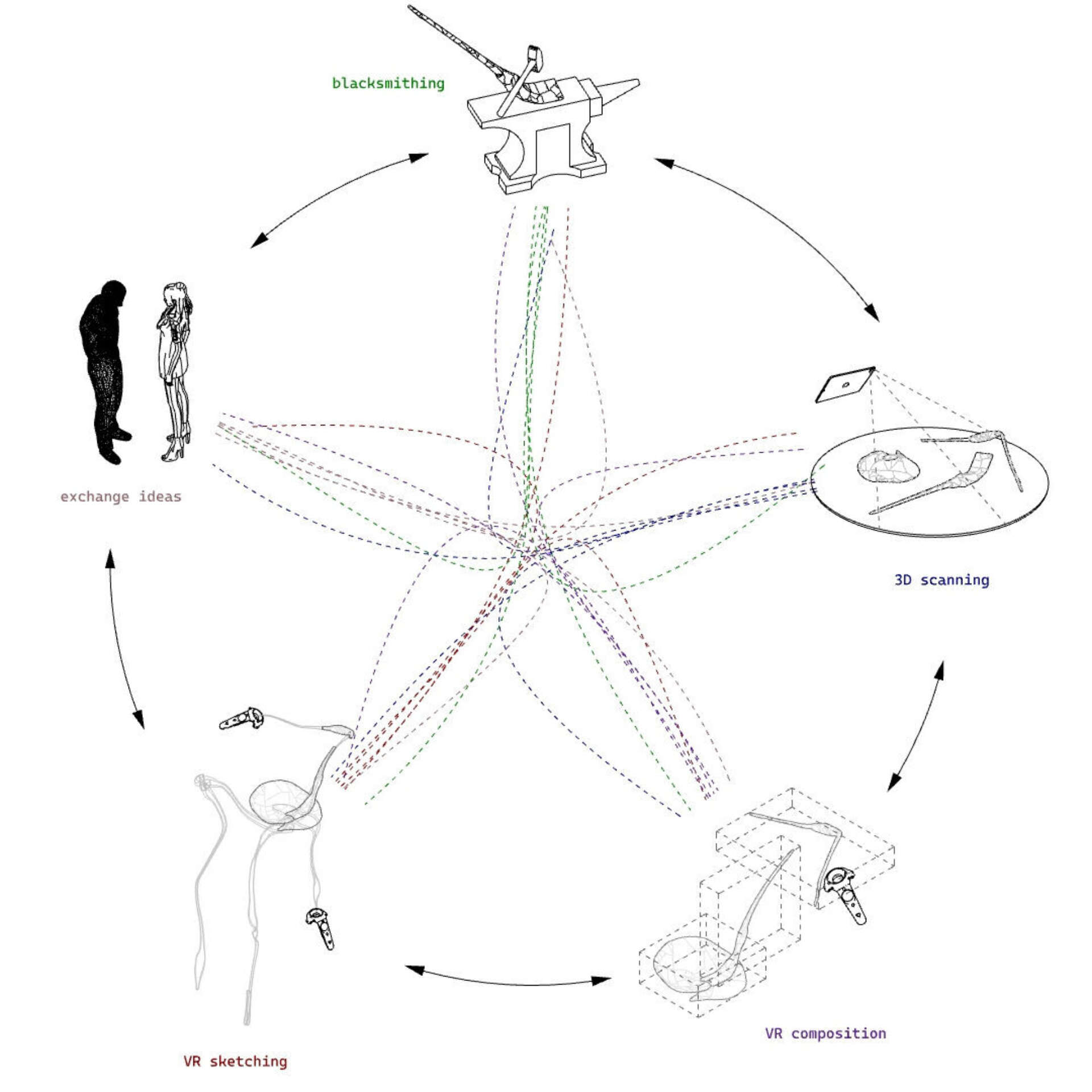
Figure 3: Diagram of different processes of making and designing within the project EXPANDED GLITCH:forging digital materiality showing collaborative trajectories that could be circular but also organic between different step, , 2024 © Atelier Crossover
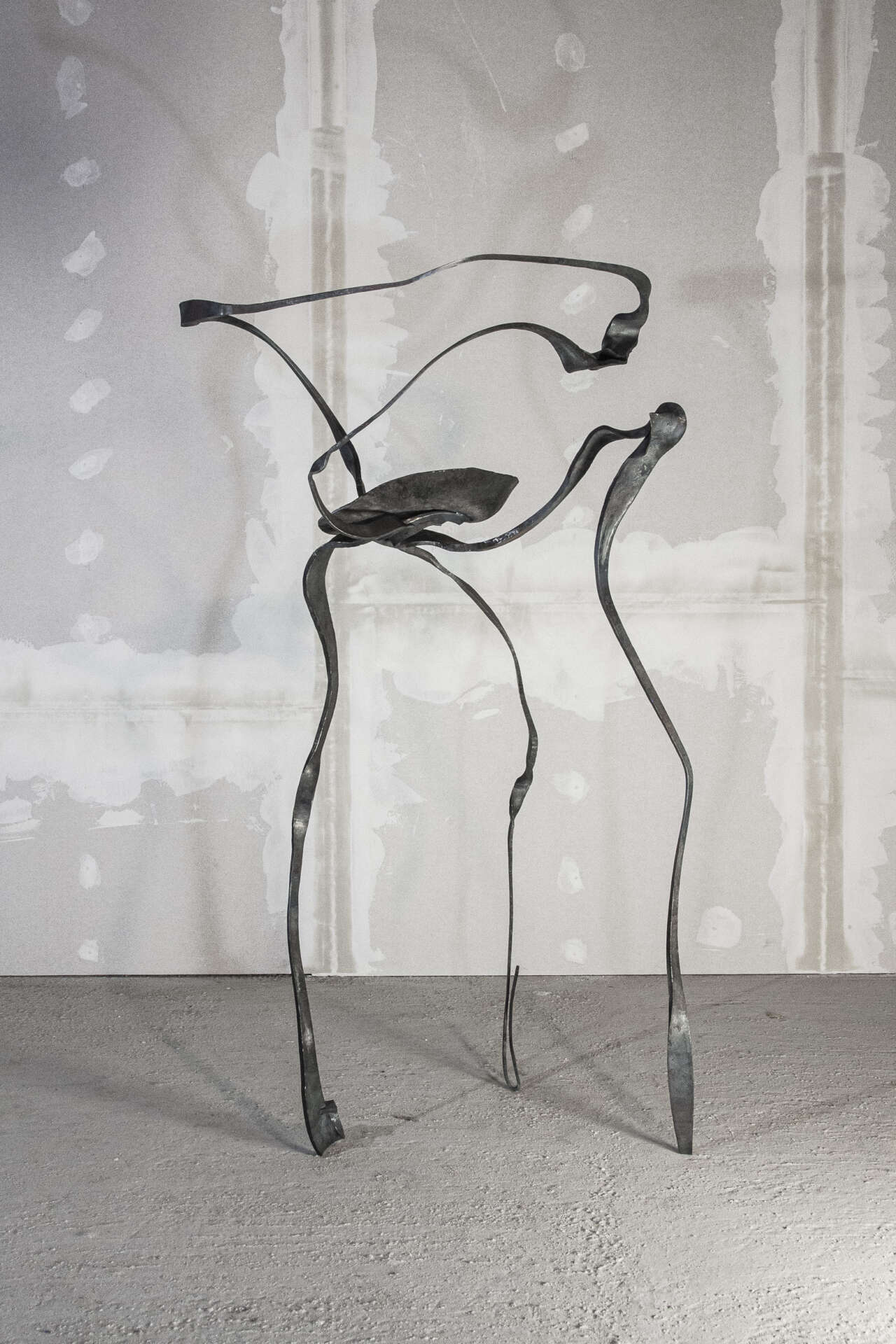
Figure 4: EXPANDED GLITCH SCULPTURE I (2024) by Elaine Bonavia & Lucas Macabéo dimensions: 150 [h] x 90 x 70 cm © Büro Bum Bum
Spatial Drawing: Thinking with Materials through Movement
In my ongoing PhD project Spatial Drawing: Thinking with Materials through Movement, I address the potential of XR as a drawing tool in design, focusing on thinking with materials and their expressive qualities. I do this by interrogating material elements in space through a practice of body-drawing inspired by movement techniques. This allows me to map out modes of relating with physical materials in their environment, situated within time and space, by engaging with my perception-in-action through a very embodied approach to digital drawing.
My practice of drawing freely and unconstrained by the desktop space produces lines that become sites of tension between physical movement and digital encoding. Here, digital ‘material’ is no longer just a visual representation of a physical object, but a correspondent that encodes experiential and performative aspects within its wireframe anatomy.
In my work I reveal this through the post-processing of spatial drawing artefacts, grounding evidence into the overall aesthetic and expressive quality of the 3D sketch, which can be regarded as a hybrid digital object. It’s something between a 3D model and sketch, and its expressive qualities are particularly interesting and visuo-haptically more effective than those of traditional, digital 3D models. It is drawn by the body yet I still describe it as a ‘drawing’ due to the movement intentionality and controlled demeanour that it carries with it.
Expressive and plastic qualities of materials are aspects we can engage with to think with the substance and matter of things, they can provoke agency in the design process and open new lines of thinking. In cases where the framework allows for it, they can even lead to new approaches for shaping or working with traditional techniques, such as in the EXPANDED GLITCH: Forging Digital Materiality Project.
While the EXPANDED GLITCH design project is linked to particular forms of craft, its experimental format and workshop style approach laid the foundation for thinking about how trajectories of exchange can fundamentally shape design processes, as well as how spatial drawings can be presented as archives of interaction, primarily through a process of continued self-observation and engagement with the body, digital materiality and affordances of digital media.
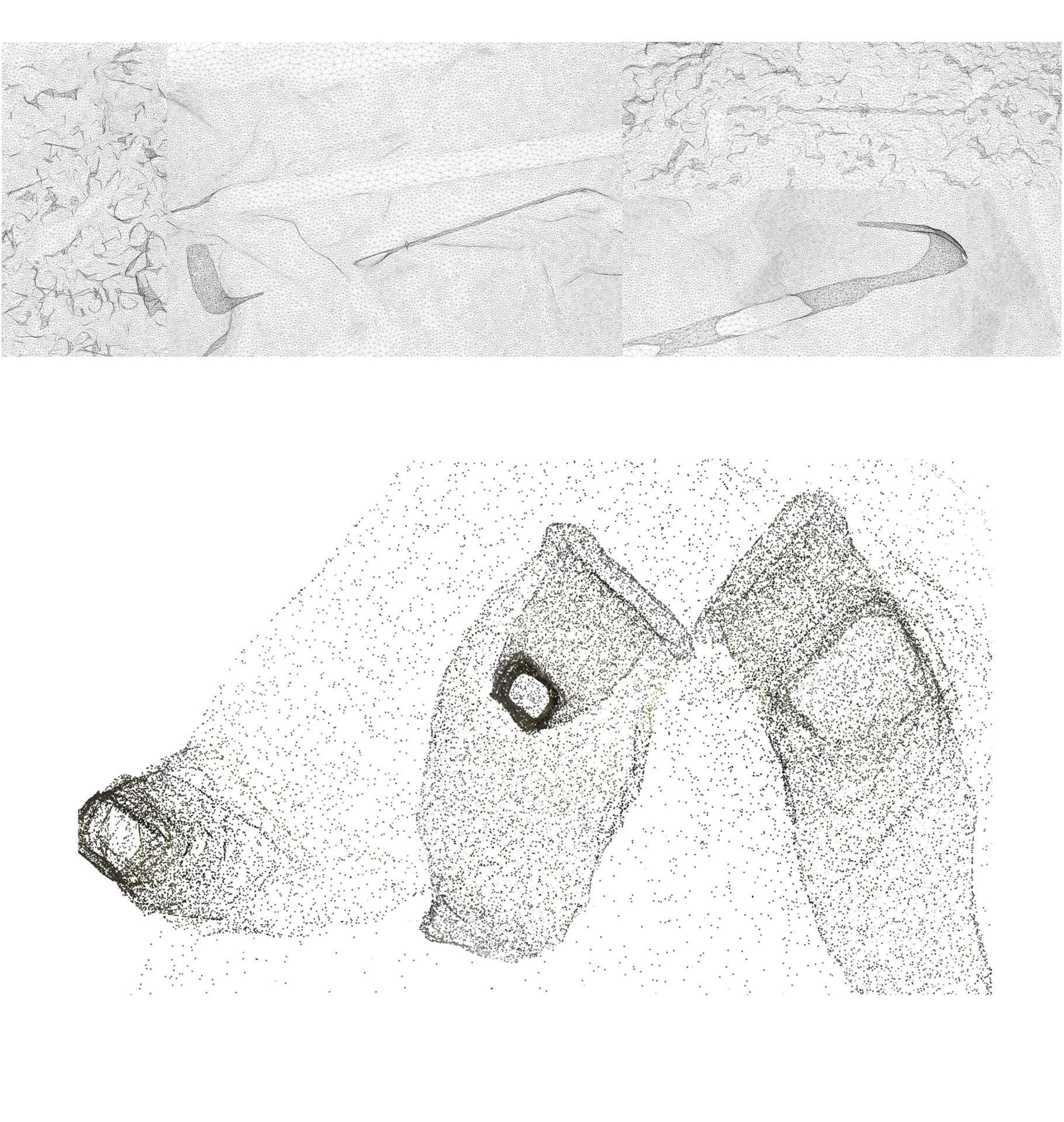
Figure 5: VAGUE MATERIALITY (2026) shows 3D scanned, forged metal prototypes by the team members of the EXPANDED GLITCH project, set over organic surfaces. Evoking a seemingly ephemeral and vague materiality through its wireframe mesh aesthetic, the scans are specifically framed in a way that the spatial thresholds between inside and outside remain loosely defined or discontinuous, effectively with blurred edges. Image referring to the idea of vagueness as a form of abundance from (Ölme and Wallenstein 2021) © Elaine Bonavia
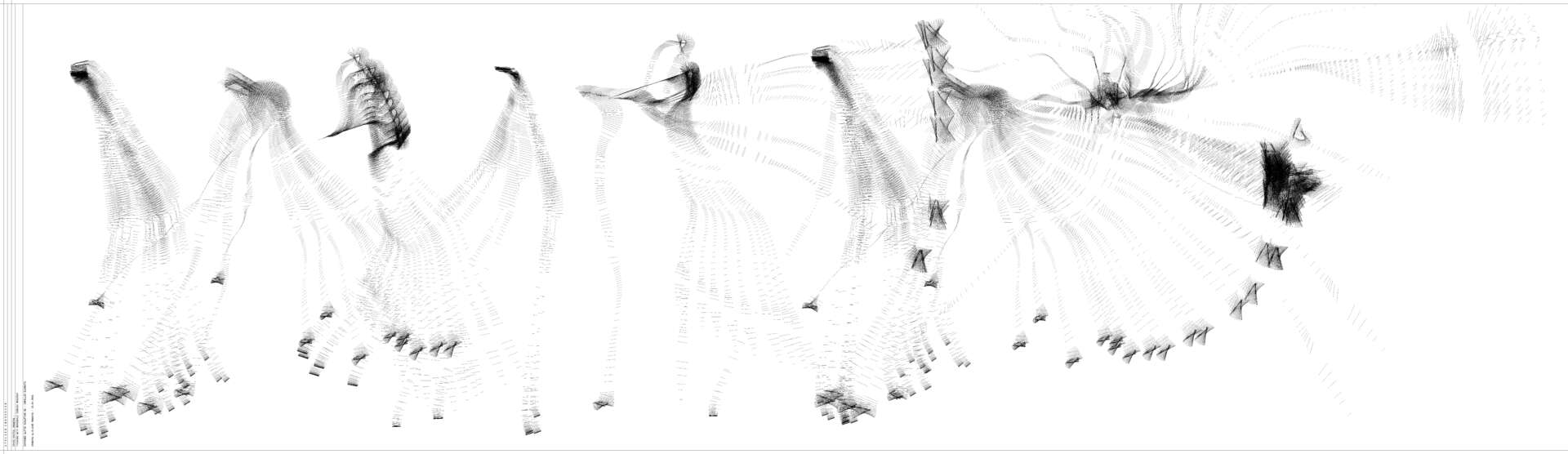
Figure 6: SIMULATION OF THE UNROLLED (2026) is a drawing addressing an acute gap in my experience of the project. Depicting frames of unrolled limbs from EXPANDED GLITCH I, fictitious unravelling movements based on the meshes’ geometry and complex curvature were simulated using the plugin Kangaroo2 within Rhino and Grasshopper. The drawing archives the dynamics of the material in its slow – sometimes inconspicuous - states of transformation under the blacksmith’s hand. It also speaks of the plasticity of steel - a material that is generally just perceived as hard, stiff and strong © Elaine Bonavia
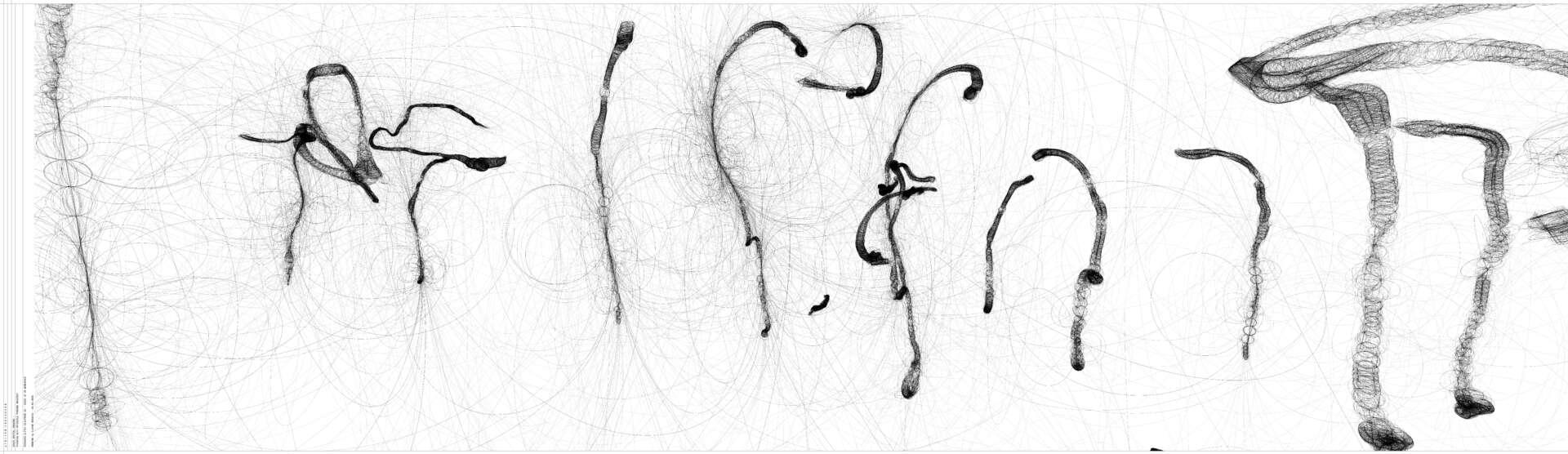
Figure 7: SENSE OF VR SPACE (2026) is a drawing about the feeling of being surrounded by floating mesh-lines in a VR space. Repeatedly sketching lines with your body eventually gives the sensation of the line as a prosthesis / extrusion of the physical body. The spatially drawn lines were rather short, similar to body limbs in scale. The sensation of letting these lines go and suspending them in the model space is also something that is intended to be evoked in this drawing. As soon as the stroke is done, the body moves through a scene that is rapidly developing around to find a new zone, experiencing a floating forest of mesh-lines along the way. © Elaine Bonavia
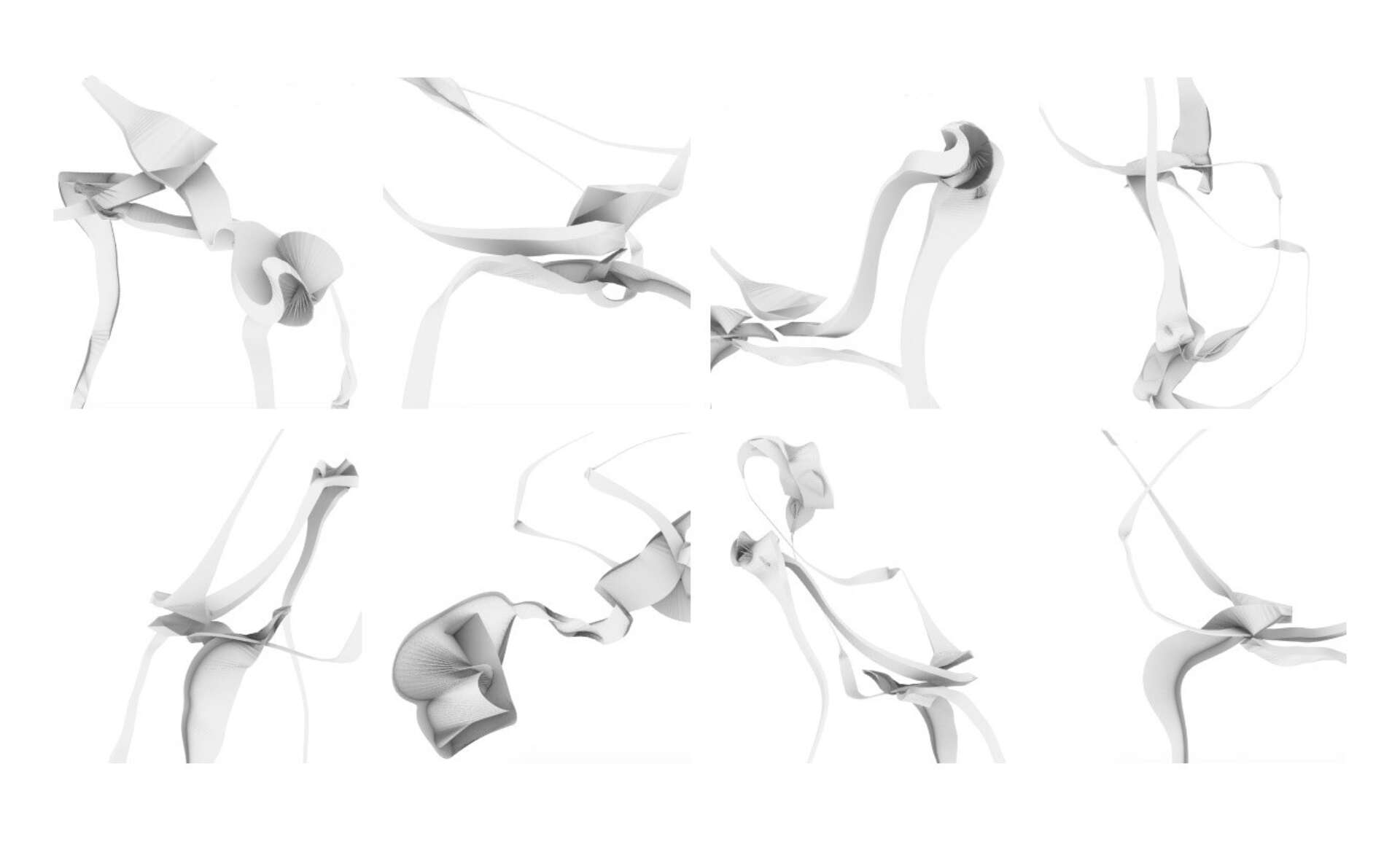
Figure 8: Selected views of the EXPANDED GLITCH SCULPTURE I 3D model, used as base media to create the image for LIMBS © Elaine Bonavia
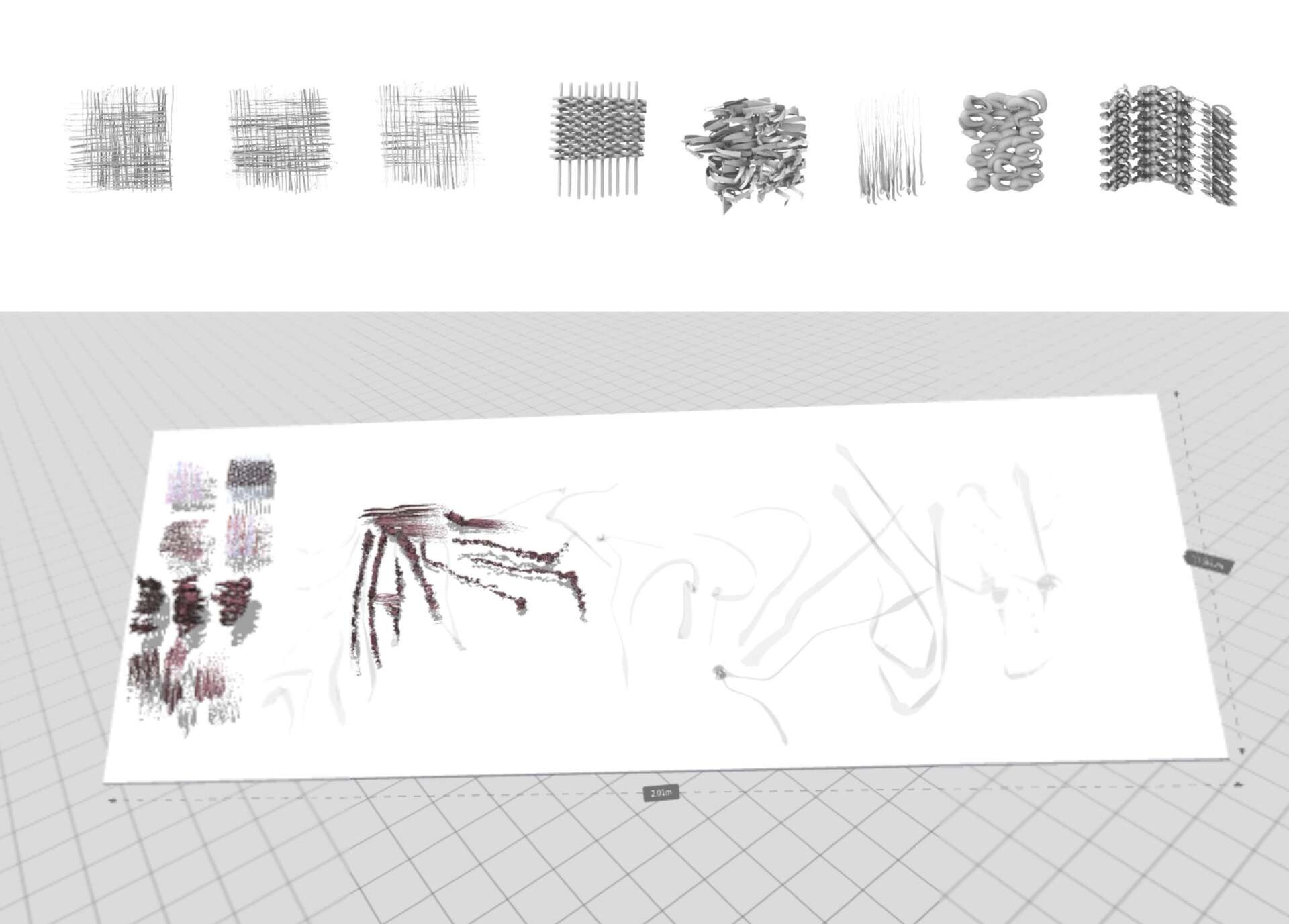
Figure 9: Texture studies through spatial drawing and VR view of compositional exploration for LIMBS © Elaine Bonavia
Figure 10: Base Digital image for LIMBS and diagram of the textural image matrix of the artwork. Images © Elaine Bonavia
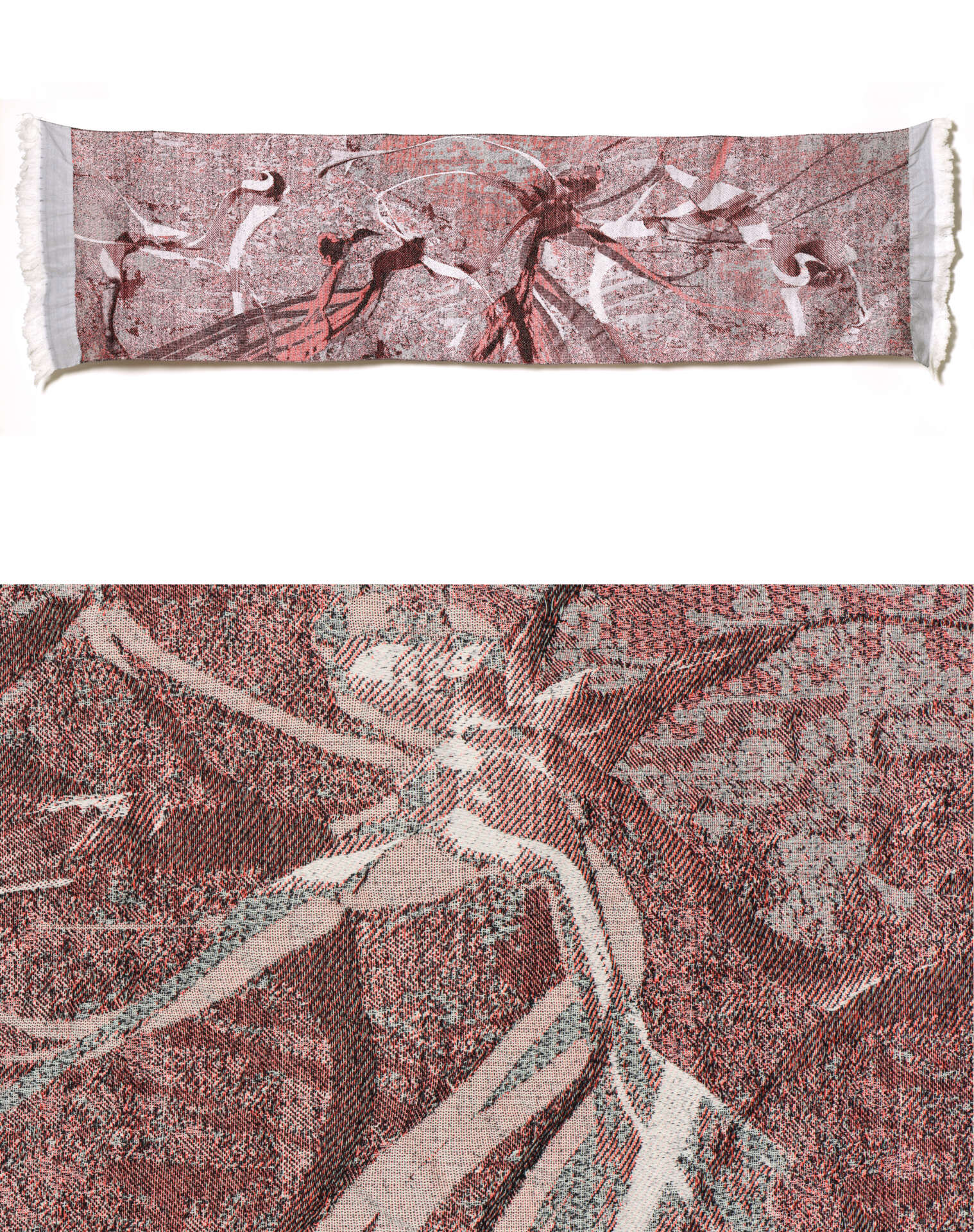
Figure 11: LIMBS (2025), 250 x 70cm, jacquard woven with acryl, polyester, cotton, digital materiality. Jacquard Weaving and Preparation by Lilo Ming Kiefer. Image © Heike Overberg & Elaine Bonavia, weißensee kunsthochschule berlin. Back detail of LIMBS, 250 x 70cm, jacquard woven with acryl, polyester, cotton, digital materiality. Jacquard Weaving and Preparation by Lilo Ming Kiefer. Image © Heike Overberg & Elaine Bonavia, weißensee kunsthochschule berlin.
Trajectories of Intra-Action
The workshop framework of the Open Call set the stage for an open-ended and non-linear design process that was unconventional in many ways, and whose outcome thrived only in sustained collaboration and intra-action.
Beginning with 3 days of the September Workshop, the team at Bernd Euler GmbH introduced us to blacksmithing while Lucas and I introduced them to immersive VR sketching. Just as we attempted holding, manoeuvring and shaping portions of semi-molten steel, our hosts tried sketching in the virtual space, moving with extruding lines, spatial doodles and a scalable world of experimentation. Significantly, these moments created the conditions for a rich space of exchange, where the focus was not on an intended outcome but on the techniques and process of both crafts.
The possibility to dabble in each other’s craft gave everyone more proximity to each other’s implicit knowledge. It created an entanglement of perceptions about the others’ craft, making discussions more concentrated and riper with emergent impulses. The exchange workshop can be described as a web of meandering trajectories and was an essential step towards what Karen Barad terms as ‘intra-action’(Barad 2007). Broadly speaking, this describes the exchange of energy and phenomena within a single entity that consists of multiple parts. It relates to the philosophy of agential realism, which deals with ontologies of being and interacting with the world and the influences of multiple entanglements. In elaborating on this from an architectural design perspective, Sandy Litchfeld says that “In other words, agency is relational, whereby doing and being are not separate but rather something that emerges from this co-mingling.”(Litchfield 2023)
At the September Workshop, precisely this space of co-mingling offered everyone the possibility to dabble in ideas that were not only discursive, but also tangible and with the possibility of testing at hand. Thus, rather than aiming for a direct interpretation and assimilation of designed forms, as is typical in usual designer-craftsperson scenarios, the workshop days were spent collectively brainstorming, collectively prototyping and simultaneously interpreting a hand-drawn sketch of a design element. Lucas and I engaged in ways of drawing and shaping a paper sketch in VR, while Georg and Ida engaged in ways of interpreting their sense of the paper sketch and their experience of the digital one. Critically, the two teams repeatedly jumped between one workshop zone to the other, checking in on the translation of the image and the progress of forged prototypes. In doing so, the design process of the first element was realised within an intra-active space of exchange.
Fast-forwarding to the production of LIMBS, a second ‘workshop-style’ work ethic was adopted between myself and designer-maker Lilo Ming Kiefer. The process of translating a digital image into a woven jacquard entailed thinking about how specific parts of the image correspond to envisaged textural volumes brought about by the combination of weaving patterns. It was necessary to prepare for the intended textural effects within the different zones of the image – both as separate entities but also as a whole assemblage of colour and varying texture. While in the process of determining this texture map, I engaged with spatially drawn 3D textures motivated by body movement research in VR. The movement was prompted by haptic effects such as direction, roughness or smoothness that I had experienced in physical textures at the Soft Rapid Prototyping Lab in precedent weeks.
This bodily attempt to define a textural direction for the overall image is a manifestation of a deep relationality between tactile experience and imagination. It’s a way of coming into intra-action with the tools, materials and collaborators involved in the production process. The drawn 3D textures are my approach of drawing out a sense of tactility without going into the technicalities of it. It is a drawing that intuitively exteriorises haptic sensation, memory and projection.
My approach of examining the 3D spatial drawing artefact and translating it into a 2D drawing emerges through the making of LIMBS and is an act of archiving relations. The work can be seen as both a drawing and a textile artwork that harbours layers of contact and relation with different media and material. Different types of texture transport themselves across media: each layer within LIMBS (presented as a separate drawing in the visual essay) represents moments of interfacing and achieving relation throughout milestones of the project process. The VAGUE MATERIALITY (2026) layer refers to a reflection on the results of the September Workshop. The SIMULATION OF THE UNROLLED (2026) layer refers to the production process, the steel in transformation and the physical labour embedded in blacksmithing. SENSE OF SPACE IN VR (2026) refers to the spatial drawing process between Lucas and myself.
As a digital image, it evokes spatiality, depth and movement through its distinct background and composition of layers of unrolled elements laid over selected views of the sculpture. It describes experienced perceptions of the project as a world that occupied several tangible spaces at the same time. It appears in a horizontal landscape format in an attempt to slow down time and look more deeply into something, just as one does with an archive.
By translating several 3D spatial drawings into this 2D image, I anchor selected perspectives of the spatial experience of the project into a site that concentrates intra-active resonances into one place. The translation into a textile serves as a three dimensional archive which harbours the entanglements between tools, perception of the project and material experimentation.
Acknowledgement
This Essay has been written in the process of reading for my practice-based PhD Spatial Drawing: Thinking with Materials through Movement at TU Dortmund, under the supervision of Prof. Matthias Ballestrem.
I am thankful to all the collaborators involved in the EXPANDED GLITCH: forging digital materiality project: Bernd Euler, Ida Frolich, Senta Hoppe, Lilo Ming Kiefer, Lucas Macabéo, Georg Reinking, and to Sara Hassoune at the Soft Rapid Prototyping Lab of the Weißensee Kunsthochschule Berlin.
Thanks also goes to the PEP Program at TU Berlin and to the PhD group at « Matters of Activity » Image | Space | Material.