
Eyes of Epoché Suspended Vision and Discovered Space
The Problematisation of Vision in Architecture
As the most powerful sense through which we perceive the world, vision has long functioned as a condition that allows the world to appear ordered and coherent. To question vision, therefore, is to destabilize the entire framework of perception. In architecture in particular, vision has operated as the most powerful and self-evident premise, while at the same time functioning as a condition that scarcely needs to be questioned. It would not be an exaggeration to say that architecture has always been organized around vision. Since the Renaissance, perspective has functioned as a language that disciplines space, and in the modern period, photography and mass media have established this visual order as a universal standard. Today, digital rendering and VR technologies further reinforce this tradition, reducing architecture increasingly to an object of image-based consumption. Despite repeated critical discourses on oculocentric architecture, we continue to inhabit architectural environments that are visually polished and immediately consumable.
Questioning the privileged status of vision has not been confined to architectural discourse. Since the nineteenth century, philosophy, science, literature, and art have increasingly ceased to regard vision as a transparent medium of perception or a guarantor of truth. Perception came to be understood not as a simple reflection of sensory input, but as a complex process entangled with the body, technology, language, and power. Vision, in turn, became persistently examined as a site of distortion, illusion, mediation, and conditioning. Philosophy reconsidered the epistemological status of vision, science revealed perception as a learned and constructed process, and literature and art dismantled the transparency of representation, transforming vision into a field of experimentation by destabilizing the viewer’s point of view. As Martin Jay has articulated in Downcast Eyes, these developments form a genealogy in which vision is treated not as a foundation of certainty, but as an object of continuous problematization.
By contrast, cases in which vision itself has been directly questioned within architectural discourse are relatively few. Kenneth Frampton criticized spectacle-driven and image-centered architectural culture and argued for the necessity of resistance grounded in place and materiality, while Juhani Pallasmaa sought to weaken visual dominance through tactility, corporeality, and multisensory experience. While these discussions may have succeeded in critiquing the cultural conditions surrounding vision, they did not fully pursue how vision itself is constructed, learned, and made operative, nor how it has organized design thinking and spatial production. Vision was repeatedly identified as a problem, yet its potential was never fully excavated, and it ultimately returned as a self-evident premise. This research was formed precisely at this point, within the theoretical gap that remained after critiques of vision. Rather than attempting to replace or abandon vision, it seeks to explore whether other possibilities exist by twisting and delaying existing visual systems, thereby questioning how vision organizes design thinking and the production of space.
The Eyes of Epoché
The difficulty lies in the fact that, from the position of the architect, taking vision itself as an object of inquiry is almost impossible. The act of “seeing” is so ordinary and habitual that the moment it is designated as an object of research, thought is easily pulled back into already solidified schemas. Attempts to analyze vision tend either to be reduced to established epistemological languages or to shift abruptly toward a rejection of vision altogether. Under these conditions, to study vision was less a matter of presupposing a clear conclusion than of accepting the possibility that the inquiry might remain unresolved. For this reason, rather than explaining or defining vision, this project takes the form of a thought experiment that first establishes conditions under which its usual premises no longer operate. In other words, instead of taking the act of “seeing” as its point of departure, this work attempts to trace the structure of vision in reverse by starting from a state of “not seeing.”
From a medical perspective, “not seeing” refers to blindness, a condition in which visual information cannot be perceived due to damage to the visual organs or the nervous system. From a cognitive perspective, however, seeing is not a simple sensory input, but a process that actively interprets visual information through accumulated knowledge and experience. When we see a car moving away from us, the image projected onto the retina becomes progressively smaller, yet we do not perceive the car as shrinking. Learned knowledge intervenes immediately, constructing the judgment that the car is receding into the distance.
In this context, the “not seeing” assumed in this research does not signify the loss of vision, but rather a suspension of interpretation. Basic visual stimuli such as color, contrast, and distance are registered, but judgments about what they are have not yet been formed. This condition is comparable to the vision of a newborn infant. This is what the research refers to as the Eyes of Epoché.
The Thought Experiment
Such a state of “not seeing” is difficult to define theoretically or to reproduce empirically. Under conditions in which we live with vision that is already learned and automated, directly observing or analyzing a prior state is nearly impossible. Accordingly, rather than attempting to explain this condition, the research adopts a strategy of hypothetically setting up the conditions under which it might be possible. Fiction here does not function as an escape from reality, but as a form of thought experiment that constructs situations in which existing perceptual structures no longer function.
This approach is informed by a series of thought experiments that have repeatedly appeared in philosophy. Molyneux’s problem in the late seventeenth century asks whether a person born blind, who has learned to distinguish a sphere and a cube through touch alone, would be able to visually distinguish them immediately after gaining sight. Condillac’s theory of sensation in the mid-eighteenth century imagines a statue devoid of all sensation that gradually acquires senses one by one, in order to investigate how cognition is constructed step by step. Frank Jackson’s Mary’s Room in the late twentieth century asks whether a person who has acquired all physical knowledge about color in a black-and-white environment would learn something new upon seeing red for the first time. These thought experiments share a common strategy: in order to demonstrate that sensation and perception are not self-evident faculties but conditional and constructed processes, they posit initial states or extreme situations that cannot be directly verified in reality.
Alongside these thought experiments, this research proposes an architectural fiction titled Eyes of Epoché. Eyes of Epoché imagines a figure whose body, from the neck down, has been completely immobilized since birth, and who has lived her entire life without any interaction with others, facing only a single visual scene. Smell, taste, hearing, and touch are extremely limited or blocked altogether, and her sole relationship with the world is a repeatedly presented visual scene. She looks out at an urban landscape through a window, yet she does not grasp what it signifies, nor does she even recognize the bodily similarity between herself and others. This setting constructs, in the form of a thought experiment, a condition in which vision exists prior to its organization into meaning and concepts, that is, a condition in which interpretation is suspended.
From Theory to Image
Eyes of Epoché did not emerge as a finished narrative outcome that subsequently triggered the research. Rather, it was continuously revised and expanded throughout the research process itself. As a result, the study did not unfold according to a clear sequence or fixed methodology, but instead progressed through multiple branching trajectories that simultaneously interfered with and amplified one another.
Within this non-linear development, historical and theoretical inquiry served as an initial means of delineating the field in which vision has operated. In its early stages, the research focused on how optical illusion, perspective, and visual perception have shaped the formation and perception of architectural space, ranging from visual corrections in ancient architecture to perspectival experiments in the Renaissance and Baroque periods, and further to transformations in visual technologies and theories of perception in the modern era. This phase was articulated in a peer-reviewed paper presented at the AMPS conference, yet it also revealed a critical limit: historical and theoretical explanation alone could not advance the inquiry.
Figure 1: Digital Archive : a contemporary cabinet de curiosité, a constellation of mosaics and images assembled to examine vision as a constructed and historically conditioned system. Image by the author, 2026.
This realization redirected the research toward images and their arrangement, leading to the construction of a digital archive (Fig. 1). Initiated during the theoretical phase, the archive was built through the selective collection of more than 200 images rather than through comprehensive textual study. It extended beyond architecture and fine art to include visual materials related to anatomical and physiological models of the eye, scientific diagrams of vision, geometries of perspective, drawing machines, camera obscura, spectacles, and mechanical attractions. These images were minimally labelled and organized not to provide in-depth explanation, but to enable visual comparison, juxtaposition, and cross-reading across domains. Materials were loosely clustered to allow overlaps and frictions rather than fixed interpretation, shifting the research from explaining vision to observing how visual systems recur, intersect, and mutate across disciplines.
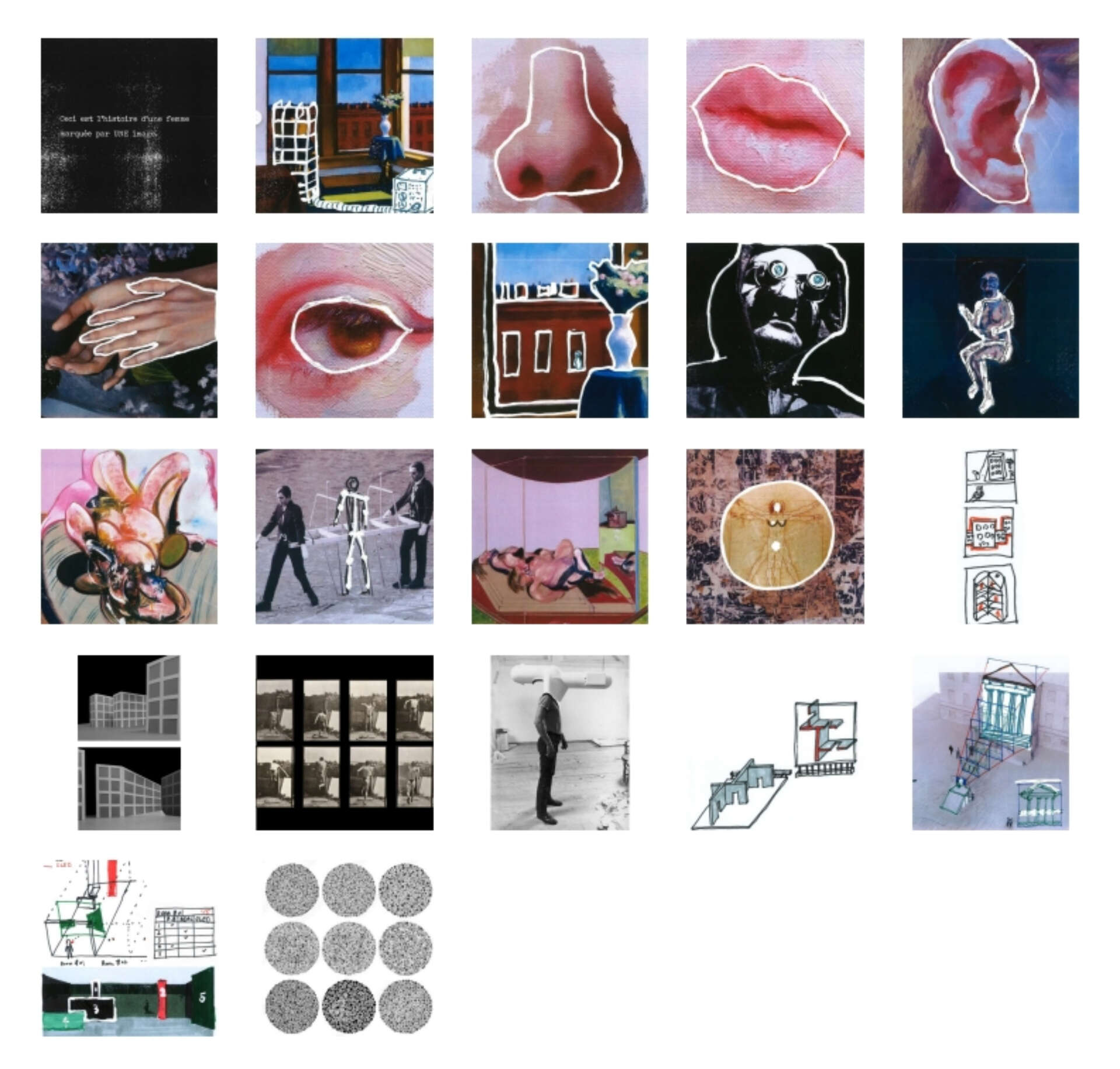
Figure 2: Storyboard, first version. Collage-based exploration of narrative structure and visual logic. Image by the author, 2026.
The Fiction and Experiments
The fiction Eyes of Epoché, which was continuously revised throughout the research process, was planned to be developed into a photo-roman film and images accumulated through the archive became the material basis for the film. A first storyboard was produced through collage, combining architectural and artistic references in a sketch-like manner to test narrative structure and visual logic (Fig. 2).
Beyond proposing the Eyes of Epoché as a conceptual framework within fiction, the research also unfolded through various experiments aimed at reproducing it physically. The representation courses at WKU became an experimental platform where perspective, photography, and attraction-based visual devices were manipulated and twisted (Fig. 3). Through this process, mechanical devices and experimental visual apparatuses were designed and prototyped to induce modes of spatial perception that escape conventional visual systems. This phase led to the realization that the very conditions required to materialize visual experiments constitute an essential part of the research itself.
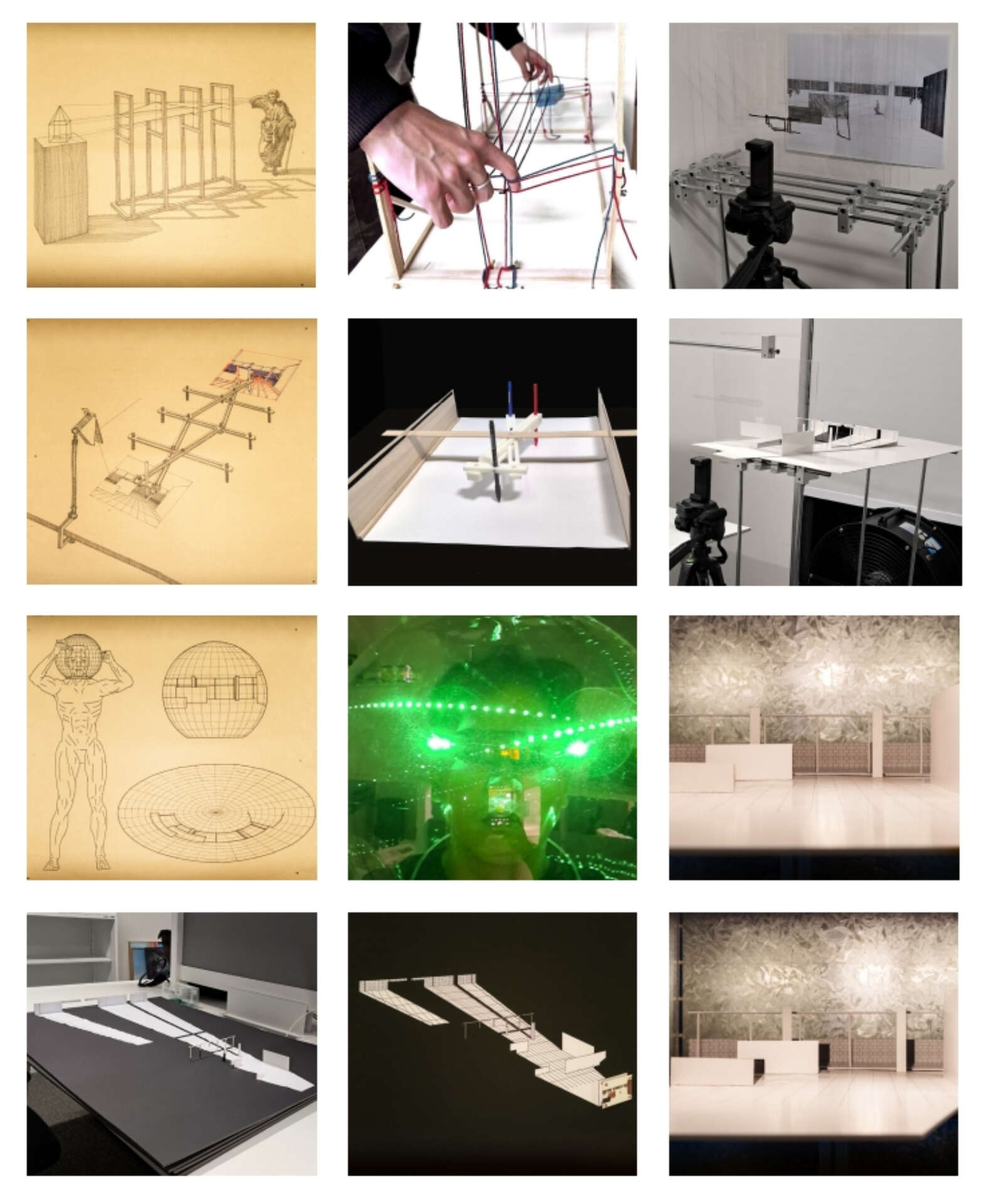
Figure 3: Prototypes and images of experimental devices that manipulate visual conditions through spatial and representational constraints.
Image by the author, 2026.
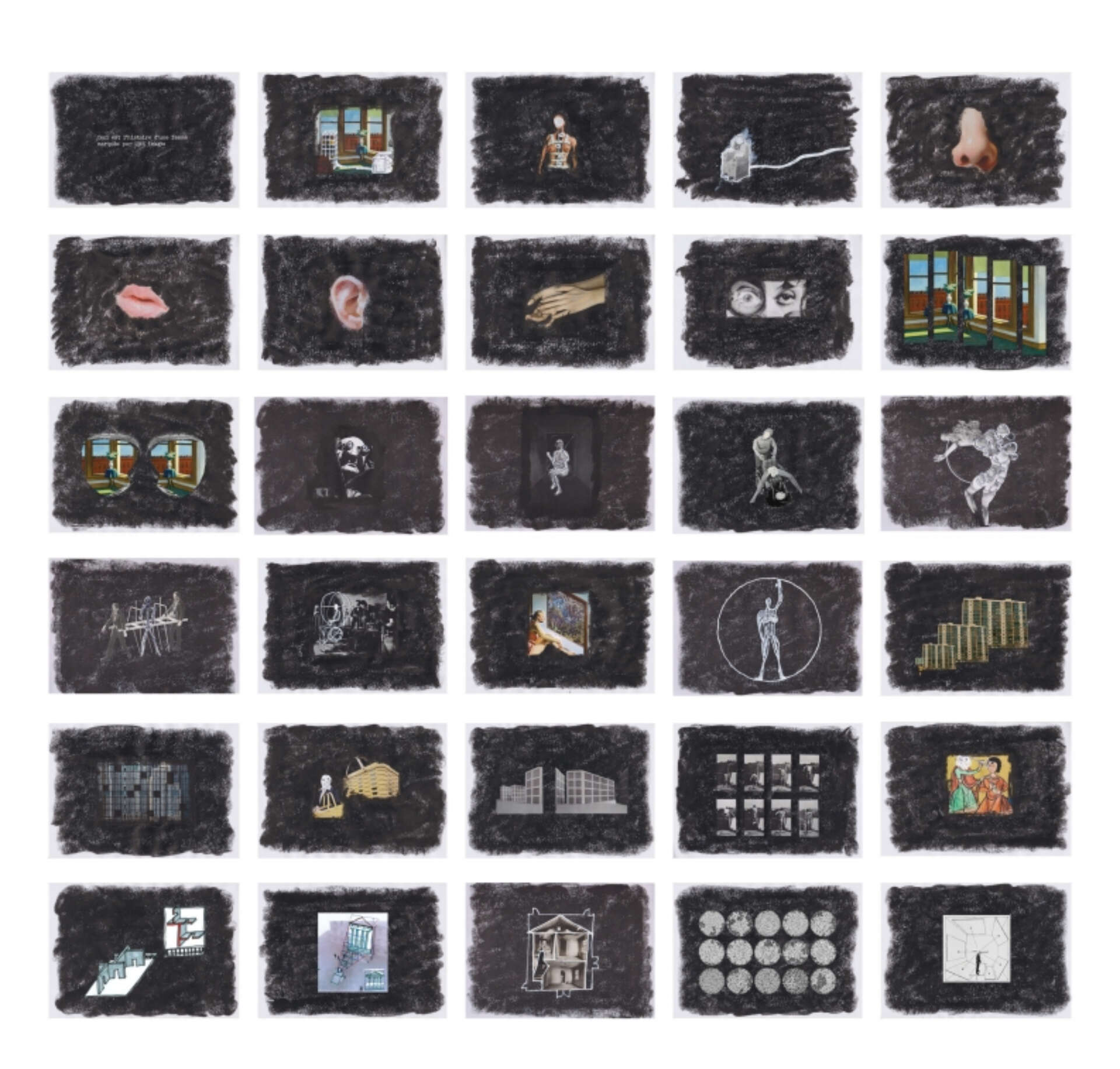
Figure 4: Storyboard, second version. Development toward a photo-roman and short film.
Image by the author, 2026.
In parallel with the experiments on visual apparatuses, the research continued through theoretical and historical inquiry, during which more clearly defined visual references were accumulated. Based on this, a second storyboard was developed, and in order to maintain overall coherence, the images were kept in a predominantly black-and-white tone (Fig. 4).
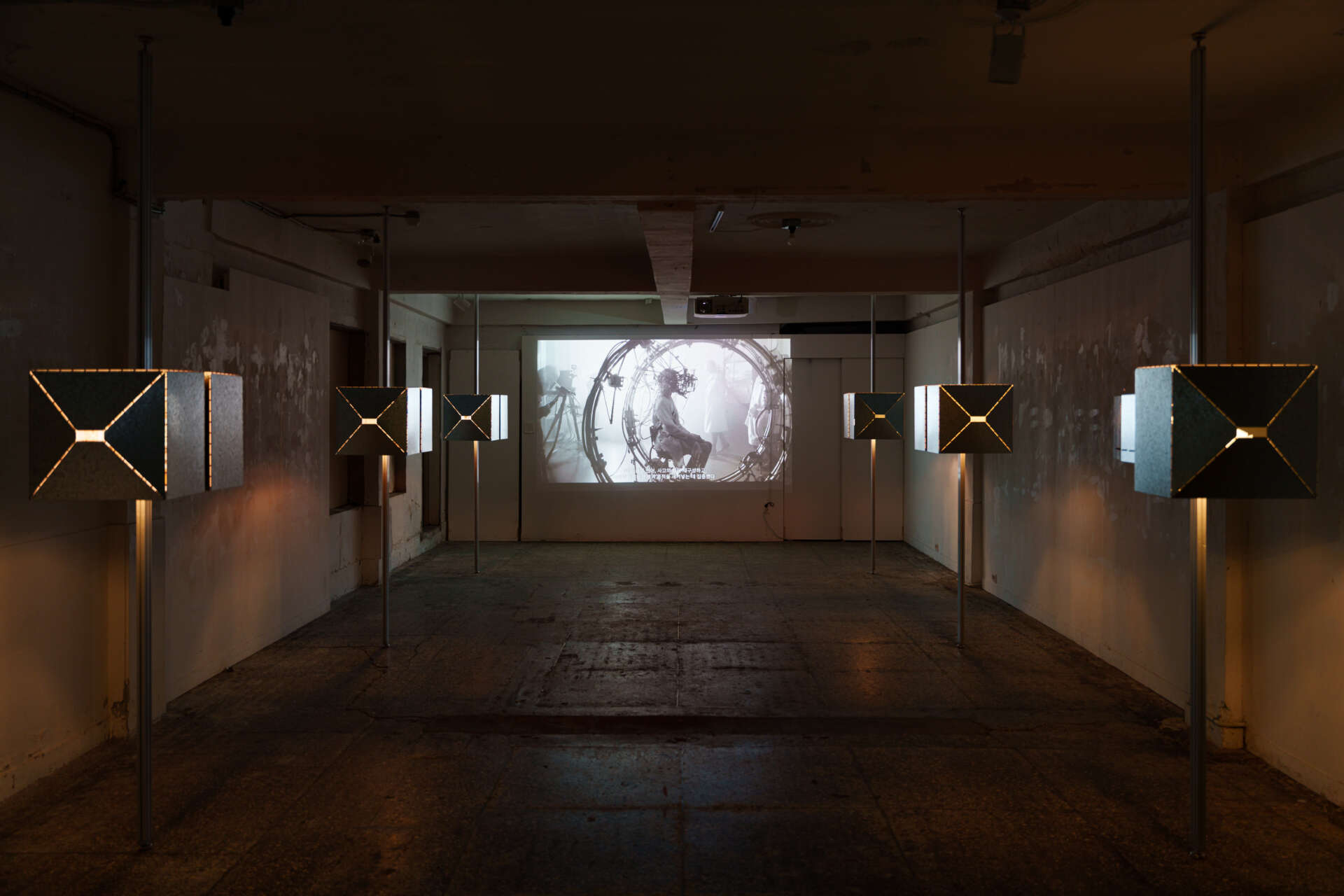
Figure 5: Exhibition view. Installation view showing the screening of the short photo-roman film.
Image by the author, 2026.
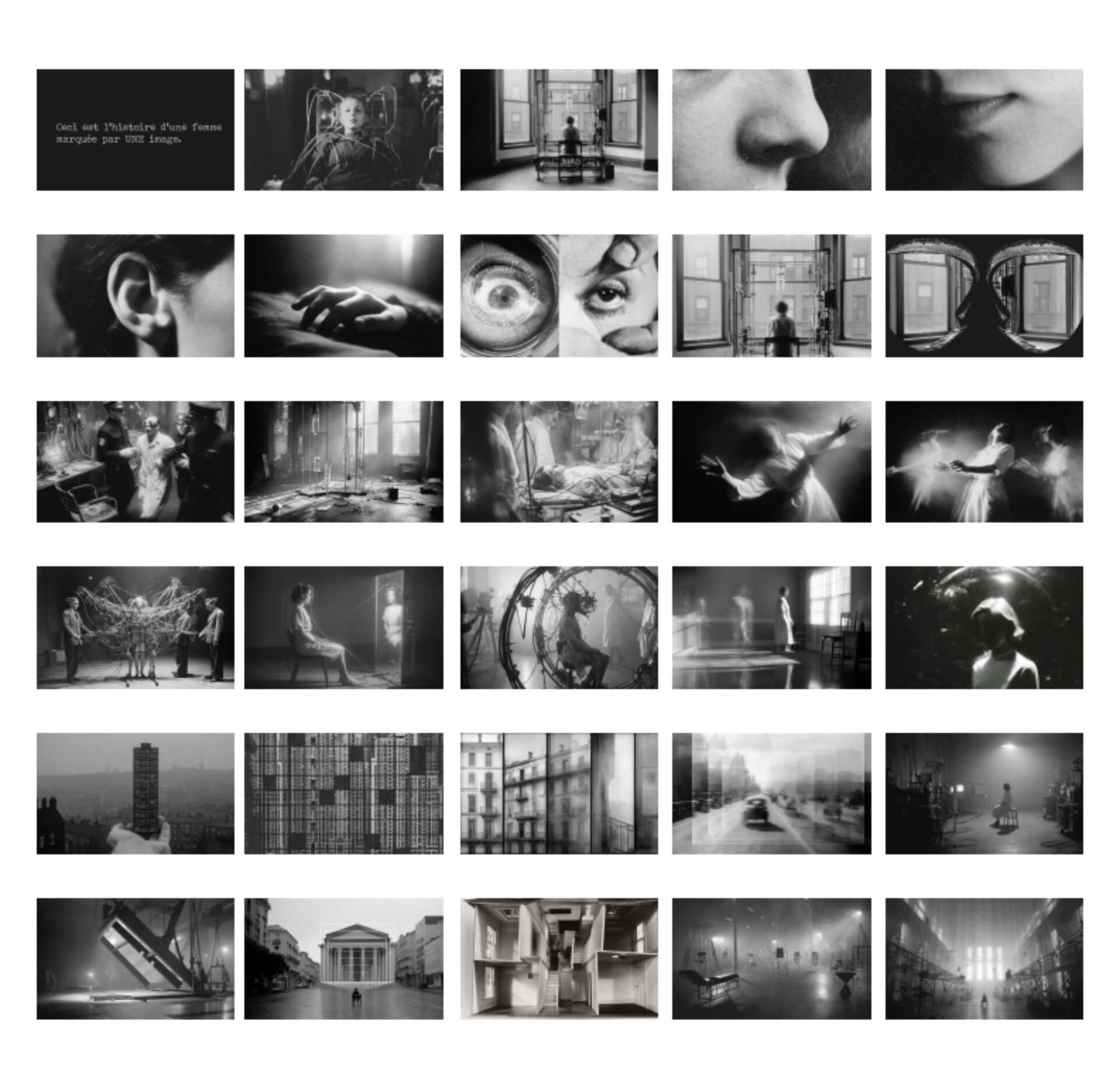
Figure 6: AI-generated images. Experimental image generation under practical constraints.
Image by the author, 2026.
The Trajectory
In this research, fiction, archival investigation, theoretical and historical study, image experimentation, and apparatus construction were not arranged as linear stages. Rather than producing independent outcomes, they were intertwined as a continuous inquiry into how vision has operated within architecture. This mode of development can be understood as a non-linear trajectory that inevitably emerges under research conditions that do not presuppose automated vision. This research process was first presented to an external audience through the exhibition Without Parallax, held in Seoul in November 2025 (Fig. 5), which included the final version of the photo-roman film composed of AI-generated images (Fig. 6).
The exhibition was conceived not as a space to explain or summarize the research outcomes, but as a site of testing, where hypotheses formed through this non-linear trajectory collided with external perspectives. Through these conditions, the Eyes of Epoché proposes that design-driven and artistic research in architecture can move beyond mere representation or critique, opening a space in which the relationship between perception and space can be reconsidered and potentially reconfigured in practice.
Literature
Aumont, J. (2007) L’Œil Interminable. Paris: La Différence.
Barthes, R. (1980) La Chambre Claire. Paris: Gallimard.
Bataille, G. (1993) Histoire de l’œil. Paris: Éditions Flammarion.
Berger, J. (1990) Ways of Seeing. London: Penguin Books.
Condillac, É. B. de (1984) Traité des Sensations. Paris: Fayard.
Crary, J. (1990) Techniques of the Observer: On Vision and Modernity in the Nineteenth Century. Cambridge, MA: MIT Press.
Diderot, D. (2000) Lettre sur les Aveugles à l’usage de ceux qui voient. Paris: GF Flammarion.
Foster, H. (ed.) (1988) Vision and Visuality. Seattle: Bay Press.
Holl, S., Pallasmaa, J. and Pérez-Gómez, A. (2006) Questions of Perception: Phenomenology of Architecture. San Francisco: William Stout Publishers.
Jay, M. (1993) Downcast Eyes: The Denigration of Vision in Twentieth-Century French Thought. Berkeley: University of California Press.
Krauss, R. (1993) The Optical Unconscious. Cambridge, MA: MIT Press.
McLuhan, M. (1964) Understanding Media: The Extensions of Man. New York: McGraw-Hill.
Merleau-Ponty, M. (1964) L’Œil et l’Esprit. Paris: Gallimard.
Pallasmaa, J. (2005) The Eyes of the Skin: Architecture and the Senses. Chichester: Wiley.
Panofsky, E. (1975) La Perspective comme Forme Symbolique. Paris: Minuit.
Picon, A. (2018) La Matérialité de l’Architecture. Marseille: Parenthèses.
Rancière, J. (2005) Le Destin des Images. Paris: La Fabrique Éditions.
Simondon, G. (1958) Du Mode d’existence des Objets techniques. Paris: Aubier.
Steyerl, H. (2012) The Wretched of the Screen. Berlin: Sternberg Press.
Virilio, P. (1988) La Machine de Vision. Paris: Éditions Galilée.