
Landing with Distortion
Introduction
This paper examines how relations with a territory are sustained when direct bodily presence is not possible. In mountain environments, many transformations unfold across temporal scales that exceed continuous human engagement. Rather than a limitation, absence is understood as a condition that shapes how relations are formed and how knowledge is produced. Situated within a transdisciplinary practice combining landscape, artistic, and embodied research, the work investigates how mediated observation enables engagement with processes beyond direct experience. It focuses on moments in which images fail to stabilise the landscape as a coherent representation (Fig. 1). These interruptions do not simply obscure visibility; they reveal the conditions that exceed it, opening alternative ways of sustaining relations over time. This research approaches trajectories as processes unfolding across time, media, and absence. Relations are traced through movement, interruption, and translation, where shifts between body, image, and material generate situated knowledge within a design-driven and artistic practice.
Figure 1: Stills from Distorted Video Transmission, Cima Capra, Italy, 24 December 2025. Operational webcam image affected by climatic interference. Composition and selection by Renata Berta Saumell. Source: Autonomous Province of Bolzano – South Tyrol (RAS).
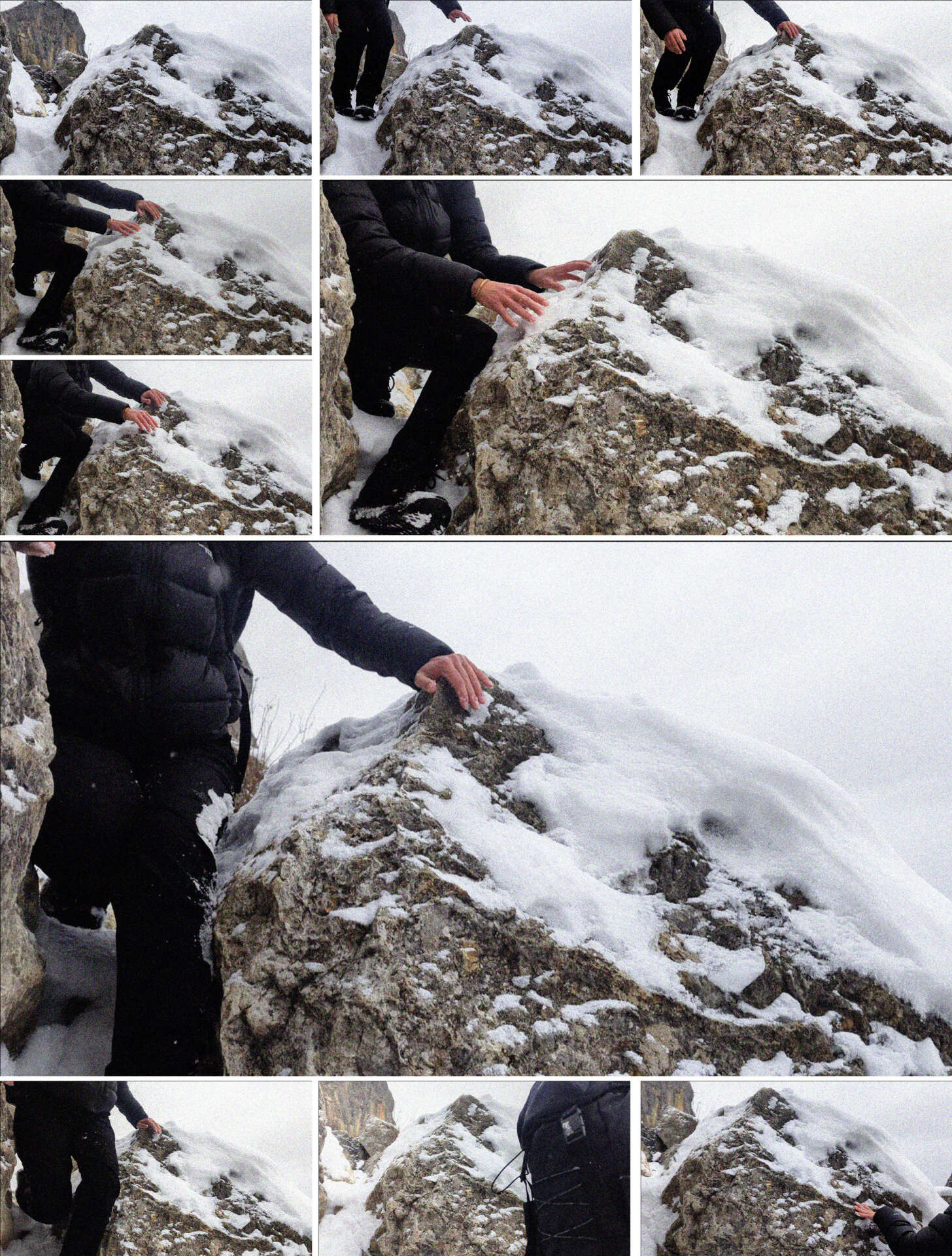
Figure 2: Stills from Embodied Action Going Through Snow, Laberinto Latemar. Video performance documenting embodied engagement with material and terrain. Credits: Renata Berta Saumell and Anna Tudos.
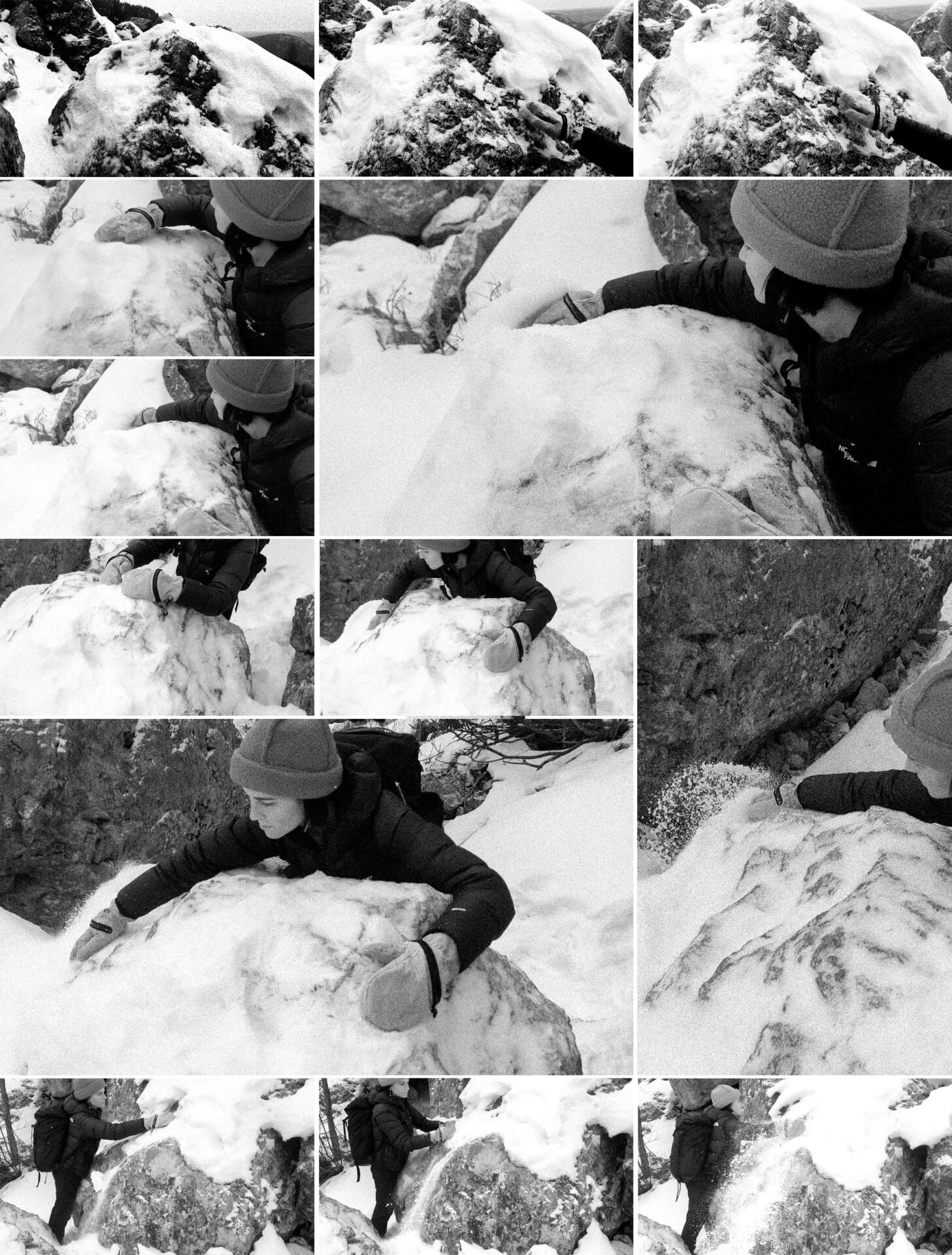
Figure 3: Stills from Embodied Action Removing Material, Laberinto Latemar.
Landing as a Situated Practice of Intra-action
Landing emerges as a situated research practice developed through engagement with dynamic territories. It unfolds through walking, touching, waiting, and returning, approaching the territory as a constellation of relations in continuous transformation (Fig. 2). Knowledge does not arise from detached observation, but through embodied intra-actions between bodies, sites, and materials, understood as co-constitutive processes (Barad, 2007).
The practice is grounded in direct bodily engagement yet begins from a condition of distance. As a foreign body in an unfamiliar landscape, the encounter is marked by a lack of coordination with its temporalities and material conditions. This distance shapes attention, requiring gradual attunement through repeated encounters (Fig. 3). Through these returns, knowledge emerges as an accumulation of situated experiences. At the same time, the method reveals a second form of distance: the temporal interval between encounters. Between them, the landscape continues to transform through processes that cannot be directly accompanied. These intervals are not interruptions but conditions through which the relation extends. What unfolds in absence becomes part of how the territory is understood. From this condition, the research asks how absence actively participates in the formation of relations with the territory.
Absence as an Active Condition of Intra-action
The methodological reconfiguration of Landing emerges from recognizing that many of the processes shaping the territory cannot be directly experienced through continuous bodily presence. As developed, relations with the site extend beyond moments of encounter into the temporal intervals between them. If the relation does not end with the encounter, then absence must be reconsidered as a condition through which the relation is formed.
This becomes evident through material encounters with dolomite stones in the Latemar mountain range (Fig. 4). Their surfaces bear traces of repeated contact -polished areas, softened edges, accumulated wear- produced through processes unfolding across multiple temporalities. These marks do not represent discrete past events; rather, they register transformations that exceed any individual encounter. The stone is not simply an element within the territory, but a material expression of its ongoing formation, where human and non-human forces remain entangled in continuous processes (Anna Tsing, 2015). At the same time, these traces point to the vitality of matter itself, suggesting that material processes are not passive but actively participate in the formation of the territory (Jane Bennett, 2010). What is encountered are traces of processes that have taken place without being directly experienced.
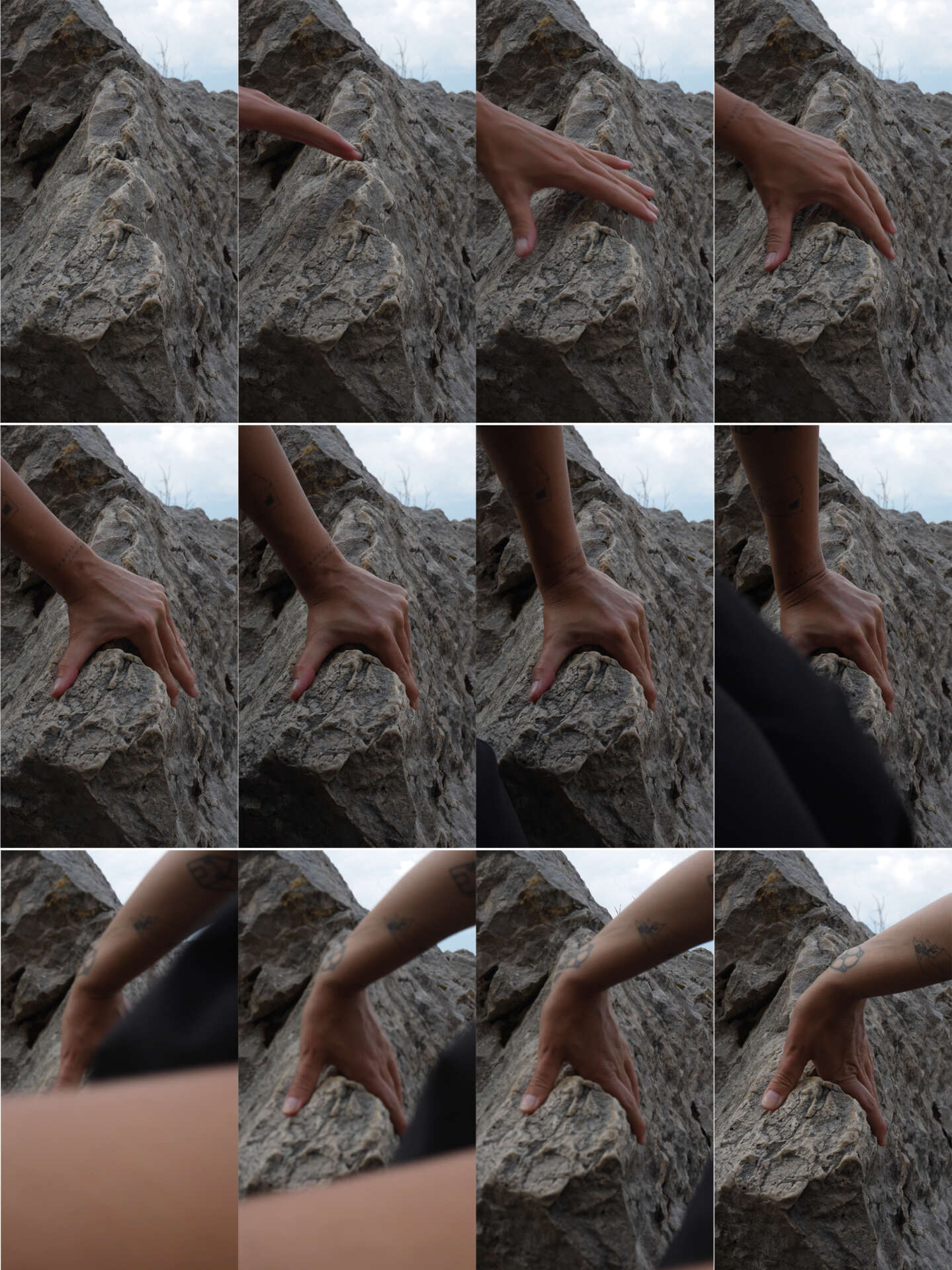
Figure 4: Stills from Embodied Action in Laberinto Latemar: Touching and Holding Time, 2025. Video performance exploring embodied duration and material contact. Composition and selection by Renata Berta Saumell.
From this perspective, absence is not external to the relation, but intrinsic to it. It defines the condition in which the territory continues to transform beyond any individual bodily experience. Relations are therefore not limited to what is directly perceived but extend through processes that unfold independently of the body. What becomes available are not complete representations, but partial and situated traces of these processes, which cannot be fully accessed yet still sustain the relation (Donna Haraway, 1988). Absence does not interrupt the relation; it is the condition through which it persists across time. This has methodological implications: absence becomes a condition of engagement. Mediation operates within absence—not to recover what is missing, but to engage with what cannot be directly experienced.
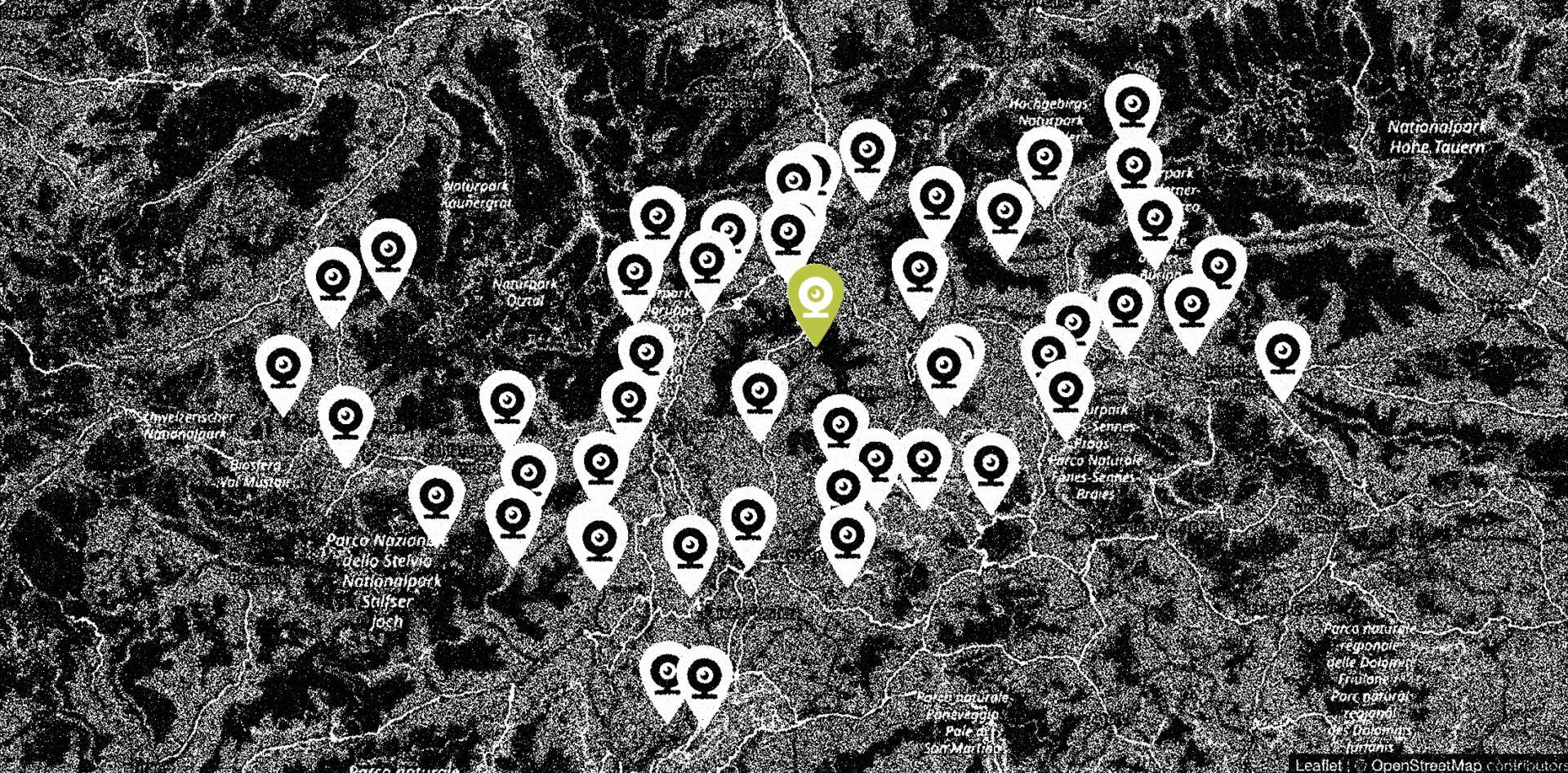
Figure 5: Location of public webcam infrastructure in South Tyrol. Green marker indicates the digital field site at Cima Capra, Italy. Edited by Renata Berta Saumell. Source: Autonomous Province of Bolzano – South Tyrol (RAS).
Mediation and Distortion as Operative Conditions
The turn toward mediation in Landing arises from the need to remain in relation with territorial transformations. Processes such as erosion, accumulation, and atmospheric variation continue in absence. The question is not how to observe them from a distance, but how to engage with them as part of the relation itself. This engagement takes place through operational webcam images installed in alpine territories (Fig. 5).
These infrastructures continuously render the landscape visible for monitoring and tourism (Farocki, 2004; Paglen, 2014), producing a mediated condition shaped by atmospheric and technical factors. Within this context, images no longer function primarily as representations, but as operative elements within systems of observation, circulation, and use. Their relevance lies not in what they show, but in how they sustain a continuous yet mediated relation to the territory across time (Fig. 6). Rather than engaging these images through their intended clarity, the research focuses on moments in which this clarity breaks down. If the aim is to engage with processes that exceed direct experience, then it is precisely in these moments that such processes become perceptible. Snow, fog, condensation, and shifts in light do not simply obscure the image; they reveal the atmospheric density, material interference, and technical limits that structure its visibility (Fig. 7).
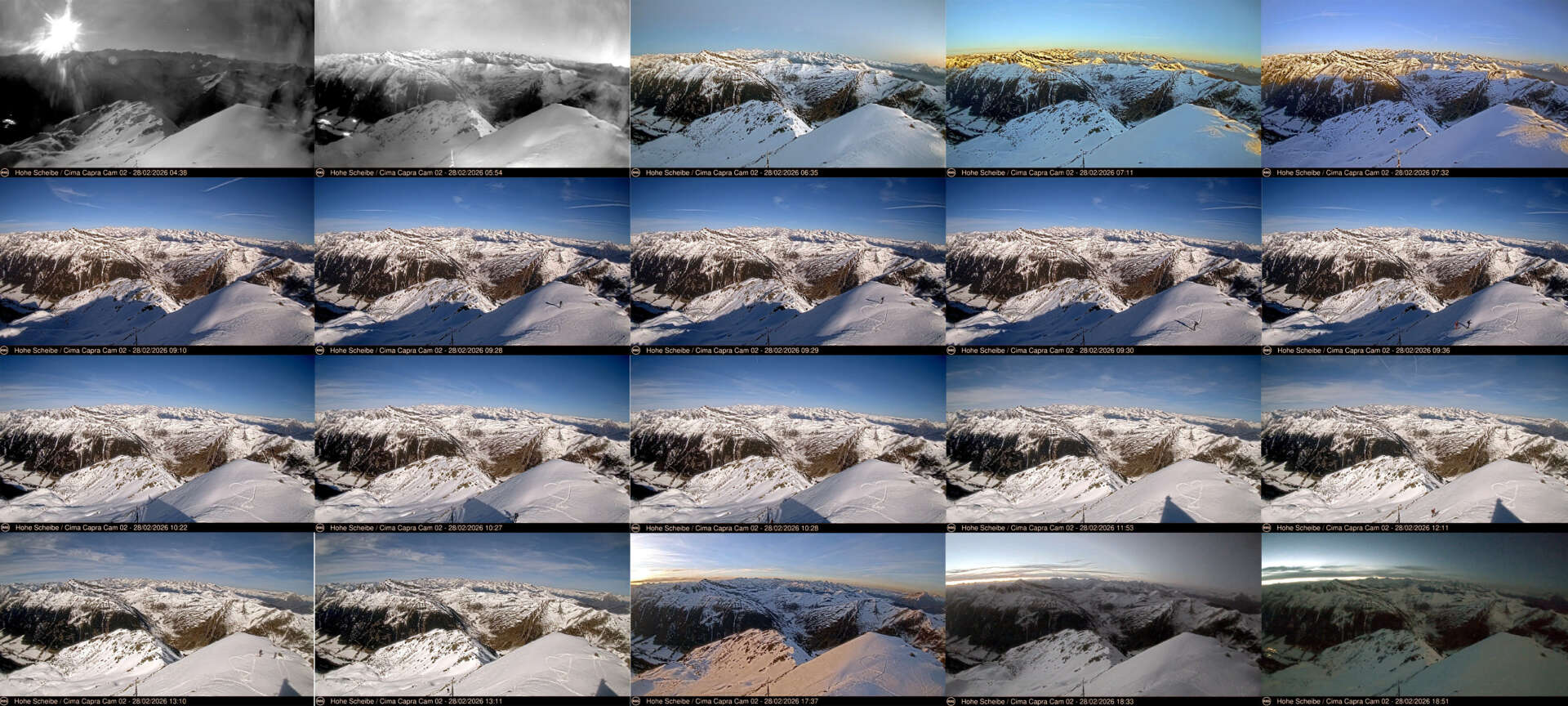
Figure 6: Stills from Distorted Video Transmission, Cima Capra, Italy, 28 February 2026. Sequential frames from a webcam stream showing human presence interacting with the terrain under conditions of being captured. Composition and selection by Renata Berta Saumell. Source: Autonomous Province of Bolzano – South Tyrol (RAS).
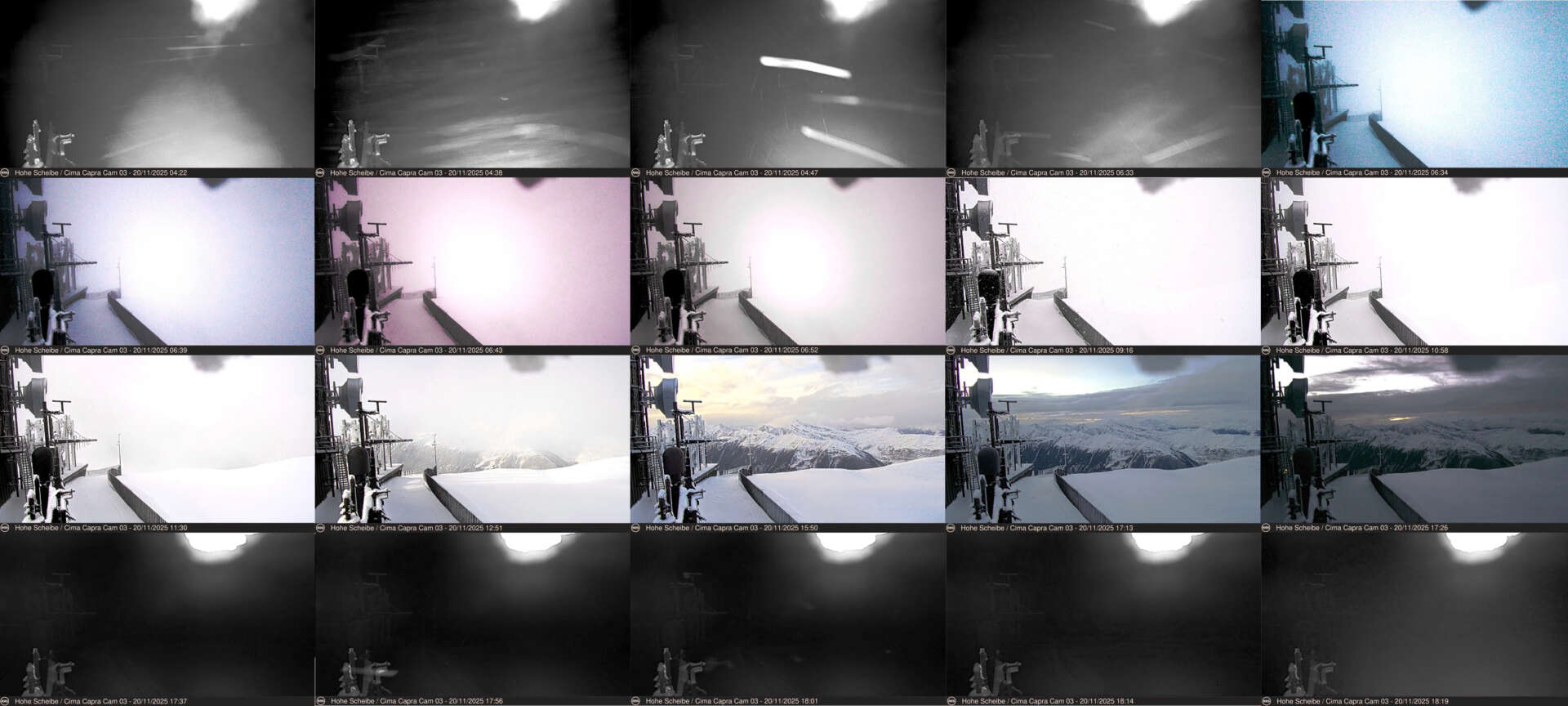
Figure 7: Stills from Distorted Video Transmission, Cima Capra, Italy, 20 November 2025. Webcam image affected by climatic interference, where the weather station becomes visible within the frame. Composition and selection by Renata Berta Saumell. Source: Autonomous Province of Bolzano – South Tyrol (RAS).
At these moments, distortion becomes central. It is the condition in which the image exposes its limits, registering the forces that exceed its capacity to represent the territory. Distortion marks the point at which the relation can no longer be stabilized as a coherent visual object, shifting attention from what is visible to the conditions that produce visibility (Fig. 8).
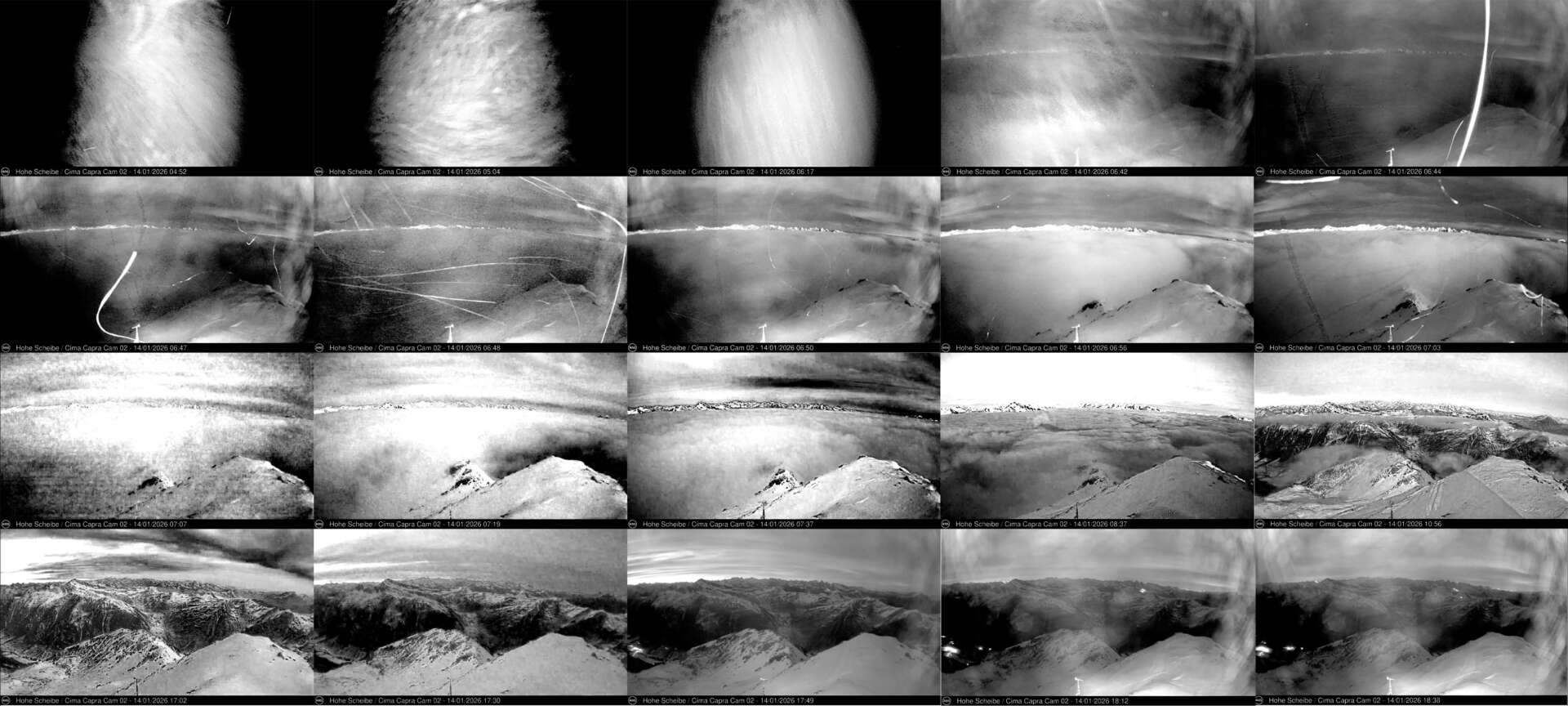
Figure 8: Stills from Distorted Video Transmission 03, Cima Capra, Italy, 14 January 2026. Webcam sequence alternating between distortion and clarity. Composition and selection by Renata Berta Saumell. Source: Autonomous Province of Bolzano – South Tyrol (RAS).
Methodologically, these moments are treated as events. A script detects and extracts frames affected by interference from continuous webcam streams (Fig. 9). This operation responds to the scale and continuity of the visual flow, which exceeds what can be manually attended. Attention must therefore be translated into a form that can operate in absence.
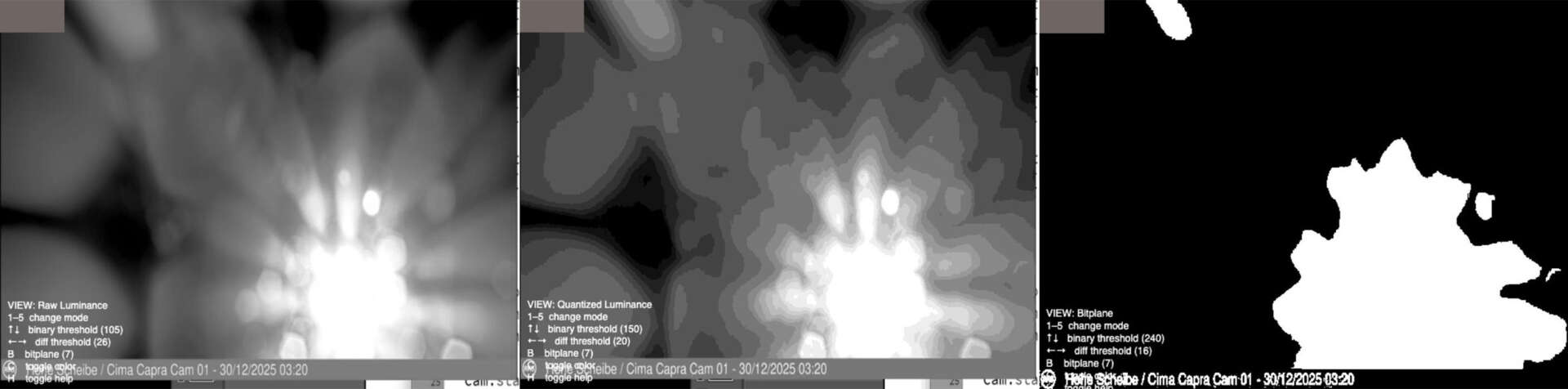
Figure 9: Script detecting moments of climatic interference and extracting distorted frames for material translation. Script developed by Rocco Modugno and Renata Berta Saumell.
The construction of this script requires translating embodied knowledge of the territory -its rhythms, weather patterns, and material behaviours-into computational criteria. What affects the body in the field -cold, humidity, reduced visibility, glare- also affects the camera as a material device (Fig. 10). The script operates at this intersection, transforming embodied perception into a distributed form of attention, where sensing is no longer exclusively human but shared across bodies, machines, and environments (Bridle, 2022). In this sense, the camera and the script cannot be understood as neutral tools, but as participants within a network of relations that includes human, technical, and environmental agencies (Bruno Latour, 2005).
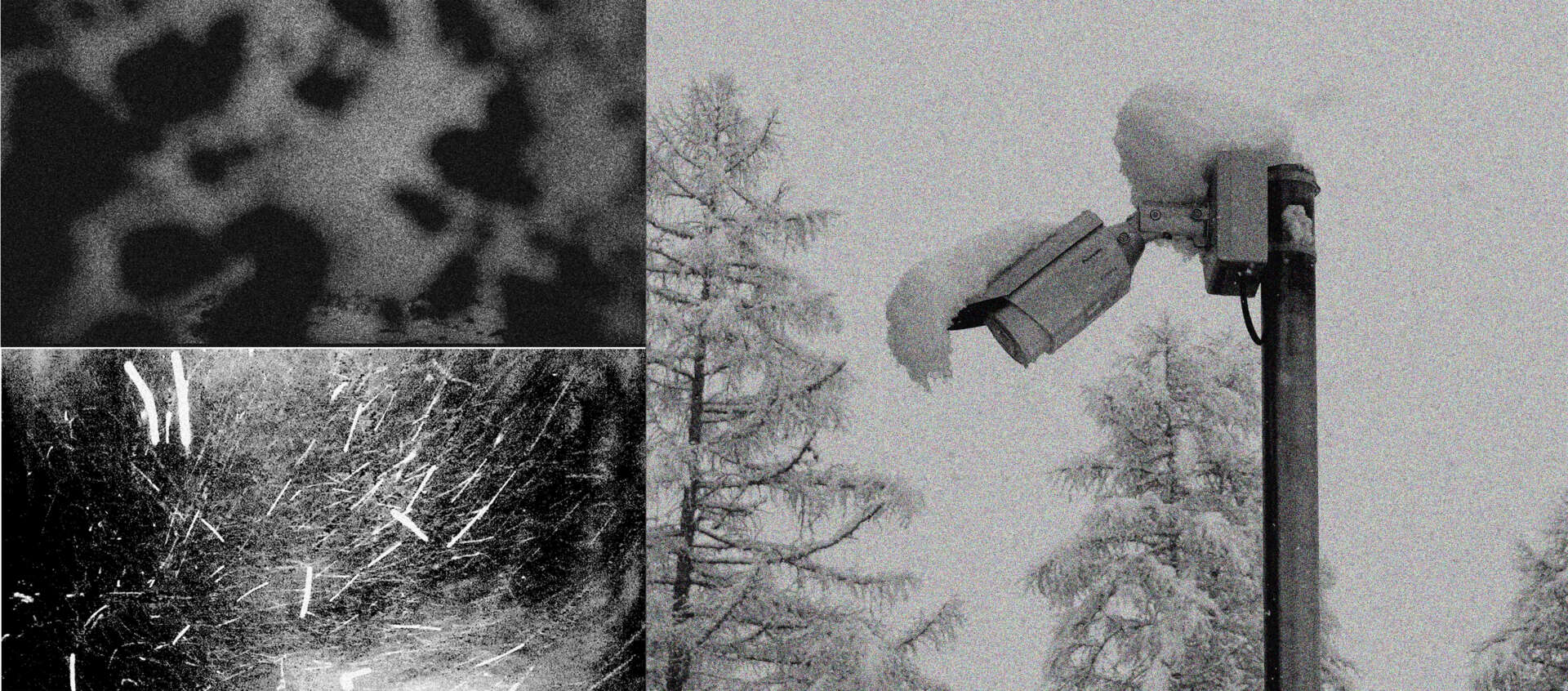
Figure 10: Webcam device affected by snow accumulation and corresponding image outputs registering this interference as a material process. Composition and selection by Renata Berta Saumell.
Through this process, an archive is produced (Fig. 11). It does not simply collect images but gathers the result of this translation. Each extracted frame is not a representation of the territory, but a trace selected through the alignment of body, machine, and environment. The archive therefore functions as a working material: a field in which absence is not only recorded but made operative. It allows these otherwise fleeting events to persist, accumulate, and be re-engaged.
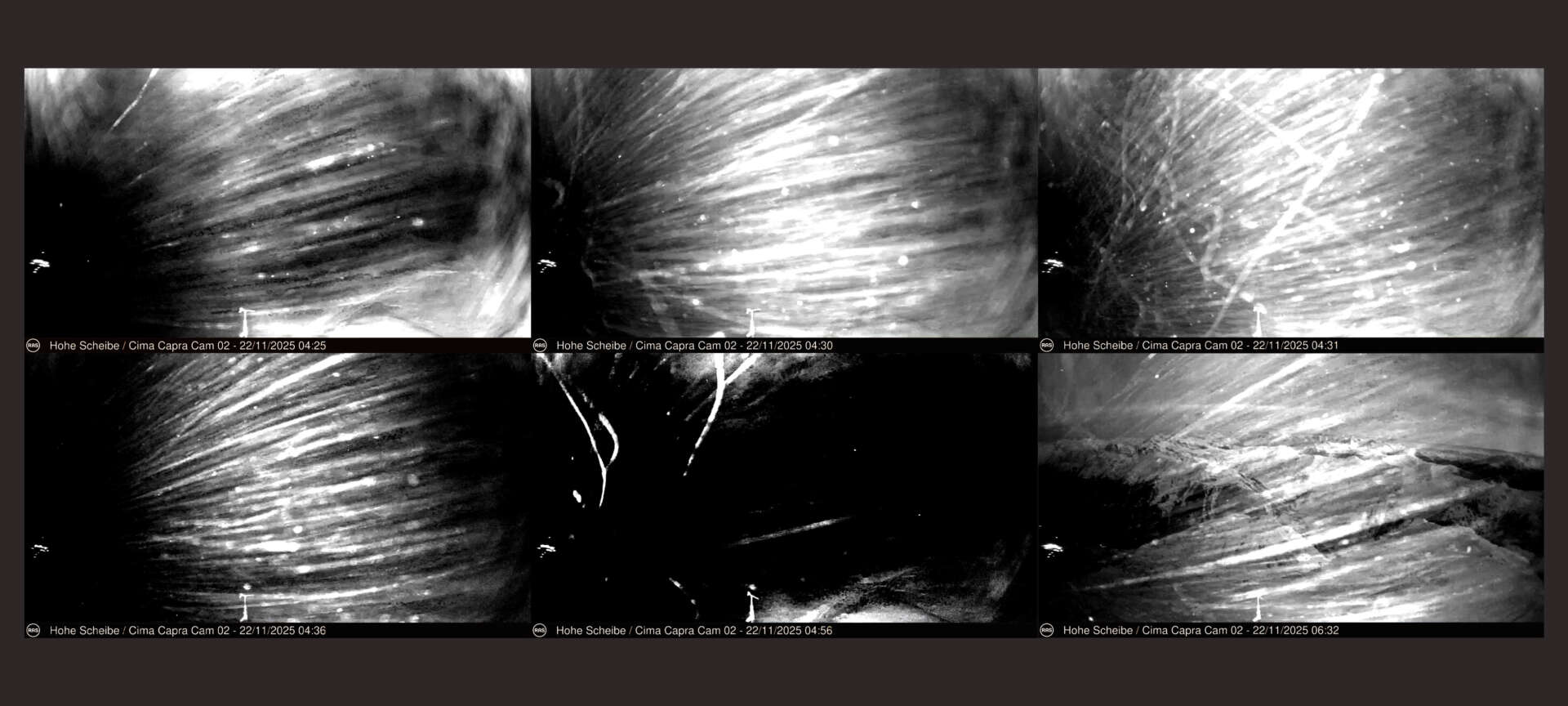
Figure 11: Stills from Distorted Video Transmission, Cima Capra, Italy, 22 November 2025. Webcam sequence alternating between distortion and clarity. Composition and selection by Renata Berta Saumell. Source: Autonomous Province of Bolzano – South Tyrol (RAS).
Because the script is continuously adjusted through encounters with the territory, the archive remains open and iterative. In this sense, the process involves an ongoing translation -from embodied experience to computational detection, and from mediated traces to further forms of engagement. Working with this archive therefore does not end in its accumulation but opens the need to transform it further.
Material Translation as an Epistemic Practice
The archive does not resolve how these traces can be engaged, nor how knowledge of absence can emerge from them. While it allows interruptions to persist and be revisited, it remains bound to a digital condition in which perception unfolds through screens and continuous image flows. The archive sustains the relation but does not yet fully activate it as an experience.
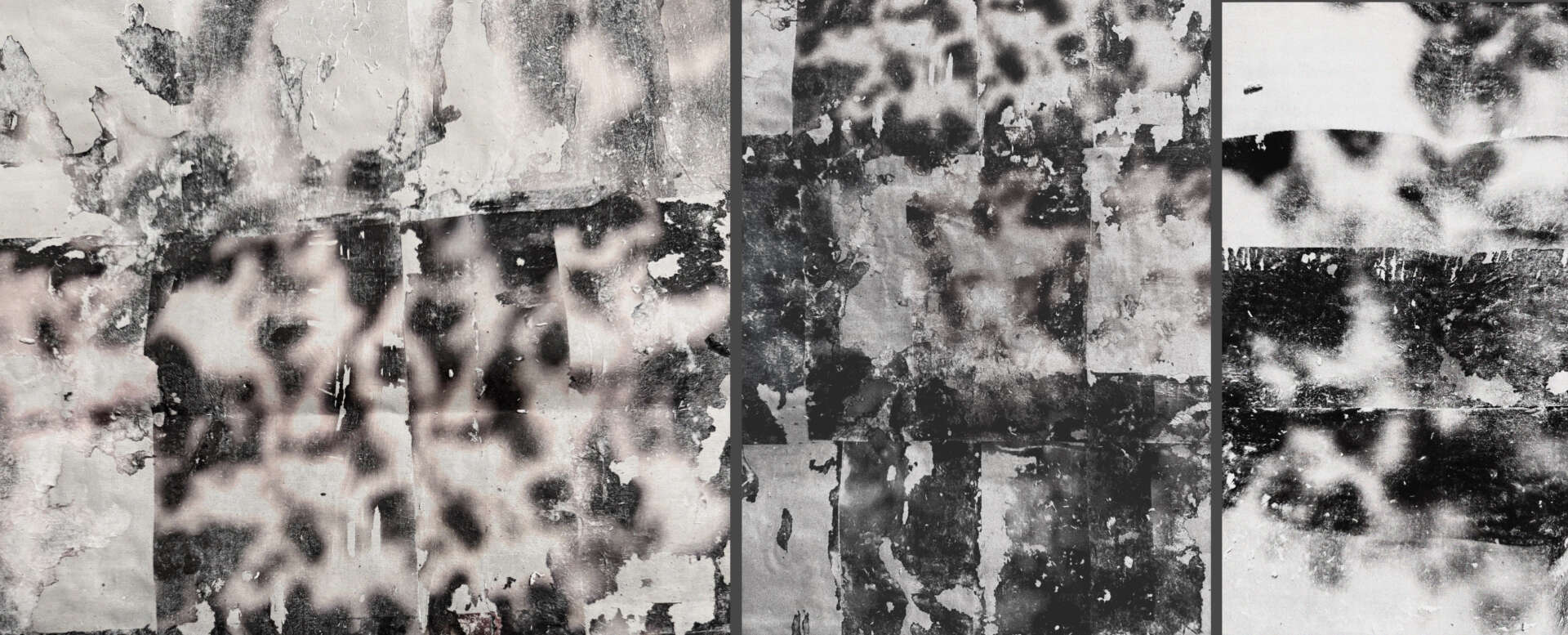
Figure 12: Early transfer experiments translating distorted webcam frames from inkjet prints onto canvas, foregrounding loss and transformation across media. Materials: canvas, transfer medium, inkjet print. Composition and selection by Renata Berta Saumell.
To address this condition, the research extends translation beyond the computational into the material. If the script translates embodied knowledge into detection, material translation continues this process across media. Translation is not understood as reproduction, but as transformation, where what is transferred is not the image itself but the conditions it carries. The archived images are therefore not restored but reworked as fragments that hold traces of atmospheric and temporal processes.
This transformation takes place through specific materials and techniques -printing, transfer, layering, and work on textiles (Fig. 12). Each passage from one medium to another entails a loss: resolution decreases, contours dissolve, and visual coherence is disrupted. Yet this loss is not a limitation. It produces a shift in how the image can be engaged. As the image is translated, it acquires weight, texture, and scale, reintroducing a material dimension that the digital condition suppresses. What emerges is not a clearer image, but a denser one -one that must be approached, handled, and situated in space. In this sense, knowledge is not extracted from the image but generated through processes of making and material engagement.
Through this process, each materialisation becomes a new instance of the relation. The image is no longer a representation of the territory, but a site where its processes are rearticulated. What is preserved is not visual fidelity, but a condition: the persistence of transformation across media. The relation is therefore not maintained intact but continuously reconfigured through what is lost and what is retained in each translation. Knowledge, then, does not reside in the image or in the observer alone. It emerges in this movement between media -between embodied experience, computational selection, and material form. The material objects do not provide direct information about the territory; instead, they enable a mode of engagement grounded in proximity, scale, and embodied memory. What becomes legible are not complete representations, but partial and situated traces that can only be understood through relation (Donna Haraway, 1988). At the time, the project continues to develop these material forms, exploring how different media and techniques can further elaborate distortion, absence, and loss as constitutive conditions of the research.
Conclusion
Relations with a territory do not depend on continuous presence but persist through absence. What is learned is not the landscape as form, but the conditions through which it resists being seen—fog, snow, condensation—processes that interfere with their own capture. The territory does not become clearer through observation; it asserts itself through distortion. By working with these interruptions, absence becomes methodologically operative. Knowledge is not extracted from the image, but produced through its transformation—across scripting, archiving, and material translation. What emerges are not representations, but traces that remain partial, unstable, and ongoing. The implication is a shift in how design engages landscape. Rather than seeking clarity, control, or prediction, this method remains with what exceeds them. In a moment when mountain environments are continuously captured, streamed, and consumed through images, the demand for visibility becomes a form of reduction. Against this, opacity is not a deficit but a refusal. As proposed by Édouard Glissant (1997), opacity is the condition through which relation can persist without being made fully transparent, legible, or extractable. To work from absence is not to know less, but to know differently: to remain in relation with a territory that cannot—and should not—be fully resolved.
Literature
Barad, K. (2007) Meeting the Universe Halfway: Quantum Physics and the Entanglement of Matter and Meaning. Durham, NC: Duke University Press.
Bennett, J. (2010) Vibrant Matter: A Political Ecology of Things. Durham, NC: Duke University Press.
Bridle, J. (2022) Ways of Being: Animals, Plants, Machines and the Search for a Planetary Intelligence. London: Allen Lane.
Farocki, H. (2004) ‘Phantom Images’, Public, 29, pp. 12–22.
Glissant, É. (1997) Poetics of Relation. Trans. by B. Wing. Ann Arbor: University of Michigan Press.
Haraway, D. (1988) ‘Situated Knowledges: The Science Question in Feminism and the Privilege of Partial Perspective’, Feminist Studies, 14(3), pp. 575–599.
Ingold, T. (2013) Making: Anthropology, Archaeology, Art and Architecture. London: Routledge.
Latour, B. (2005) Reassembling the Social: An Introduction to Actor-Network Theory. Oxford: Oxford University Press.
Paglen, T. (2014) ‘Operational Images’, e-flux Journal, 59.
Steyerl, H. (2009) ‘In Defense of the Poor Image’, e-flux Journal, 10.
Tsing, A. (2015) The Mushroom at the End of the World. Princeton: Princeton University Press.