
Loss is More Detailing towards a Media-Based Atlas of Modernist Heritage Fragmentation
Introduction
The research addresses the transformation of architectural heritage and the problem of extending the life of modernist buildings through contemporary adaptive reuse practices, focusing on the phenomena of modernist heritage fragmentation. It examines how the reconstruction of post-war architecture generates new forms of meaning, value, and continuity, often negotiating between preservation and loss. Additionally, the research outlines how design-driven methods can contribute to reinterpreting the material and cultural layers of modernist heritage.
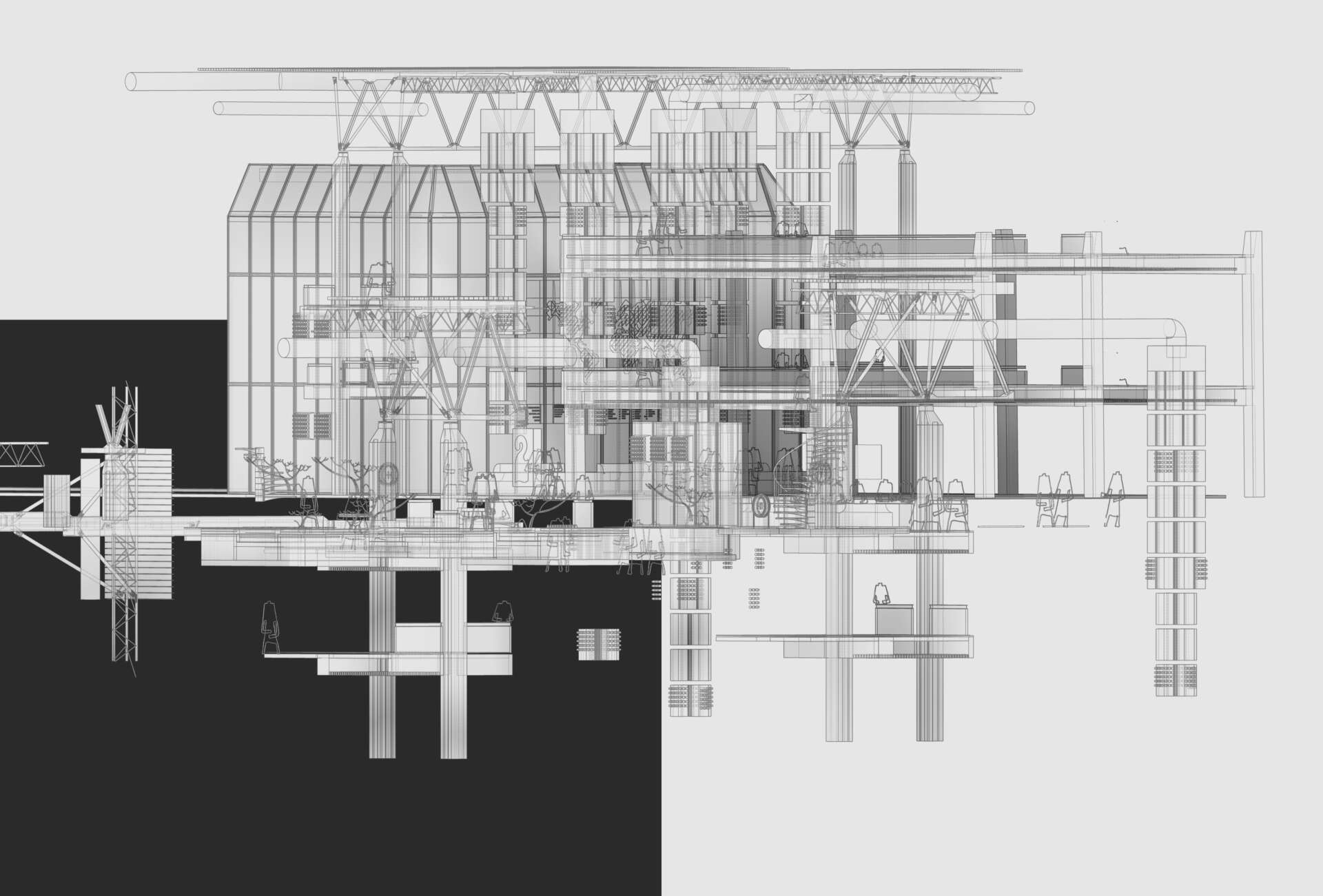
The presented work focuses on the transformation of the architectural detail, as a site where architectural identity, material agency, and historical narrative converge. Building upon earlier explorations of speculative detailing and post-tectonic studies, the research develops a media-based atlas as a design-driven framework for tracing and visualizing trajectories of modernist heritage fragmentation. Using the Sava Center in Belgrade as a pilot case study, the research investigates how the erasure of distinctive elements during recent reconstruction reflects broader processes of modernist heritage fragmentation and transformation. By reactivating lost details and tectonic fragments, the project articulates how design can engage with heritage not only as a restorative act but as a form of critical reinterpretation.
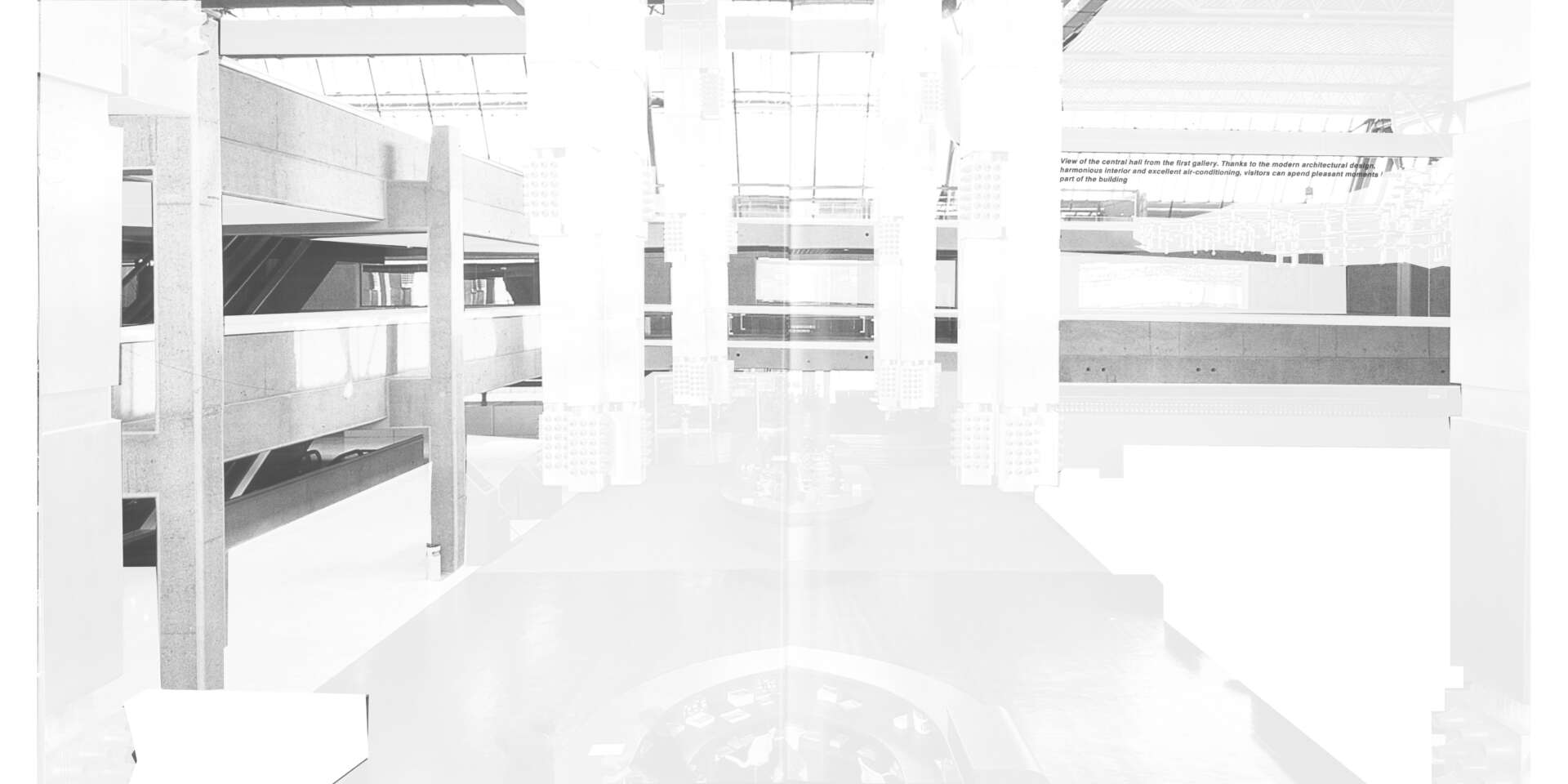
Figure 1: “Loss is More”, Collaged page from the brochure representing the loss in the main Lobby. Source: image by the author based on the original image, source: Jugoslovenska revija. Sava Center in Belgrade. Special edition. Belgrade: Sava Centar, n.d. p.14-15.
Methodological framework
Methodologically, the research combines interpretive 3D modeling, archival mapping, and critical drawing to re-narrate architectural loss through the lens of architectural detail. It positions detailing as a reflective and media-based mode of inquiry, in which representation operates as an instrument for revealing additional layers of heritage transformation. The process unfolds through iterative cycles of archival research, drawing, modeling, and archival intervention. Each iteration redefines the relationship between representation and material evidence, generating new readings of architectural loss. Through this continuous movement between documentation and speculation, between micro and macro scale, the Media-Based Atlas emerges as a cumulative field of inquiry in which sketches, models, and mappings trace the shifting trajectories between past conditions, current states and speculative emergent futures. Building on the premises of assemblage theory, the research framework defines four interrelated dimensions that interpret fragmentation as both a material and a conceptual condition: spatial, temporal, epistemic, and political (STEP). Within this structure, “Loss is More” becomes a generative concept, thematizing loss as an active field of reflection, learning, and reactivation. This approach repositions the architectural detail beyond its technical definition, framing it instead as a narrative and analytical device through which qualitative values and cultural meanings can be revealed. The iterative process of observing, sketching, modeling, mapping, and reinterpretation forms a temporal trajectory of its own, where each cycle of work becomes both documentation and transformation of the research subject. In doing so, together with the STEP dimensions, the research expands the scope of architectural inquiry toward other disciplinary domains, where design operates as both a critical, ethical and interpretive act.
Reflection On Trajectories
The research investigates the trajectories of transformation within modernist heritage, focusing on how processes of reconstruction redefine the relation between material continuity and cultural memory. Emerging from previous tectonic studies, where the architectural detail was observed as a locus of constructional logic and narrative meaning, the work evolves toward a broader inquiry into the afterlife of modernist buildings. The objective is not the restoration of the lost, but to understand how erasure itself becomes a productive field of knowledge, observed as a condition through which architecture may be critically reinterpreted.
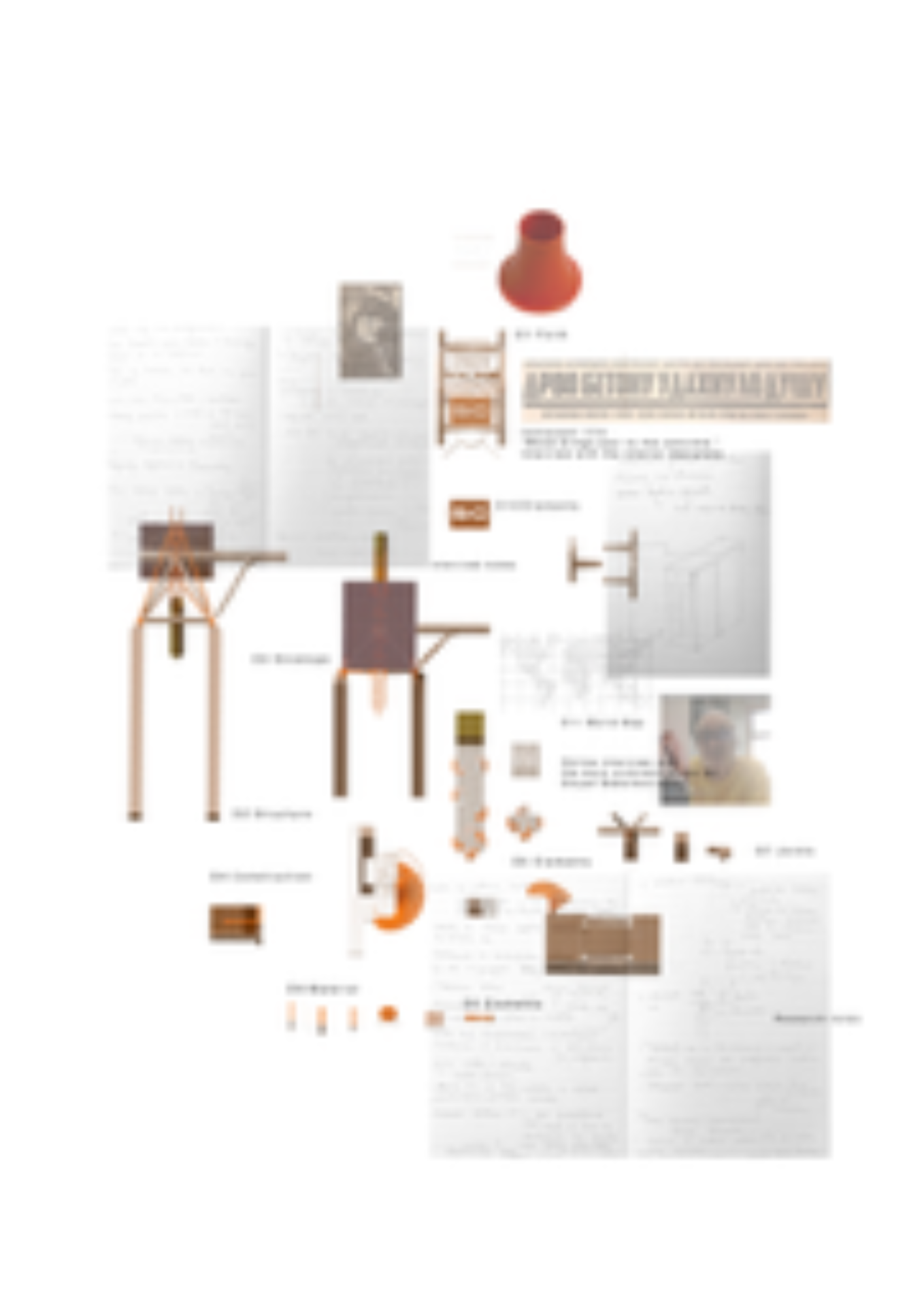
Figure 2: Research Trajectories (archival research, interviews, detailing, 3D interpretive models)
Source: Illustration by the author.
Trajectories in the Pilot Case Study
The Sava Center was selected as the pilot case study due to the continuity of prior research, the availability of original documentation, and the possibility of tracing its transformation across several temporal and material stages. Its scale, programmatic complexity, and symbolic status within Yugoslav modernism further position it as a critical example through which questions of adaptive reuse of post-socialist architecture could be examined. The case study serves as a site of experimentation and reflection, allowing heritage practice to be approached as a living concept with the capacity to inform future design strategies and modes of intervention. The research has evolved through a long-term engagement with the building, beginning in 2018 with access to its architectural archive and extensive on-site observation prior to reconstruction. This early phase provided direct physical insight into the building’s material and spatial logic, later complemented by interviews with the original architects and interior designer (2018–2019). As the reconstruction process unfolded between 2021 and 2024, several field visits and a return interview with the new stakeholders in 2025 enabled comparative documentation of the transformation and loss of key architectural features. Across these phases, the research gradually shifted from archival analysis and digital modeling toward a broader media-based inquiry into erasure and adaptive reuse. The continuity of these encounters shaped a methodological position where theory, practice, and experience intersect, grounding the development of the Media-Based Atlas within lived trajectories of architectural change (Figure 2).
In transitional socio-political contexts such as Serbia, where modernist architecture faces demolition, privatization, and administrative erasure (Europa Nostra, 2024; University of Belgrade-Faculty of Architecture, 2024; BINA, 2025; Delta Holding, 2024), these questions acquire urgency. The transformation of the Sava Center in Belgrade, while enabling the building’s survival, has also resulted in the disappearance of its distinctive material features. The study uses this condition as a framework to inquire how design can operate within, rather than against, the complexity of heritage transformation. The Sava Center thus functions as a pilot case for testing media-based methods of reading, reconstructing, and narrating architectural loss. The theoretical foundation is built upon Manuel DeLanda’s assemblage theory, previously explored through post-tectonic analysis, where the architectural detail is understood as an assemblage of relations between material, drawing, and imagination. Its identity is not understood as inherent in the object itself, but emerges through its reconfiguration, through territorialization and deterritorialization to the whole, and the emergent properties that follow. This perspective situates the architectural detail as an active component within a dynamic field of forces, as a position of the continuous negotiation between material presence, absence and conceptual reinvention. In this study, it is regarded as a process that parallels the physical and narrative fragmentation through the adaptation of architectural heritage. Furthermore, Bruno Latour’s notion of “drawing things together” is included as an additional conceptual lens for understanding media-based approach as a generative act, where representation itself becomes a site of knowledge production.
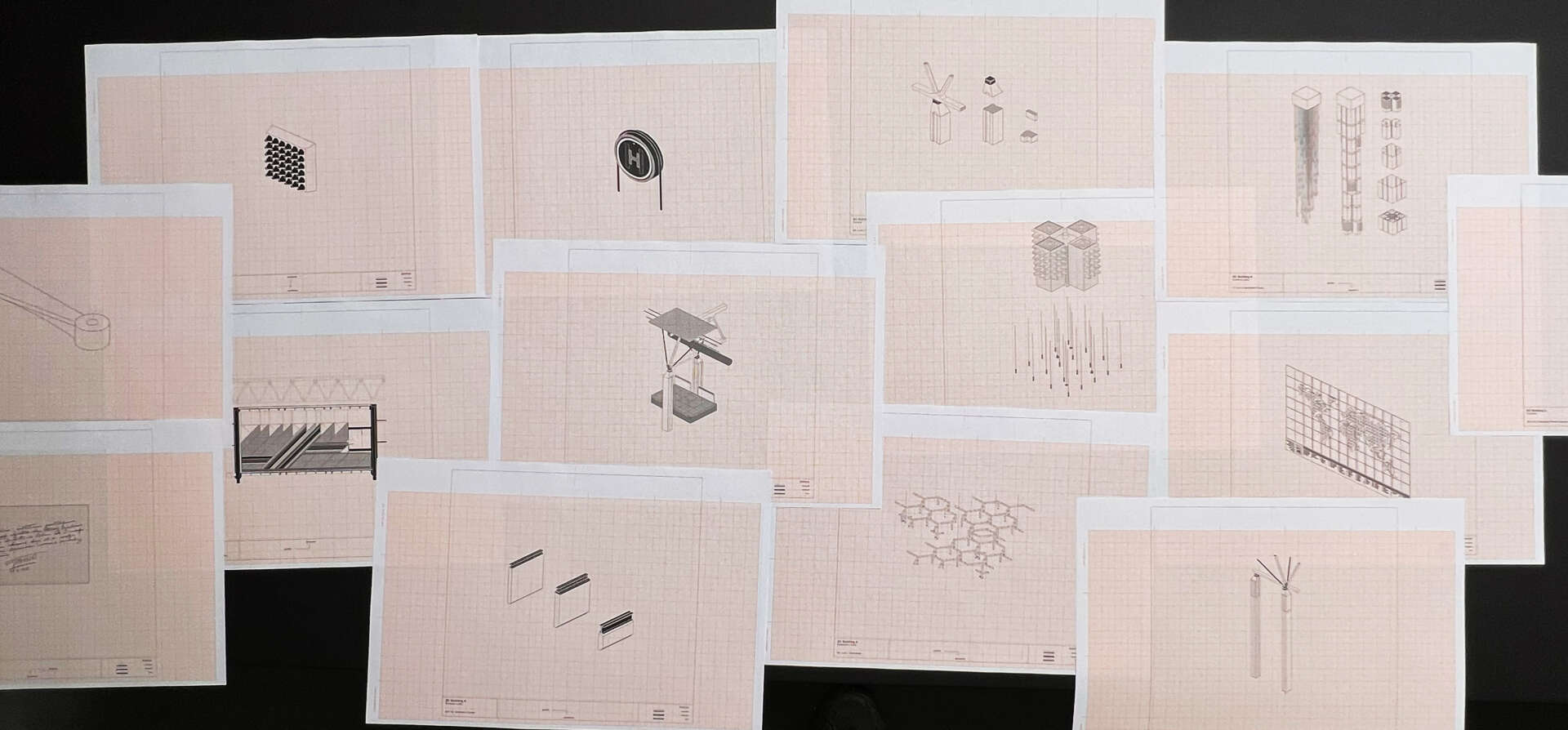
Figure 3: Detail portfolio: Comparative study of transformed and erased tectonic elements
Source: Illustration by the author.
Figure 4: Cover of the brochure Sava Center in Belgrade (c. 1977.)
Title page of the original publication Sava Center in Belgrade, published by The Yugoslav Review in cooperation with the Belgrade Culture Center Source: Scan of the original publication by the author.
STEP Dimensions as Analytical Framework
The analysis is structured through the STEP framework (Spatial, Temporal, Epistemic, and Political dimensions) designed to trace the relationship between fragmentation and reactivation of the built substance on the scale of detail. In practice, the framework operates as a shifting matrix through which fragments of the Sava Center as a pilot case study are examined. Spatial trajectories map the displacement of interior elements such as ceilings and ventilation clusters, while temporal investigation reconstructs their successive transformations across design, use, and reconstruction phases. Epistemic interpretation addresses how these fragments mediate between drawing and material knowledge, and the political dimension reveals how economic and institutional agendas shape decisions of preservation, erasure, or adaptation. Together, these dimensions situate architectural detailing as both a technical and a cultural act, providing a structure that connects micro and macro scales and exposes how material and conceptual transformations unfold through time. Furthermore, STEP framework contributes to the development of the Media-based Atlas, underlining and extending its function as a design instrument for mapping the transformations of modernist heritage. The work ultimately positions the architectural detail as both medium and method, a site through which the layered conditions of transformation can be critically observed and reactivated. The Atlas functions as a visual and analytical document that gathers trajectories of loss, mapping the dynamic processes of modernist heritage fragmentation and connecting their spatial and conceptual relations. In this sense, tracing trajectories becomes a double movement: from fragment to system, and from disappearance towards new forms of presence. Within this evolving process, the research recognizes detail as a mediating instrument between form, memory, and heritage transformation. The Media-Based Atlas therefore functions not only as a record of what is lost, but also as a performative tool for understanding how knowledge about architecture is produced, translated, and shared through design.
Toward a Media-Based Atlas
The Media-Based Atlas has been recognized within the research as a framework capable of integrating diverse forms of information while maintaining openness to uncertainty and incompleteness. Its structure reflects the dual ambition of assembling a coherent body of knowledge and preserving the fluidity necessary to address ongoing transformations. In the current phase, the research extends toward renewed engagement with public institutions and professionals involved in the reconstruction, adding a new informational layer to the existing material. Many erasures remain interpreted as undefined maps—gaps awaiting further contextualization, explanation, and ethical reflection. These voids are approached through the STEP framework, which provides a structure for articulating and reframing the complex relations between knowledge, responsibility, and transformation.
Experimental Presentation Format
The presentation represents an ongoing phase of the research and focuses on the original architectural brochure Sava Center in Belgrade, published by The Yugoslav Review and the Belgrade Culture Center in the late 1970s (Figure 5). Treated as both document and medium, the publication is reinterpreted through a series of digital and physical interventions (erasure, cutting, and layering) to reveal the spatial and material transformations that occurred during the building’s reconstruction (Figure 1). Alongside the portfolio of details (Figure 3) and a set of 3D interpretive proxies (Figure 4), the presentation forms part of a broader investigation into how loss can be recorded and reactivated through design. It is conceived as an evolving experiment, where re-drawing and re-layering operate as design-driven methods that mediate between archival evidence, interpretive modeling and reconstruction (Figure 5). The forthcoming research phase will extend these explorations through new on-site documentation once access to the reconstructed building is granted.
In this process, the Media-Based Atlas emerges as a living document that unarchives knowledge instead of preserving it in a fixed state. It gathers fragments, relations, and interpretations and brings them into new constellations. Through successive additions and translations, the atlas begins to function as an assemblage in its own right, evolving in form, meaning, and conceptual structure.
Literature
DeLanda, M. (2006) A New Philosophy of Society: Assemblage Theory and Social Complexity. London: Continuum.
DeLanda, M. (2006) ‘Deleuzian Social Ontology and Assemblage Theory’, in: Deleuze and the Social, edited by Martin Fuglsang and Bent Meier Sørensen. Edinburgh: Edinburgh University Press, pp. 250–266.
Latour, B. (1990) ‘Drawing Things Together’, in: Representation in Scientific Practice, edited by Michael Lynch and Steve Woolgar. Cambridge, MA: MIT Press, pp. 19–68.
Frascari, M. (1984) ‘The Tell-The-Tale Detai’, VIA 7 (1984), pp. 22–37.
Ford, E. (2014) ‘The Grand Work of Fiction: The Detail as Narrative’, Architectural Design 84, no. 5, pp. 26–35.
Till, J. (2009) Architecture Depends. Cambridge, MA: MIT Press.
Kostić, M. (2021) Architectural Detail in Contemporary Tectonic Practice: Methodological–Interpretive Model. PhD diss., University of Belgrade – Faculty of Architecture.
Kostić, M. (2022) ‘Post-Tectonic Translations: Decoding Poetics of Architectural Detail’, Serbian Architectural Journal 12, no. 3, pp. 85–101. DOI: 10.5937/saj2002085K.
Jugoslovenska revija. Sava Center in Belgrade. Special edition. Belgrade: Sava Centar, n.d.
Europa Nostra. ‘Joint Statement Calling for the Withdrawal of the Proposed Lex Specialis Law Related to the Generalštab Modernist Complex in Belgrade, Serbia’. Accessed November 2025.
https://www.europanostra.org/j...
Delta Real Estate. ‘Obnovom Plave dvorane završena rekonstrukcija Sava Centra’. Accessed September 15, 2025. https://deltarealestate.rs/mixed-use/obnovom-plave-dvorane-zavrsena-rekonstrukcija-sava-centra/