
Material Afterlives of Division Human and Non-Human Interventions on Modern Europe – An Post-Conflict Dividing Walls
Introduction
The construction of dividing walls, ranging from international borders to urban barriers, is accelerating (Vallet 2017), resulting in the fragmentation of communities through physical structures. As the challenge of climate change remains unresolved, the phenomenon of climate migration is poised to intensify, thereby exacerbating the difficulties already observed at borders. Furthermore, as populism continues to present itself as a viable political force, there is a persistent tendency among its proponents to advocate for, and indeed construct, additional walls (Brown, 2010). These developments underscore the urgent need to examine the evolving role and impact of such walls in contemporary urban contexts.
Despite extensive research on border walls, there remains a significant gap in architectural scholarship regarding the materiality of post-conflict dividing walls and the interventions, both human and nonhuman, that occur after formal peace is established. Existing studies often conclude with the cessation of conflict(Calame and Charlesworth 2009, and Kliot and Mansfield 1997), overlooking the transformation of these structures into memorials, sites of preservation, or targets for demolition. This research addresses this gap by focusing on the period following established peace, investigating how edits, interventions, and spontaneous ecological growth shape the trajectory of these walls.
My doctoral project undertakes a comprehensive examination of modern European post-conflict dividing walls, with particular emphasis on the Belfast peace lines during the second year of the project. It explores the diverse interventions that manifest in and around these borderland spaces, such as the emergence of graffiti and murals, as well as the development of biodiversity arising from dereliction in these areas. The research seeks to extend current understandings of conflict timelines (Atun and Doratli 2009; Calame and Charlesworth 2009), specifically by including the period following the formal declaration of the end of conflict. In addition, it investigates the spatial trajectories and material characteristics that shape both human and ecological interactions with these structures. More specifically, the study examines the factors that facilitate individuals to create graffiti on these walls, as well as the environmental conditions that promote the spontaneous growth of weeds and other forms of nature in neglected sites. Particular attention is devoted to identifying the types of wall or fencing materials most conducive to artistic expression or ecological colonisation, considering how their physical properties may either invite painting or enable the proliferation of plant life.
Employing a mixed-methods approach, the research integrates architectural techniques such as spatial mapping, the creation of digital models, and qualitative interviews with key stakeholders, including local peace process NGOs, artists, and policymakers. This methodological framework allows for a nuanced exploration of
both the physical and social dimensions of post-conflict walls. Recent fieldwork has revealed a remarkable variety of materialities in and around the walls, from printed aluminium sheets coated in plastic to canvas framed in plywood and painted surfaces. Nonhuman elements, though less populous, possibly due to seasonal factors, include birds, moss, lichens, weeds, grasses, and even buddleia growing atop the walls. These observations suggest that both artistic and ecological interventions are influenced by local climate and material conditions.
Preliminary findings indicate that the transformation of these walls is shaped by a complex interplay of social, political, and environmental factors. The anticipated outcomes of this research include the formulation of guidelines for designated art installation areas and recommendations for zones to be left for natural reclamation. These guidelines are intended to empower local communities to consider the future of these walls, whether as memorials, preserved sites, or candidates for removal. Through a series of design-by-research mini-projects, the project will culminate in a brief and a set of actionable recommendations, enabling residents to actively participate in shaping the destiny of their urban environment.
Ultimately, this research-through-design framework aspires to support the transformational trajectory of post-conflict walls, guiding their evolution from security infrastructure towards new roles as cultural landmarks or ecological spaces that both reflect and enrich the local context. By bridging the gap between architectural theory and community practice, the project seeks to contribute not only to academic discourse but also to the lived experience of those residing in proximity to these contested structures.
In addition to the aforementioned aims, this research situates itself within a broader discourse on the politics of urban space and the agency of communities in post-conflict environments. The study recognizes that dividing walls are not merely inert barriers but are dynamic entities that continue to shape social relations, urban morphology, and ecological processes long after the cessation of overt conflict. By foregrounding the period of transformation that follows peace agreements, the project challenges conventional narratives that treat walls as static relics of past violence. Instead, it posits that these structures are subject to ongoing negotiation, reinterpretation, and reappropriation ie, interventions by diverse actors, human and nonhuman.
The research also acknowledges the importance of interdisciplinary perspectives, drawing on insights from urban studies, environmental psychology, and cultural geography to enrich its analysis. By integrating these perspectives, the study aims to develop a holistic understanding of post-conflict walls as sites of contestation, creativity, and ecological regeneration. The ultimate goal is to inform policy and practice in ways that foster inclusive, sustainable, and culturally resonant urban environments.
Literature review
This literature review adopts a systematic and comprehensive approach to the selection and evaluation of relevant sources, ensuring a robust foundation for the research. The primary focus is on European post-conflict city walls, specifically those constructed in urban settings and arising from post-conflict scenarios. To maintain clarity and relevance, the review explicitly includes studies that examine walls built in European countries under post-conflict conditions and excludes those outside these parameters.
However, to provide a richer analytical context and strengthen the theoretical framework, the review also incorporates literature that extends beyond the immediate scope of modern European walls. This includes studies on border walls and ancient city walls from various regions around the world. For instance, the work of Jones (2016) on the US-Mexico border wall and Vitruvius and Rowland (2014) on ancient theories of city walls have been purposefully included. These sources are pertinent as they offer valuable insights into the motivations behind wall construction, the reasoning processes that inform such architectural decisions, and the analytical methods used to examine these structures.
By integrating both region-specific and globally relevant literature, this review aims to elucidate the multifaceted nature of dividing walls. The inclusion of diverse case studies and theoretical perspectives not only enriches the analysis but also enables a more comprehensive understanding of the social, political, and material factors that influence the construction and transformation of walls in post-conflict urban settings (Monticelli, 2020; Silver, 2010). This approach ensures that the review is both rigorous and inclusive, laying a solid foundation for the subsequent research and analysis.
The literature reveals three principal themes that are particularly salient within the architectural discourse on dividing walls. First, the political dimensions of wall construction and maintenance are explored through the works of Calame and Richard (2010), whose comparative analyses underscore the significance of political context and advocate for bottom-up approaches as potentially yielding the most constructive outcomes. Second, the theme of interventions—both human and non-human—is examined through the lens of Rael (2017), who investigates fictional and non-fictional installations along the US-Mexico border wall. While Rael’s research may lack methodological rigour in certain respects, it is complemented by the contributions of Shulyk et al. (2024), who investigate the use of plants as architectural elements during conflict, with a particular focus on the Ukrainian war, while Hanauer (2011) delves into the political implications of graffiti on the Israel-Palestinian wall. The third theme centres on the temporal dimension of wall interventions, drawing on Calame and Charlesworth (2009), who articulate a timeline from the initial construction of walls to the cessation of physical violence. This thematic structure provides a comprehensive framework for understanding the complex interplay of politics, materiality, and temporality in the evolution of dividing walls.
The conceptualisation of city and border walls has undergone significant transformation over time, reflecting shifts in architectural, political, and material paradigms. Early texts, such as those by Morris (1994), discuss the historical significance of city walls, while more recent research has focused on the construction and analysis of specific case studies, including those in Belfast. A pivotal moment in the field occurred with the fortification of the United States following the events of 9/11, which catalysed a broader interest in securitisation and the proliferation of border walls. This period marked the emergence of ‘border studies’ as a distinct interdisciplinary field, characterised by rapid scholarly development and the production of comparative analyses. The construction of the Trump border wall, for example, inspired a series of publications by Rutledge, Cooper and Tinning (2020), further expanding the discourse. Contemporary research now revisits issues of securitisation in light of ongoing conflicts in Ukraine and Palestine, underscoring the dynamic and evolving nature of wall studies.
The current state of research on border walls is distinguished by its interdisciplinary scope and geographical diversity. Scholars from political science, economics, sociology, and anthropology have contributed to a nuanced understanding of the multifaceted roles and implications of these structures. Key figures such as Brown, Jones, Calame and Vallet have shaped the discourse by offering perspectives on the socio-political, economic, and cultural significance of border walls. Research is being conducted across a range of countries, including the United Kingdom, Northern Ireland, Cyprus, Turkey, and the United States, thereby enriching the analysis with diverse contextual insights. Despite this breadth, there remains a need for more integrative and comparative research that examines the interplay between environmental, artistic, and material culture factors in wall interventions. Future studies should adopt a holistic approach, systematically comparing these dimensions to achieve a comprehensive understanding of the impact and significance of border walls. Such an approach will facilitate deeper insights into the complex dynamics surrounding these structures and inform more effective policy decisions.
Recent years have witnessed significant technological advancements in the study and construction of border walls, elevating the field to a critical area of inquiry within border studies. These structures, which have long served functions such as security, population delineation, and the assertion of sovereignty, are now being examined through the lens of technological innovation. The historical context of urban walls reveals their enduring significance and the multifaceted roles they play in contemporary geopolitics. Political scientists have provided a robust foundation for this research, contributing to the emergence of border studies as a distinct interdisciplinary field. The depth and diversity of perspectives and methodologies within this field are essential for understanding the complexities of border walls. Notably, scholars such as Brown, Jones, Calame and Vallet have made substantial contributions, shaping the discourse and offering valuable insights into the evolving materiality and technological dimensions of wall construction and intervention.
The social and cultural context in which walls are constructed and maintained plays a pivotal role in shaping their architectural character and significance (Nagle, 2009). The politics of wall construction are increasingly influenced by factors such as climate change, migration, and shifting societal values. These dynamics necessitate a reevaluation of traditional approaches to wall design and intervention, emphasising the importance of context-sensitive and culturally informed strategies.
Environmental research has focused on the ecological impact of border walls, particularly in relation to wildlife migration, habitat fragmentation, and environmental degradation (Zmelik et al., 2011; Gurung et al., 2009). Artistic research has explored the cultural and symbolic significance of art installations and styles, yet these studies have often been conducted in isolation, without adequately considering the interplay between environmental and artistic factors (McAtackney, 2011; Hocking, 2012). To address this gap, future research should pursue a more integrative approach, systematically comparing and contrasting these dimensions to provide a holistic understanding of their impact and significance. Comparative studies of the US-Mexico border, the Israel-Palestinian wall, and the Indian-Pakistani wall (Jones, 2016) offer valuable insights into the commonalities and differences in the roles and implications of these structures.
Furthermore, comparative research has highlighted the importance of examining both large-scale border walls and smaller city dividing walls. While the former have received considerable attention due to their political and environmental impact, the latter remain understudied, in part because of their relative scarcity and shorter length (Abdelmonem & McWhinney, 2015). Studies on the environmental impact of border walls have predominantly focused on border regions, such as the US-Mexico divide, but have also noted the ecological benefits of abandoned sites along the Iron Curtain, which have become thriving habitats for local wildlife. The literature identifies significant gaps, including the absence of comparative studies on European city walls, a lack of material studies addressing both human and non-human interventions, and insufficient research on the life cycle of walls from the end of conflict to the process of memorialisation.
This research aims to address these gaps by examining the timelines and trajectories of European walls through a material lens, focusing on both human and non-human interventions. Drawing inspiration from Calame’s work and extending it beyond the “third generalisation,” the study also incorporates insights from Kowarik’s (2011) analysis of the Berlin Wall as an “uncomfortable monument.”
In addition to the themes outlined above, recent scholarship has begun to interrogate the symbolic and psychological dimensions of dividing walls (Summa, 2019). For example, Brown (2010) explores how walls function as both literal and metaphorical boundaries, shaping collective memory and identity in post-conflict societies. This perspective is echoed in the work of Jones (2016), who argues that the persistence of walls in urban landscapes reflects deeper anxieties about security, belonging, and exclusion. Such analyses underscore the importance of considering not only the physical and material aspects of walls but also their affective and symbolic resonance.
Technological innovation has also emerged as a critical area of inquiry. Advances in surveillance, construction materials, and digital mapping have transformed the ways in which walls are built, monitored, and represented. Scholars such as Vallet (2014) and Casey and Watkins (2014) have examined the implications of these technologies for both security and artistic intervention, highlighting the complex interplay between control and creativity in contemporary wall studies.
Moreover, interdisciplinary approaches have enriched the field by integrating insights from environmental psychology, cultural geography, and urban ecology (Webster, 2006; Hickey, 2014). For instance, research on the ecological succession of abandoned walls has revealed unexpected patterns of biodiversity and habitat creation, challenging conventional narratives of dereliction and decay (Zetter & Blitz, 2014; Mell, 2019). Artistic interventions, meanwhile, have been analysed as forms of resistance, commemoration, and community engagement, with scholars such as Hanauer (2017), Hasan and Bleibleh (2023), and Rael (2015) documenting the diverse media and methods employed by artists in contested spaces.
Despite these advances, significant gaps remain. There is a pressing need for longitudinal studies that track the evolution of interventions over time, as well as comparative analyses that examine the interplay between materiality, climate, and social context across different regions. By addressing these gaps, the present research aims to contribute new insights to the field and inform future policy and practice.
Research Questions and Hypotheses
This research is fundamentally concerned with understanding the dynamic transformations that occur to city dividing walls over time, particularly in post-conflict urban environments. The central research question guiding this study is:How does materiality impact the types and nature of interventions that occur in and around post-conflict walls?
To address the main research question, several supporting sub-questions have been formulated. These sub-questions are distinct from the research aims, as they are designed to probe specific aspects of the phenomenon under investigation:
How does time affect the materiality of post-conflict walls and the interventions enacted upon them?
To what extent do various actions, whether political, economic, policy-driven, artistic, or ecological, influence the materiality and the range of possible interventions on these walls?
What frameworks should be developed and employed to guide future interventions and the ongoing management of post-conflict walls?
These questions collectively aim to catalogue the different types of post-conflict walls, with the goal of selecting archetypal cases for further, in-depth investigation. The research seeks to develop a series of methodological approaches for examining both human and non-human interventions in post-conflict walls across modern Europe. This will be piloted through an exploration of the peacelines in Belfast, serving as a foundational case study. Subsequently, the tested approach will be applied to additional cases through comparative analysis, thereby addressing the overarching research questions.
This project is conceived as a design-through-research initiative, with the final phase dedicated to creating a framework that enables communities to reimagine and transform these walls, from their original function as security infrastructure to new roles as cultural or ecological icons within their localities. The structure of this literature review section is intended to support and clarify the rationale behind these research questions and the methodological choices made.
While the research is exploratory in nature, several hypotheses and propositions are anticipated. It is expected that the material composition of post-conflict walls will significantly influence both the type and persistence of interventions, whether artistic or ecological. Political, economic, and policy actions are also expected to play a critical role in shaping the possibilities for transformation, while artistic and ecological interventions may serve as catalysts for reimagining the function and meaning of these structures. Ultimately, the development of a robust framework for future interventions is anticipated to empower communities to guide the evolution of post-conflict walls toward outcomes that reflect local values and aspirations.
Methodology
This research adopts a mixed-methods approach, integrating both qualitative and quantitative methodologies to ensure a robust and multifaceted analysis of post-conflict urban dividing walls. The rationale for employing mixed methods lies in the complexity of the subject matter, which encompasses not only the materiality of architectural structures but also the diverse human and non-human interventions that shape their evolution over time. Qualitative techniques, such as in-depth interviews, field observations, and trace analysis, are employed to capture the nuanced perspectives of stakeholders and the subtle transformations occurring within these spaces. Quantitative methods, including digital odelling and cataloguing, provide empirical rigor and facilitate the systematic comparison of case studies. The overall research design is structured to allow for iterative cycles of data collection and analysis, thereby enabling the triangulation of findings and the validation of emergent themes.
The selection of case studies is guided by a set of rigorous criteria designed to ensure both relevance and representativeness. Specifically, the research focuses on European urban sites that have experienced post-conflict scenarios, as these contexts offer rich opportunities for examining the interplay between architectural materiality and socio-political transformation, while also being geographically accessible to the researcher. The chosen cases are emblematic of broader phenomena, allowing for the extrapolation of findings to similar settings. Materials and subjects are selected based on their capacity to illuminate the research questions, with particular attention paid to the diversity of interventions, both human and ecological, that occur in and around these walls. The areas under investigation extend one and a half miles from the walls, reflecting the economic and social area of influence(McCord J.,McCord M.J.,McCluskey W.,Davis P.,McIhatton D.,Haran M. 2013).
A comprehensive suite of data collection tools is employed to capture the multifaceted nature of interventions on post-conflict walls. These include:
Desktop Studies: Utilization of web-available images, such as those from Google Earth, Google Street View, and satellite maps, to document spatial configurations and changes over time. These images are further processed using software such as Photoshop and Illustrator to enhance visual analysis and support comparative studies. (Rose 2016),
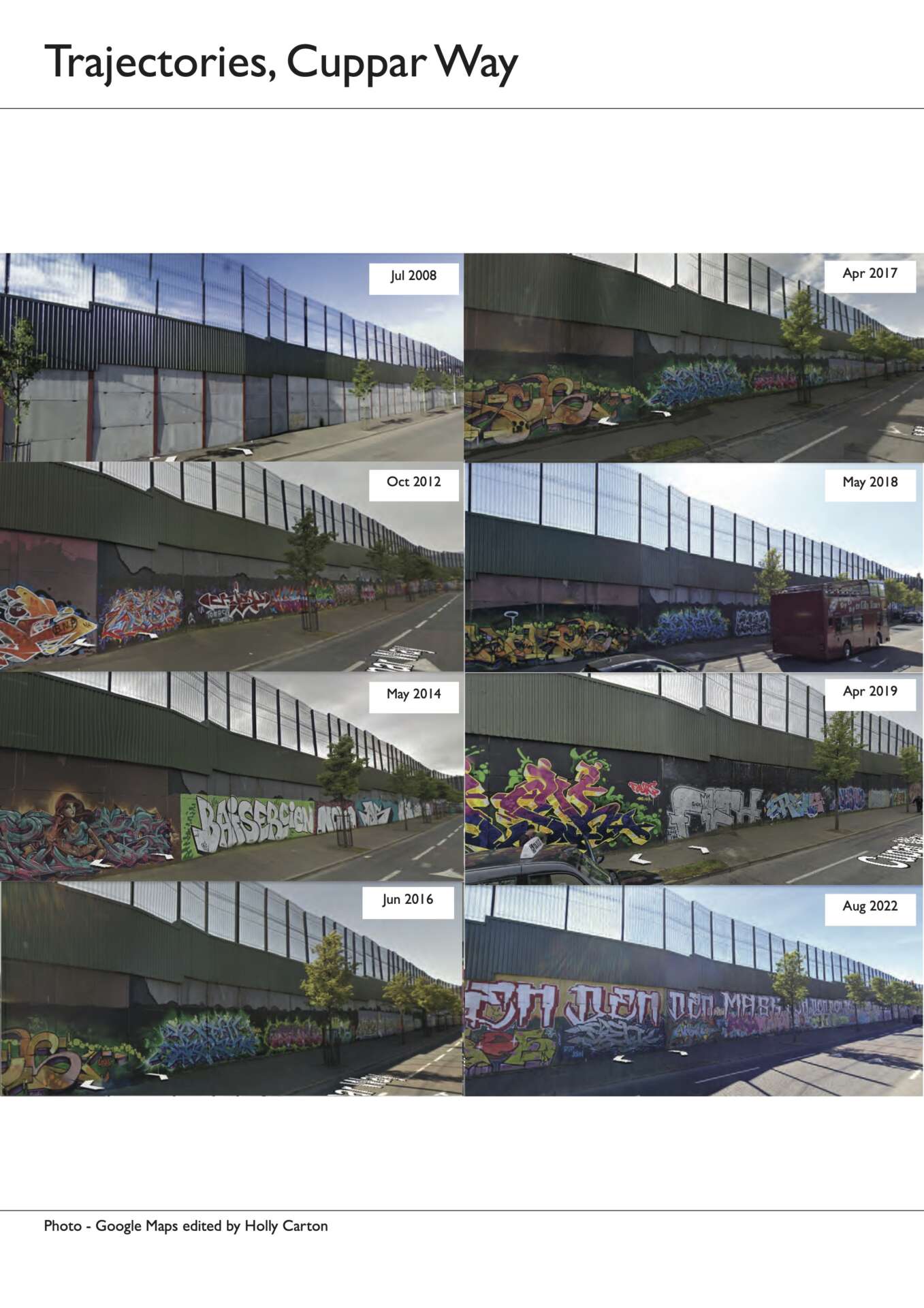
Figure 1: Desktop studies, Credit: Google Maps, 2025
Digital Modeling: Simulation of weather and light conditions, as well as public and private interventions, to understand environmental and social dynamics. This is conducted using Rhino and Grasshopper, with outputs refined in Photoshop. (Ewing and Park, 2020)
Credit: Holly Carton, Baced on maps from OSNI
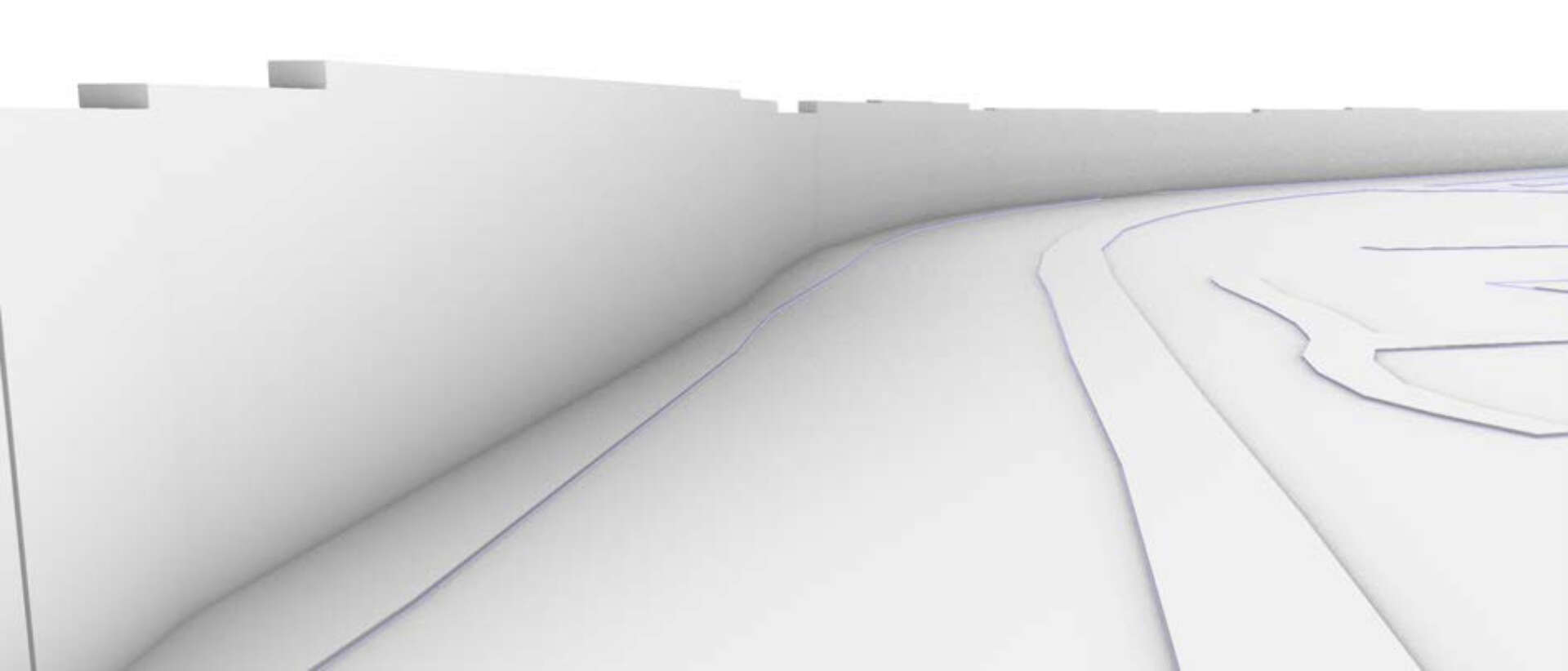
Figure 2: Digital Model, Credit: Holly Carton
Architectural Drawings: Detailed drawings of each wall and the surrounding art, including axonometric representations of how weeds or art interact with the walls. These are produced using AutoDesk, Illustrator, and Photoshop. (Leavy 2020)
Credit: Holly Carton, Baced on maps from OSNI
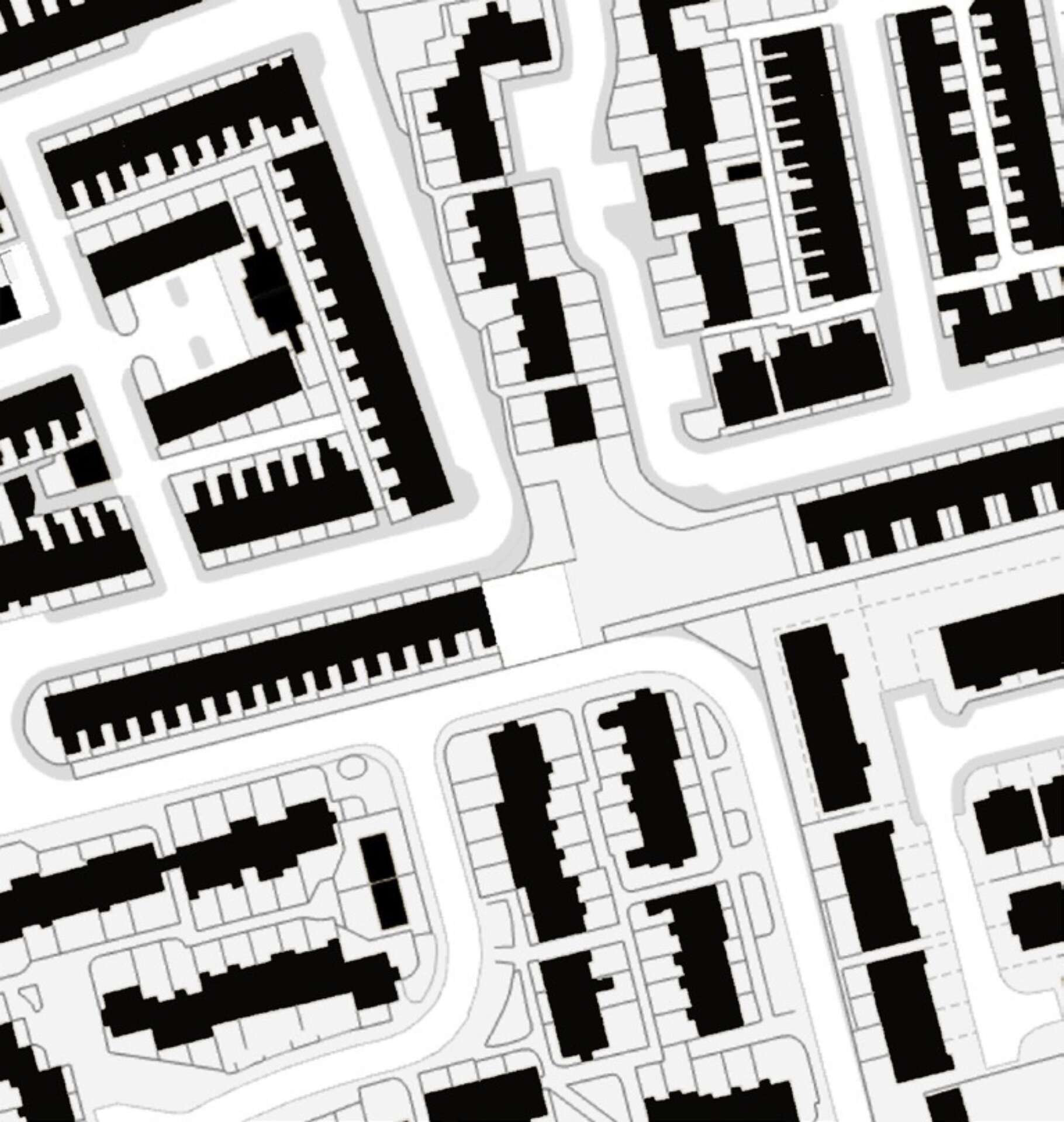
Figure 3: Architectural Drawings, Credit: Holly Carton
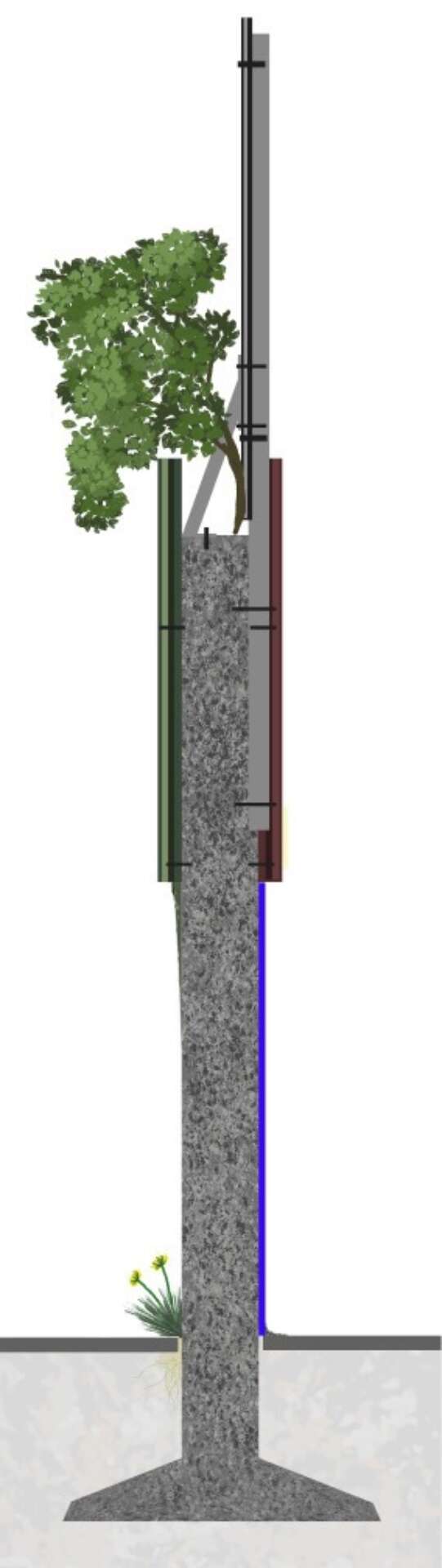
Figure 4: Architectural Drawings, Credit: Holly Carton
Physical Models: Construction of small sections using materials analogous to those found in the field, facilitating tactile and visual analysis. These models, built at scales such as 1:20 or 1:100, enable examination of materiality and spatial relationships in a controlled setting. (Rose 2016),
Credit: Holly Carton, Baced on maps from OSNI
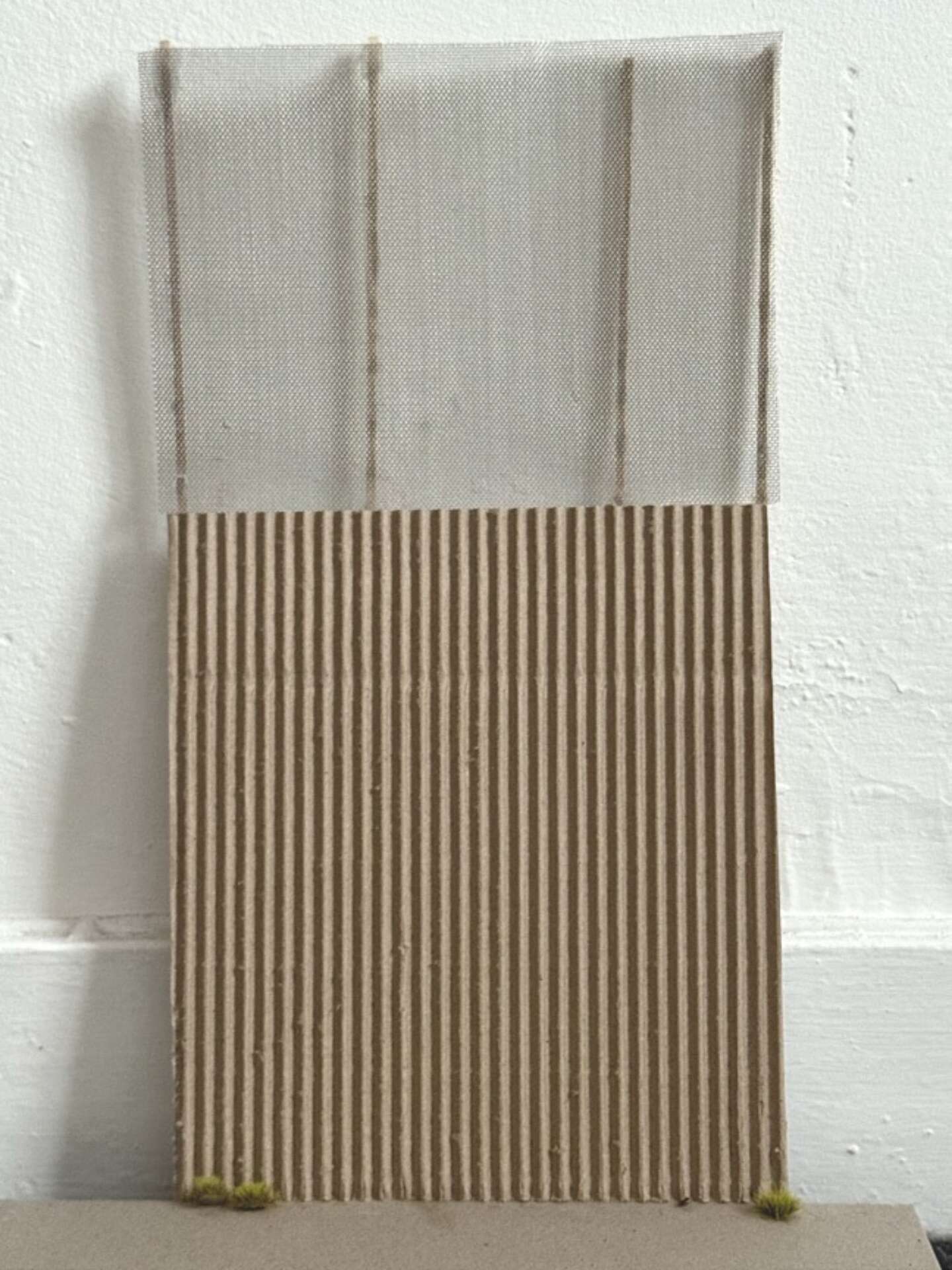
Figure 5: Physical Models, Photos by Holly Carton
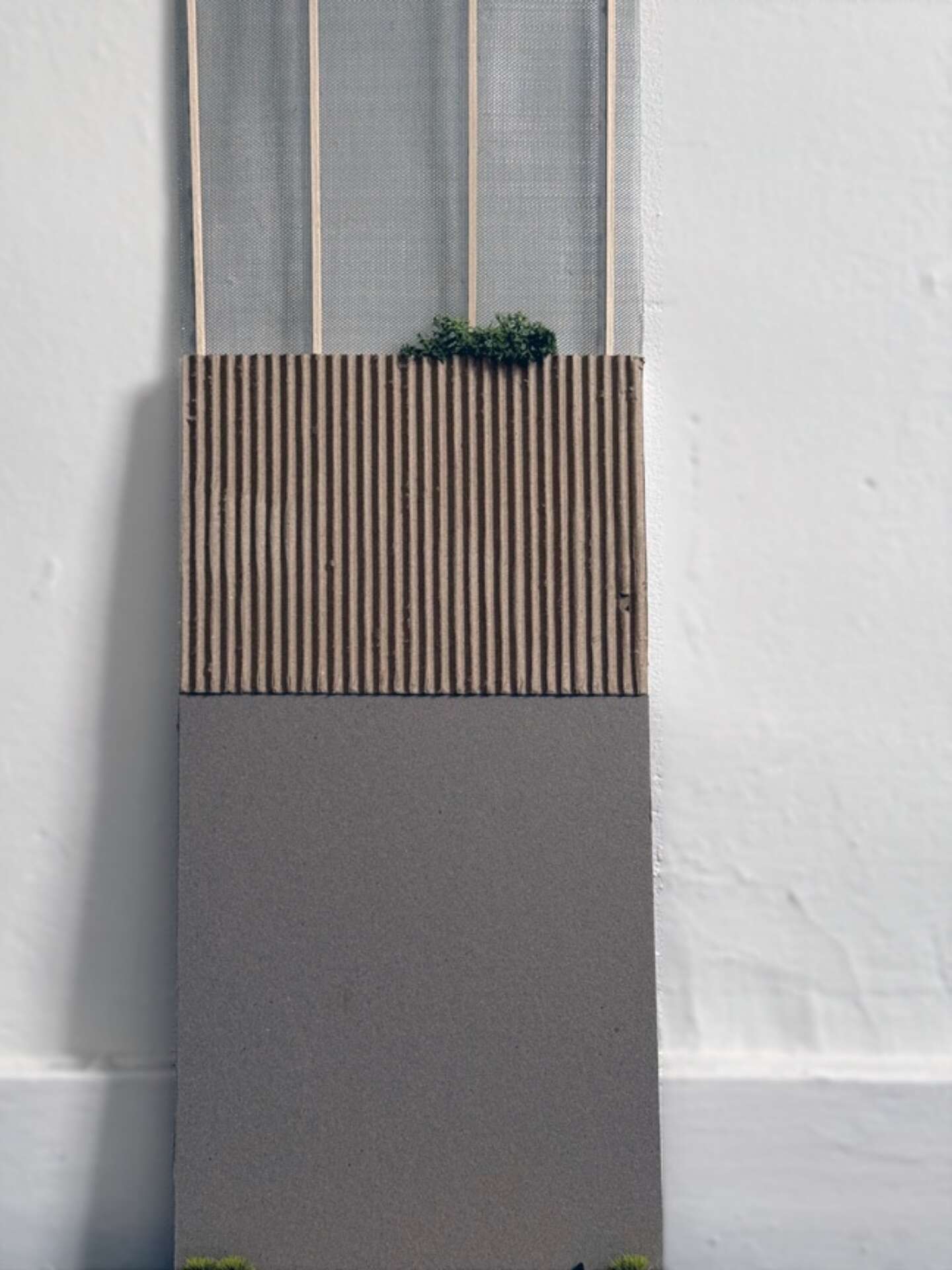
Figure 6: Physical Models, Photos by Holly Carton
Fieldwork: Site visits, photography, material sampling, and rubbings to gather empirical evidence of interventions and their material characteristics. Multiple site analyses in Belfast support the creation of a photo essay to study changes and trajectories over time. (Flyvbjerg 2001).
Evidence of non humansMetal frames to attach art offset from the wall.Marker tile and canvas as materials for artSigns and text attached to the walls.Physical human made edits to the wall, dents made by throwing, and bolts to stabilize columnsFlora growing under(weeds), on top of(moss), through(Buddleia) and out of the walls(grass). Fauna on the walls Effects of climate on the walls, sun damage, rust, and water damage. plaques glued, and sat on a L plate. Evidence of humansPhotos taken by Holly Carton
Credit: Holly Carton,
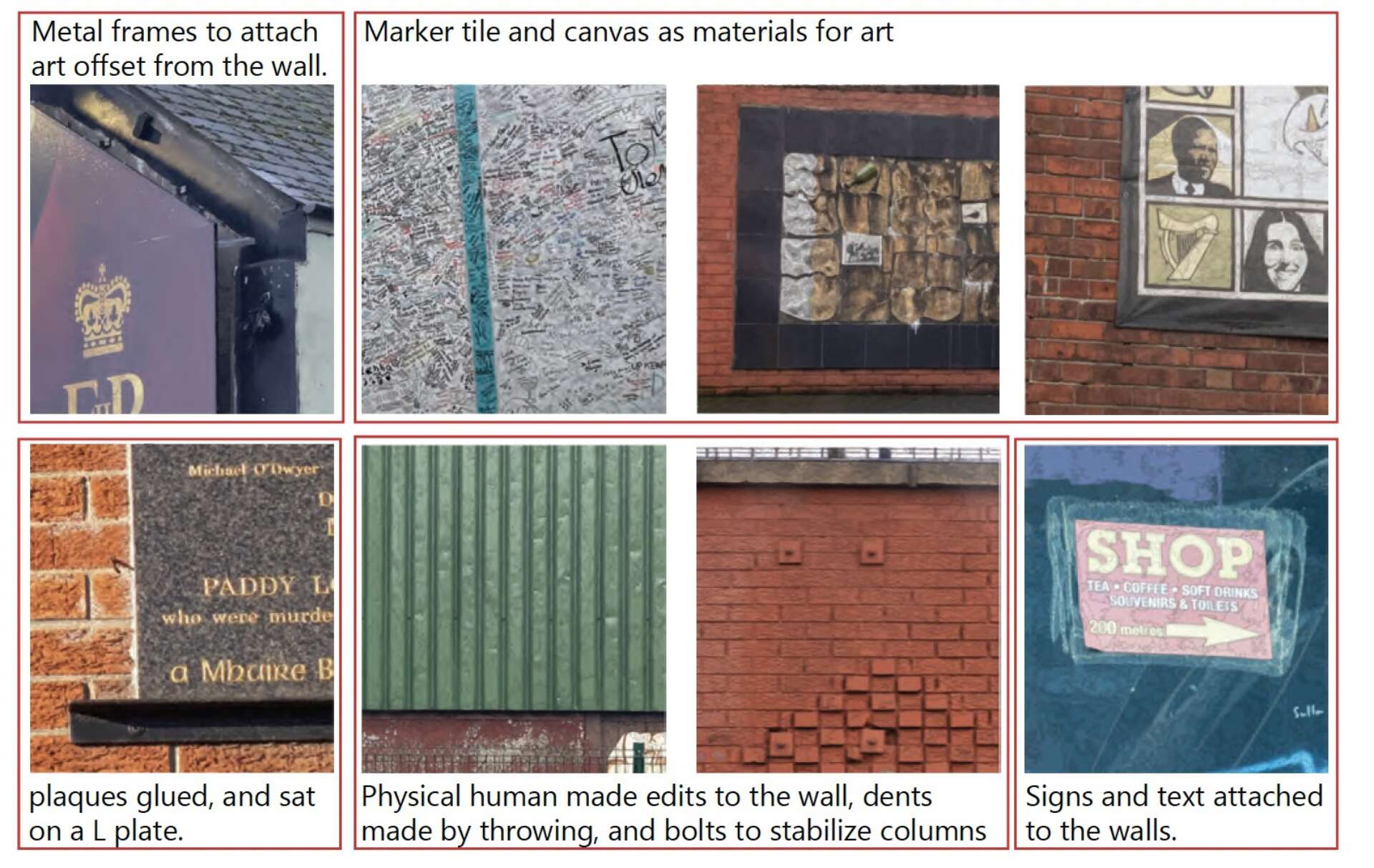
Figure 7: Field Work, Photos by Holly Carton
Interviews: Engagement with local residents, artists, owners, and other stakeholders to elicit qualitative insights into art on the walls and significance of interventions on the walls.(Gosseye, Stead and Plaat 2018, Gordon 2020)
The collected data are subjected to cataloguing, descriptive analysis, and visual interpretation, drawing on established frameworks such as those proposed by Rose (2016), (Ewing and Park, 2020) Zeisel (2006), and Flyvbjerg (2001). Comparative and content analyses are conducted to identify patterns and divergences across cases, while focused interviews and discourse analysis provide additional depth and context to the findings
The analytical strategy is designed to ensure methodological rigor and interpretive depth. Data are systematically catalogued and described, with visual analysis employed to elucidate material and spatial relationships. Physical and digital models are analyzed using case study methodologies, enabling the identification of intervention typologies and their temporal trajectories. Trace analysis is applied to material palettes, facilitating the comparison of interventions across different wall sections. Content analysis and comparative techniques are utilized to synthesize findings, while focused interviews are subjected to discourse analysis to uncover underlying themes and stakeholder perspectives.
The research is structured in two principal phases: the MPhil and the PhD. The MPhil stage initiates a broad investigation of post-conflict European dividing walls, employing a material cultural studies framework to categorize exemplar cases. This phase culminates in the selection of representative sites and the piloting of visual and architectural research methods, with Belfast serving as the foundational case study. The subsequent PhD phase extends the material investigation to additional cases, such as Nicosia, Berlin, and the Iron Curtain, thereby demonstrating the generalisability of the findings. The final stage involves the development of guidelines and frameworks for future interventions, informed by the research outcomes and tested through design-based projects(Loveless 2019).
Ethical integrity is paramount throughout the research process. Interviews are conducted with the informed consent of participants, documented through signed forms or audio consent. Special care is taken to ensure the anonymity of respondents, particularly when dealing with sensitive political information. Audio and video recordings are made only with explicit permission, and alternative modes of communication are offered to accommodate participant preferences. Observational methods, including photography and mapping, are employed with the understanding that any individuals captured in images will be digitally removed to protect privacy. Archival research is conducted with strict adherence to data protection protocols, and all personal information is anonymized in reporting.
To ensure the reliability and validity of the research, multiple strategies are employed, including methodological triangulation, pilot studies, and reflexive analysis. The use of diverse data sources and analytical techniques enhances the robustness of the findings, while pilot studies allow for the refinement of methods and the identification of potential limitations. Reflexivity is maintained throughout, with the researcher critically reflecting on positionality and potential biases.
The research acknowledges several methodological constraints, including the challenges of accessing certain sites at particular times due to heightened tensions in the area, the potential for incomplete archival records or limitations in online resources, and the inherent constraints of qualitative interviews. These limitations are addressed through adaptive strategies, such as the use of alternative data sources and the triangulation of findings. By anticipating and responding to these challenges, the research maintains its methodological rigor and adaptability.
A pilot study is conducted to test the feasibility and effectiveness of the proposed methods, with the Belfast study serving as a practical example. This pilot provides valuable insights into the practical challenges and opportunities associated with the research design. The findings from Belfast inform subsequent stages of data collection and analysis, ensuring that the research remains responsive to emergent issues and is able to refine its approach as necessary.
The research is informed by feminist methodologies, acknowledging the outsider perspective of the researcher and the ethical complexities associated with studying dividing walls. (Law 2004, Harding, 2013) While the researcher recognizes the divisive nature of these structures, it is also understood that, for host communities, walls
may serve vital security functions. Reflexivity is maintained throughout, ensuring that the research remains sensitive to the diverse values and experiences of affected populations. The researcher’s own positionality as an Irish individual studying in the UK is explicitly acknowledged, and efforts are made to mitigate potential biases and to approach the research context with humility and openness.
Case Studies
This section presents the empirical case studies selected for detailed analysis, all situated within Belfast. The choice of Belfast as the pilot location was primarily motivated by its accessibility to the researcher and the diversity of wall materials and interventions present. Sites were chosen not only for the variety of their physical construction but also for the presence of artistic expressions and spontaneous ecological growth, such as weeds, on or adjacent to the walls. The focus on Belfast allows for an in-depth exploration of post-conflict urban dividing walls within a manageable geographic scope, providing a foundation for broader comparative analysis in future research phases.
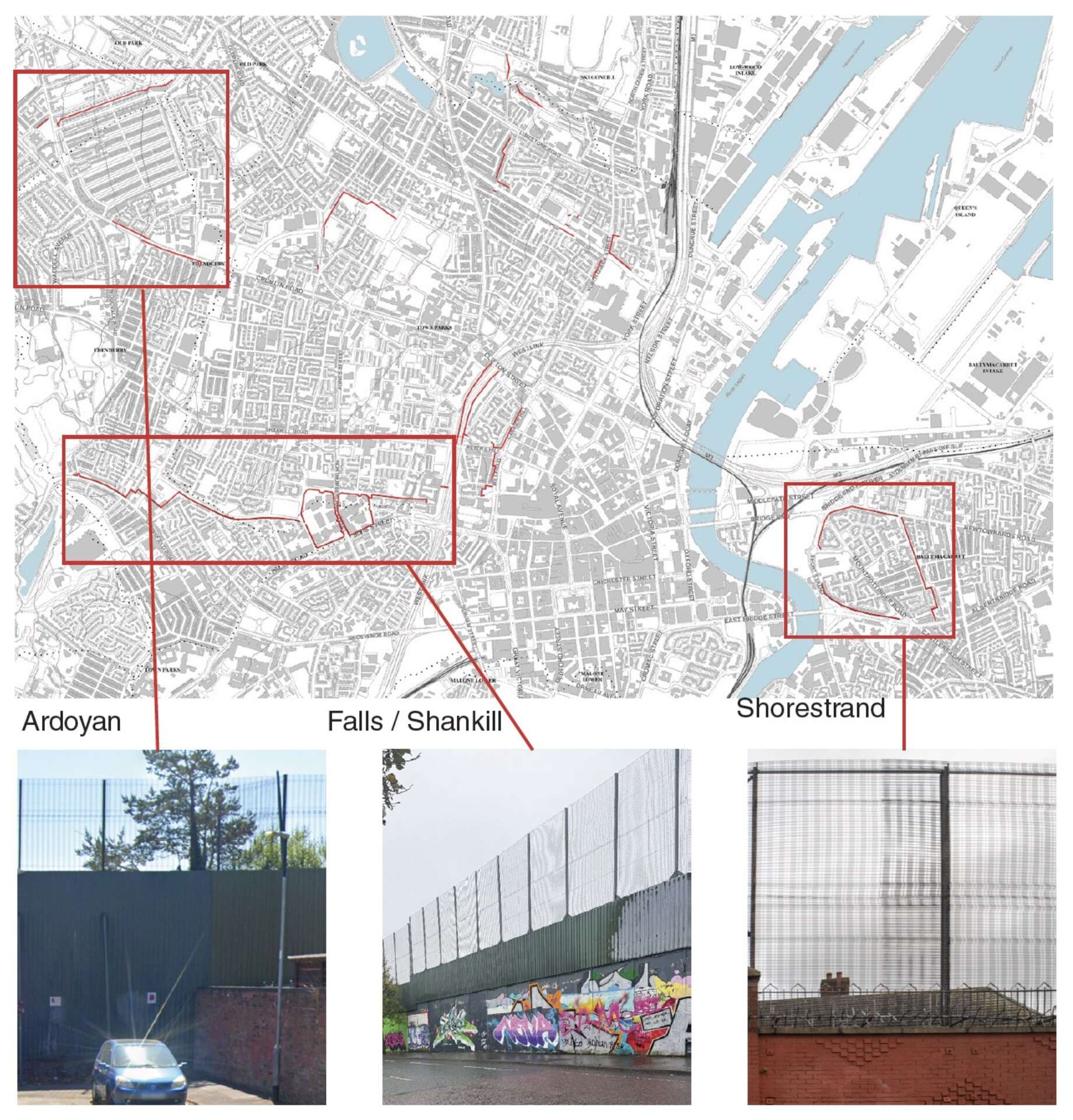
Figure 8: Belfast Map and Case Study, Credit Holly Carton based on Digi Maps, Photo Credit Google Maps Photos by Pascal Artur Witt, 8/25 (left) and Holly Carton (middle, right)
Case 1: Shankill / Falls
The first case study examines the wall separating the Shankill and Falls communities. This wall is the most prominent in Belfast, both in terms of its physical dimensions and the extent of scholarly attention it has received. It is the longest and tallest of the city’s dividing walls, and it has been closely associated with tourism and historical episodes of violence. Its significance is further underscored by its role as a focal point for both local and international visitors.
The most well-known section of the Shankill/Falls wall runs along Cupar Way, reaching a height of approximately 14 meters. It is constructed from concrete and corrugated metal, topped with fencing for additional security. Another notable area is the “peacewall” section, which serves as a canvas for local artists to address current conflicts and social issues through their work. This dynamic use of space highlights the evolving function of the wall as both a barrier and a site of cultural expression.
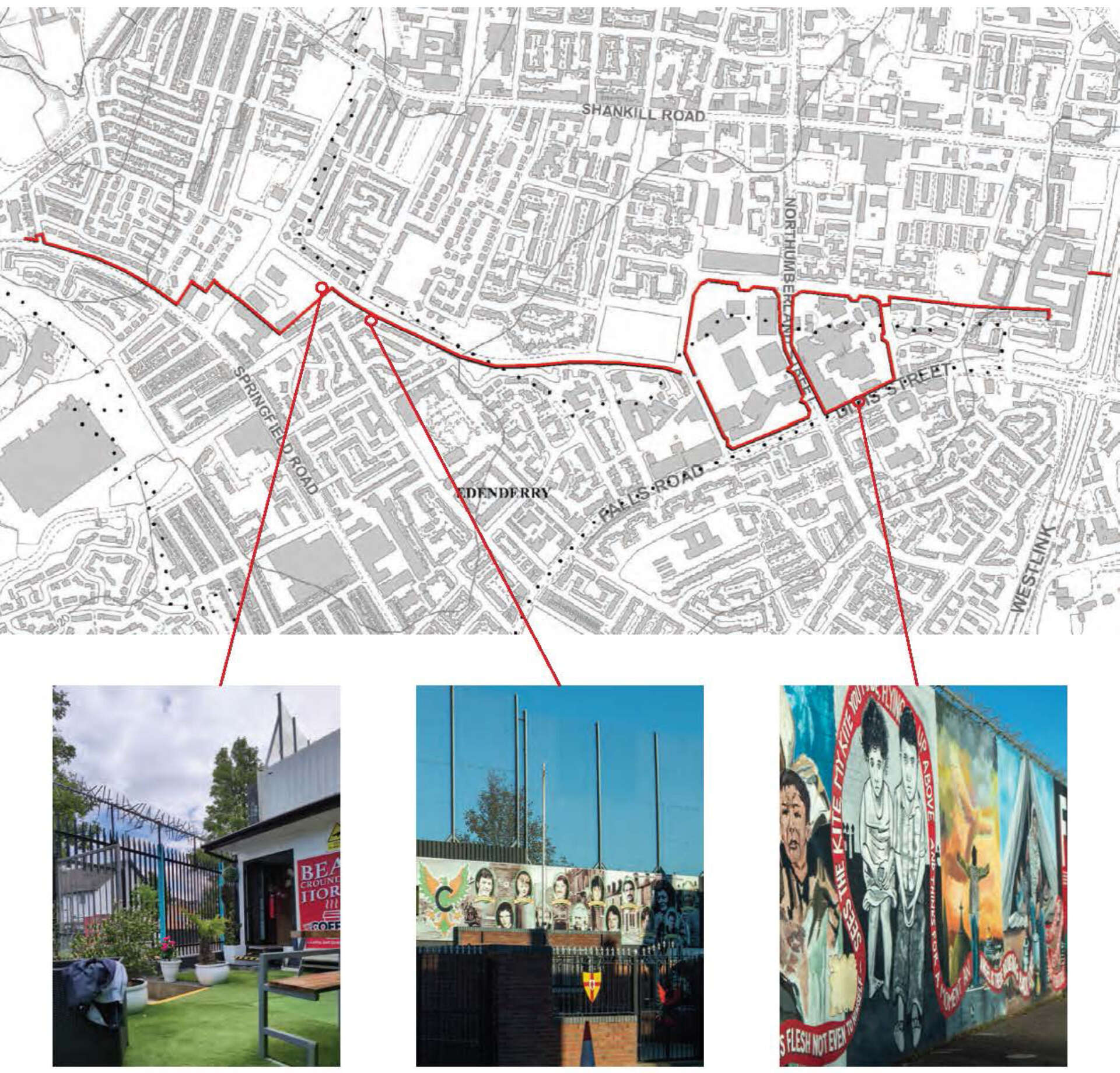
Figure 9: Falls Shankill Map, Credit Holly Carton based on OSNI Maps, Photo Credit Google Maps Photos by Pascal Artur Witt, 8/25(left) and Holly Carton (middle, right)
Case 2: Shore Strand
The second case study focuses on Shore Strand, which is unique as the only dividing wall located in south Belfast; all other major walls are situated in the northern part of the city. This wall was constructed to separate a small Roman Catholic community from the surrounding predominantly Protestant population. Its distinct social context provides valuable insights into the localized impacts of urban barriers.
The Shore Strand wall is primarily composed of brick, with fencing installed on top. Of particular interest is the presence of ceramic, tile-based artwork, which adds a layer of aesthetic and cultural significance to the structure. This artistic intervention distinguishes the wall from others in Belfast and serves as a testament to the community’s engagement with its built environment.
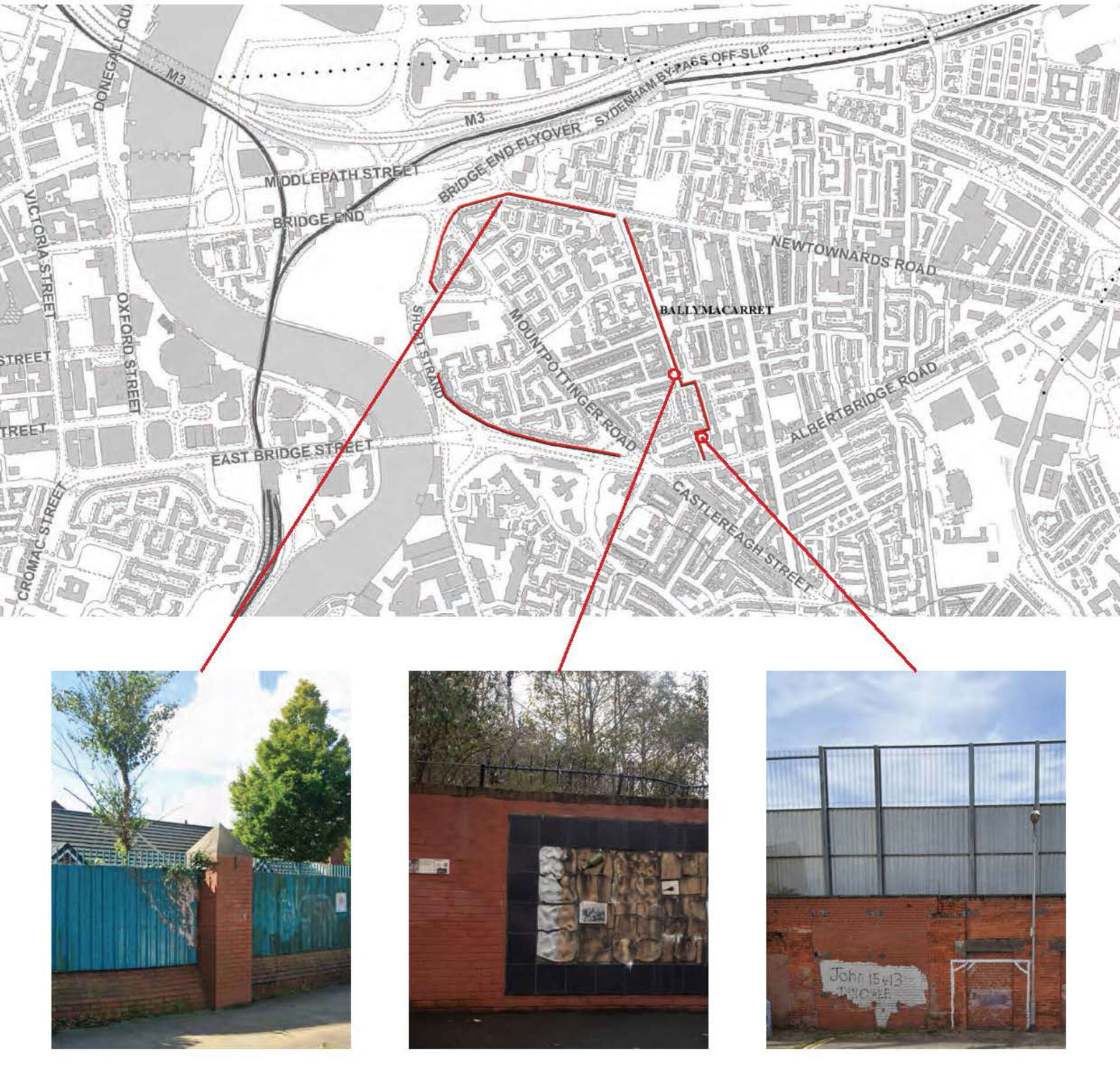
Figure 10: Shore Strand map, Credit Holly Carton based on OSNI Maps Photo Credit by Google Maps Photos (left, right) and Holly Carton (middle)
Case 3: Ardoyne / Crumlin
The third case study examines the Ardoyne and Crumlin walls, which are more fragmented and disjointed compared to the other examples. These walls are located near the Falls/Shankill wall, making them easily accessible for comparative analysis. Their dispersed nature reflects the complex spatial dynamics of post-conflict urban landscapes.
The Ardoyne walls exhibit the most pronounced signs of dereliction and abandonment. While the majority of these walls are constructed from brick, the surrounding neighborhoods feature large and visually striking murals. However, few of these artistic installations are found directly on the walls themselves, suggesting a spatial separation between sites of artistic activity and the physical barriers.
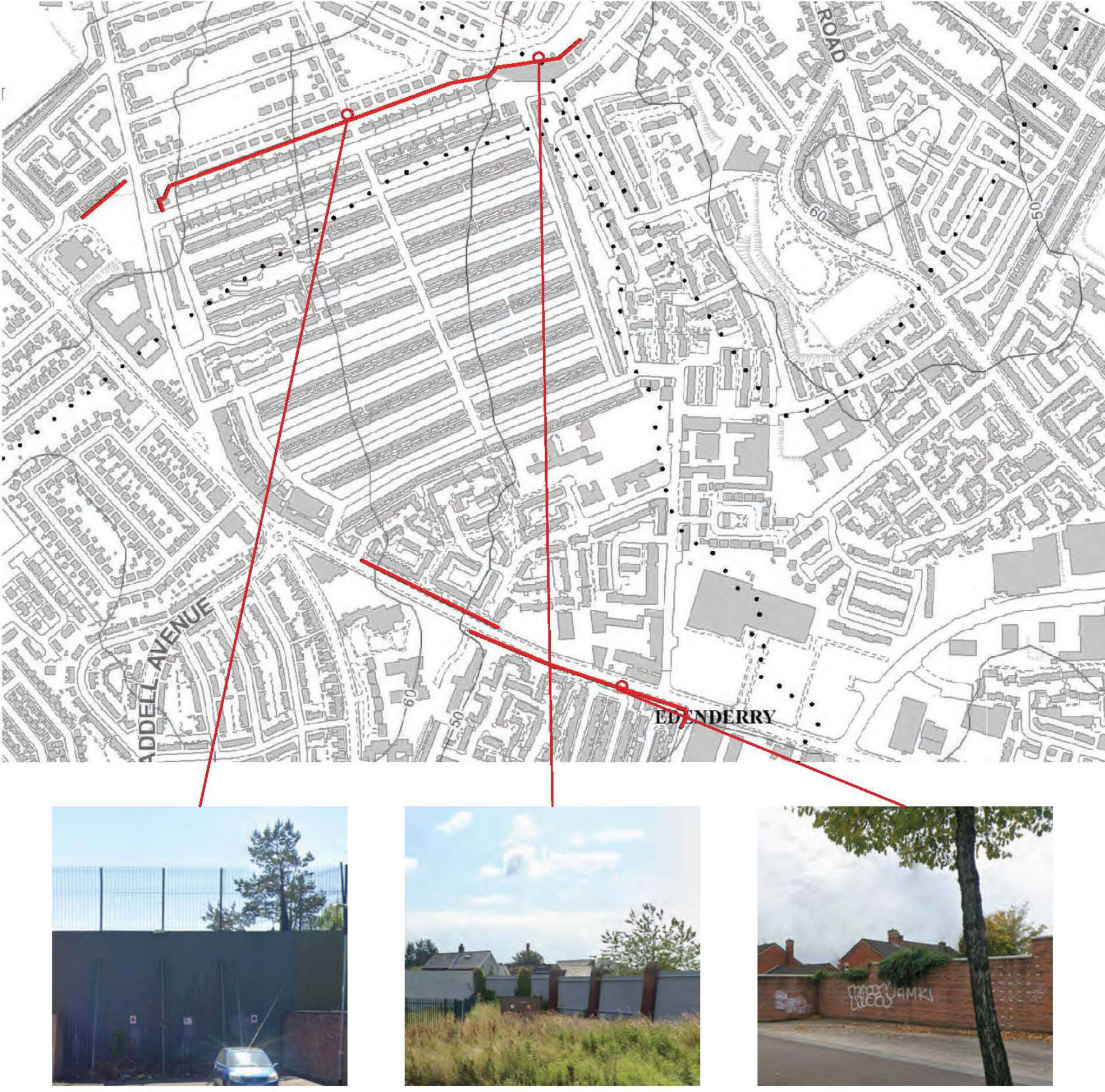
Figure 11: Ardoyan map, Credit Holly Carton based on OSNI Maps Photo by Google Maps Photos (left, right, middle)
A comparative overview reveals several key distinctions among the case studies. Tourism exerts a significant influence, particularly on the Falls/Shankill wall, as evidenced by the frequent presence of tour groups and black cabs(McLintock 2020). This wall’s height and prominence make it a primary destination for visitors. In contrast, the Shore Strand wall evokes a sense of trespass, likely due to its location within a tightly-knit residential estate. The Ardoyne area, with its more open spaces, conveys feelings of isolation and abandonment. These differences underscore the interplay between physical characteristics, social context, and public perception. Notably, themes of surrounding space, wall height, artistic intervention, and ecological growth (such as weeds) recur across the sites.
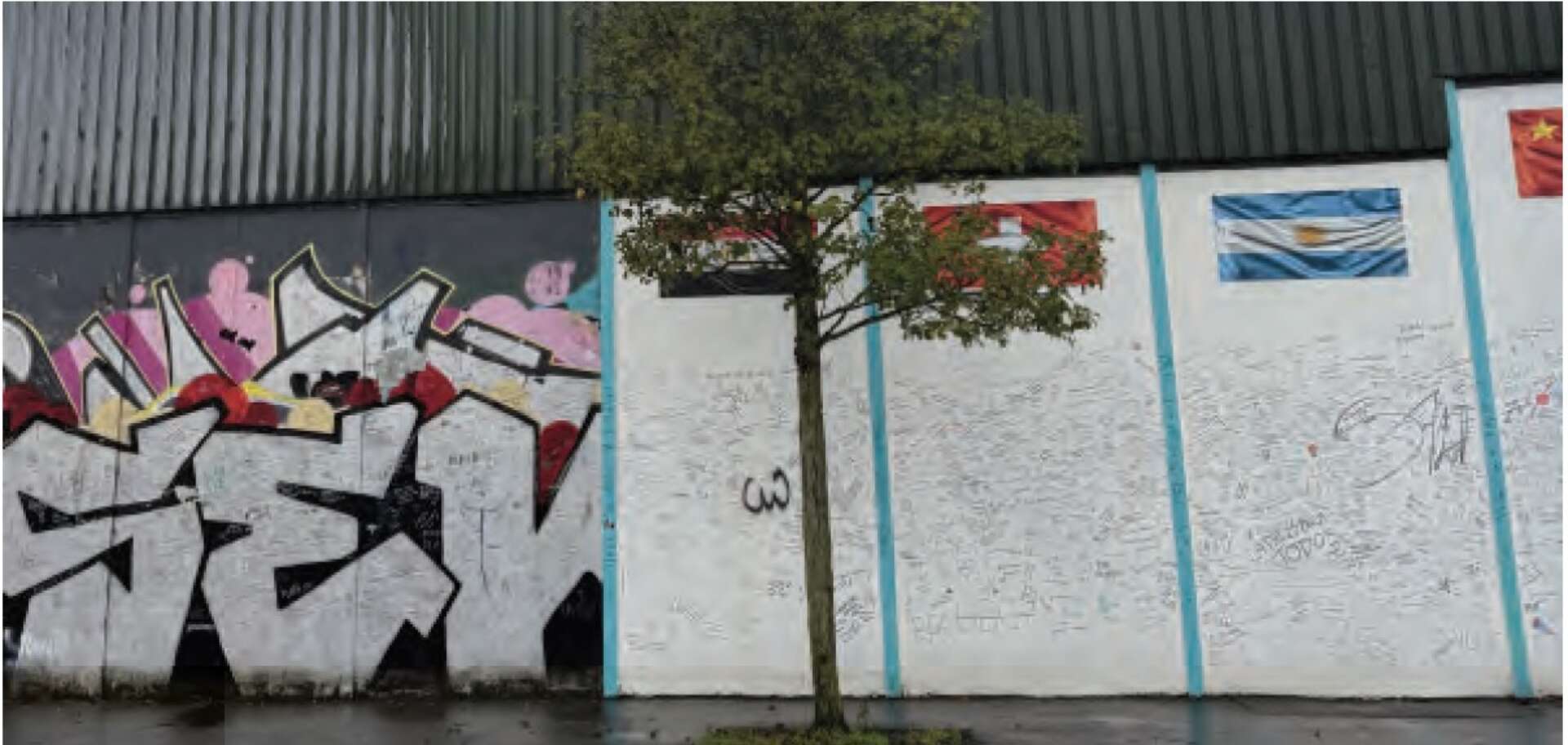
Figure 12: Photo by Google Maps Photos
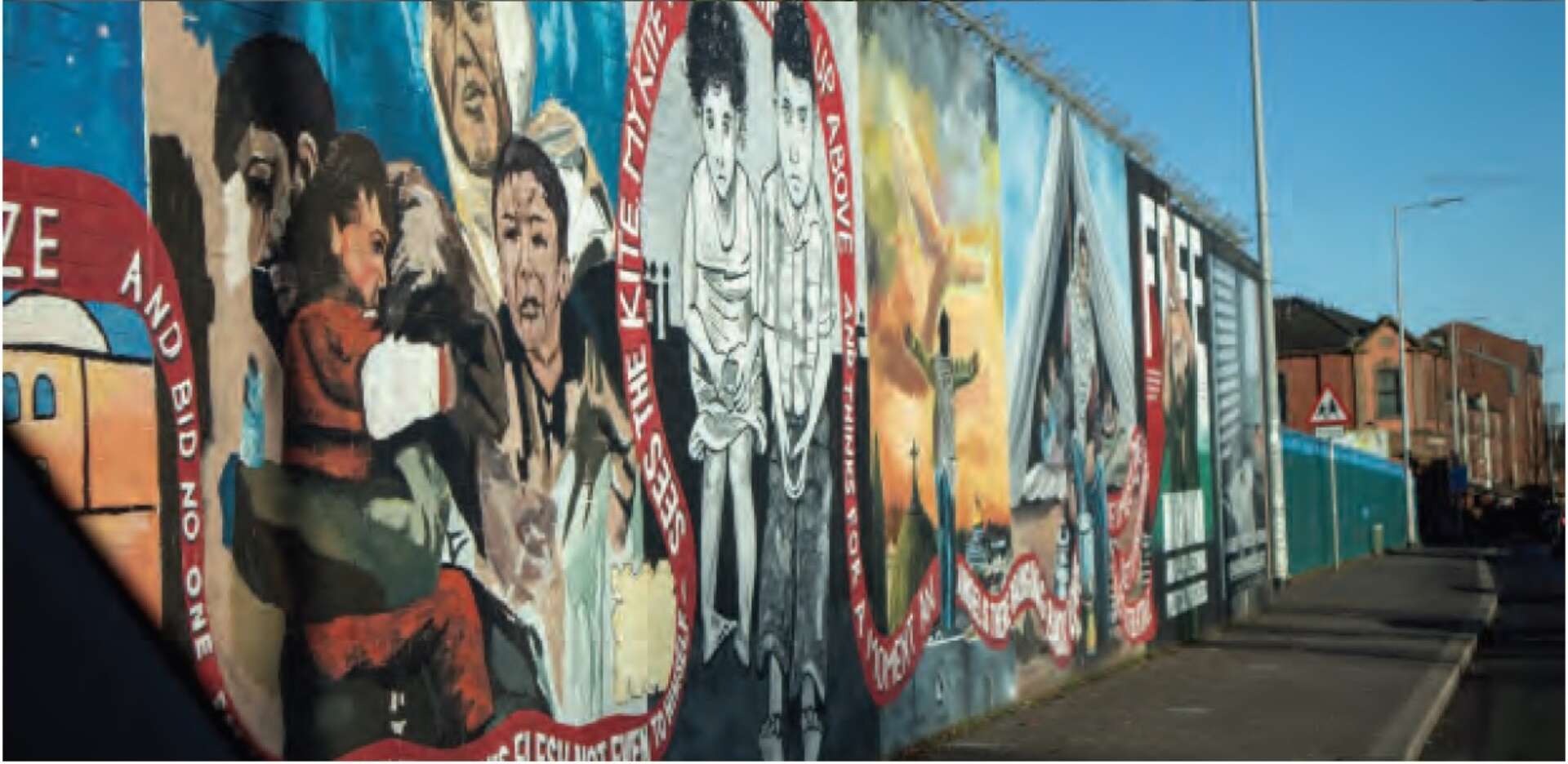
Figure 13: Photo by Google Maps Photos
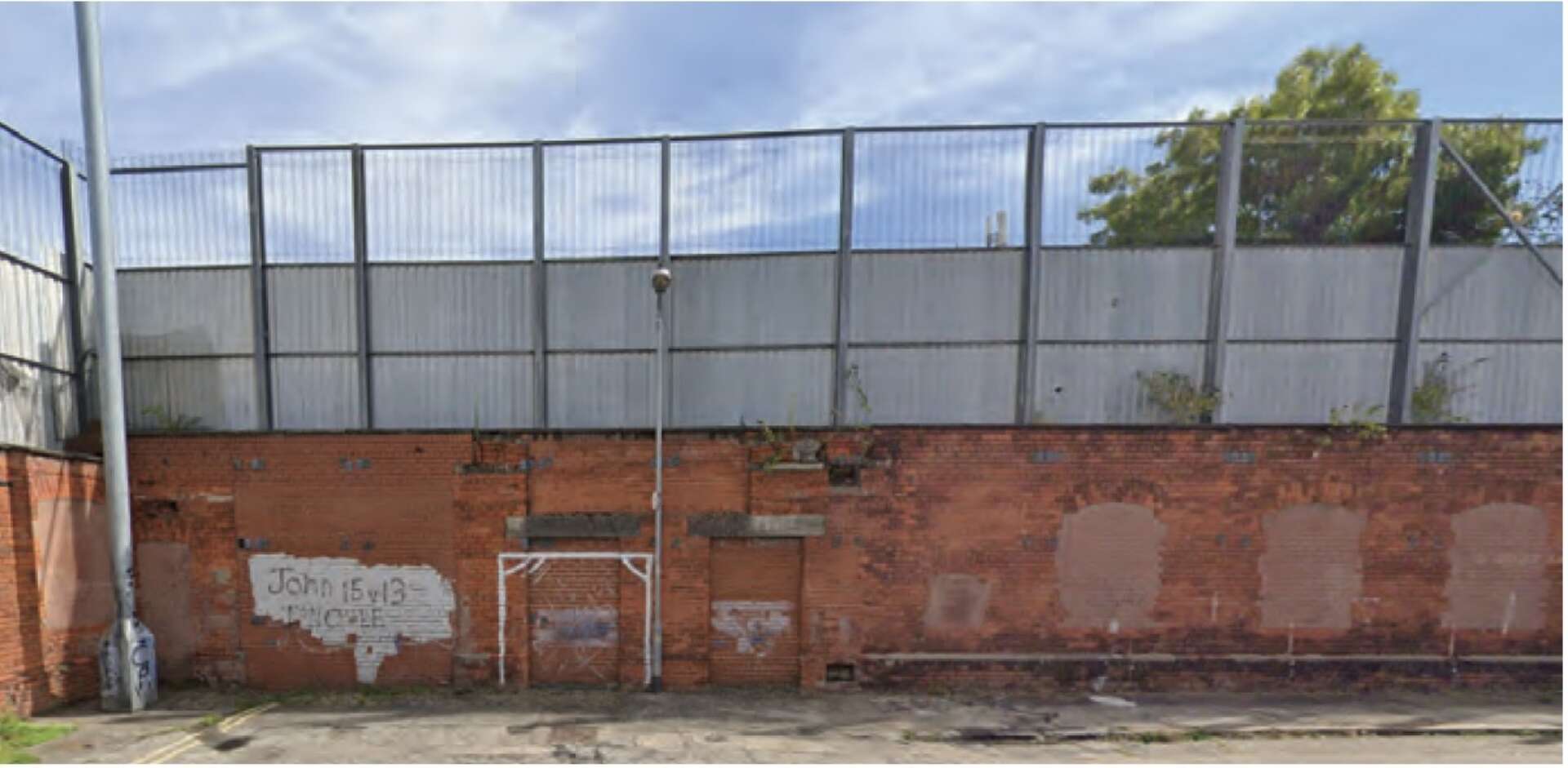
Figure 14: Photo by Google Maps Photos
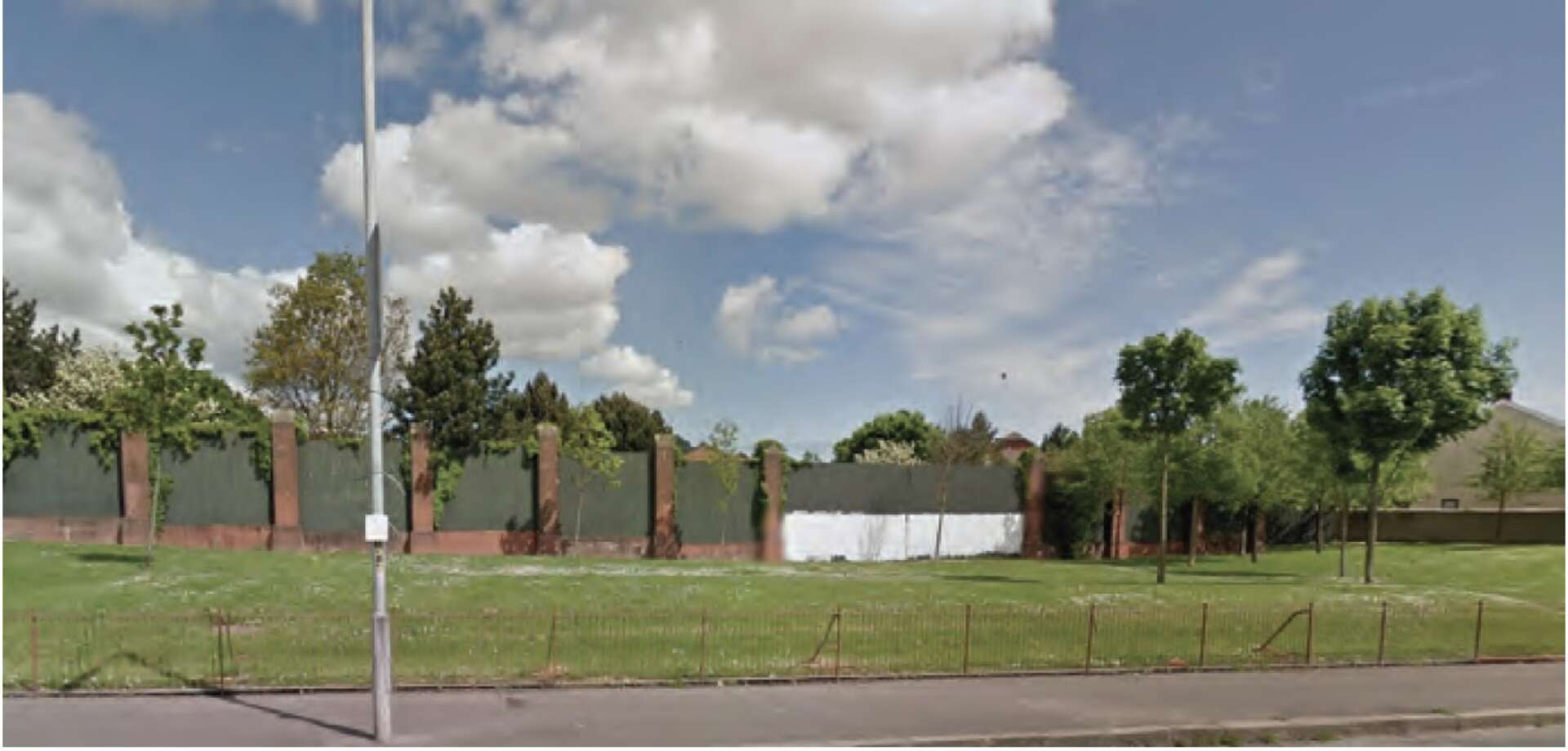
Figure 15: Photo by Google Maps Photos
The historical context of these walls is rooted in the conflict between Roman Catholic, North of Ireland republican communities and Protestant, Northern Ireland unionist populations. The peak of the conflict occurred in the 1970s, with the peace process formally initiated in 1994 through agreements brokered by the governments of the United Kingdom, Ireland, and the United States. Artistic expression on the walls reflects these divisions: the unionist side features more depictions of local community life and conflict, as well as areas designated for graffiti and tourist inscriptions. The republican side, by contrast, emphasizes cultural identity and solidarity with other global conflicts, notably Palestine.
Belfast’s temperate and wet climate shapes the ecological context of the walls. Summers are mild, and winters are characterized by frequent rainfall, fostering the proliferation of weeds, moss, and lichens during the spring and summer months. As an urban center, Belfast supports a range of fauna adapted to city life, including birds, rodents, and insects. These environmental factors contribute to the ongoing transformation of the walls and their immediate surroundings.
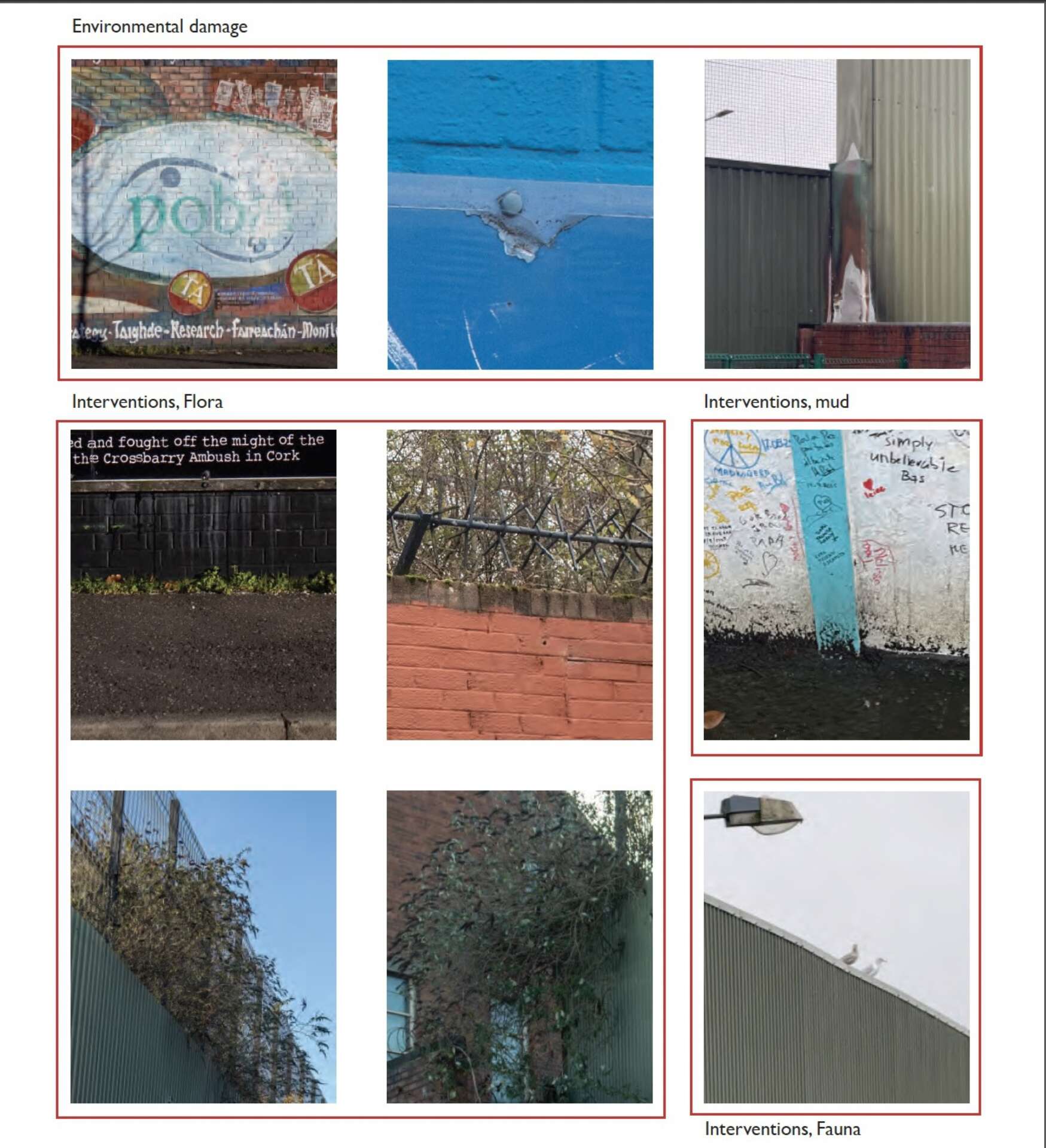
Figure 16: Photo by Holly Carton
The selected case studies illuminate the research problem by demonstrating the multifaceted impacts of post-conflict urban walls. Through analysis of materiality, artistic intervention, ecological processes, and social context, the research advances understanding of how these structures evolve and interact with their environments and communities. The diversity of cases within Belfast provides a rich empirical foundation for addressing the central research questions and developing frameworks for future interventions
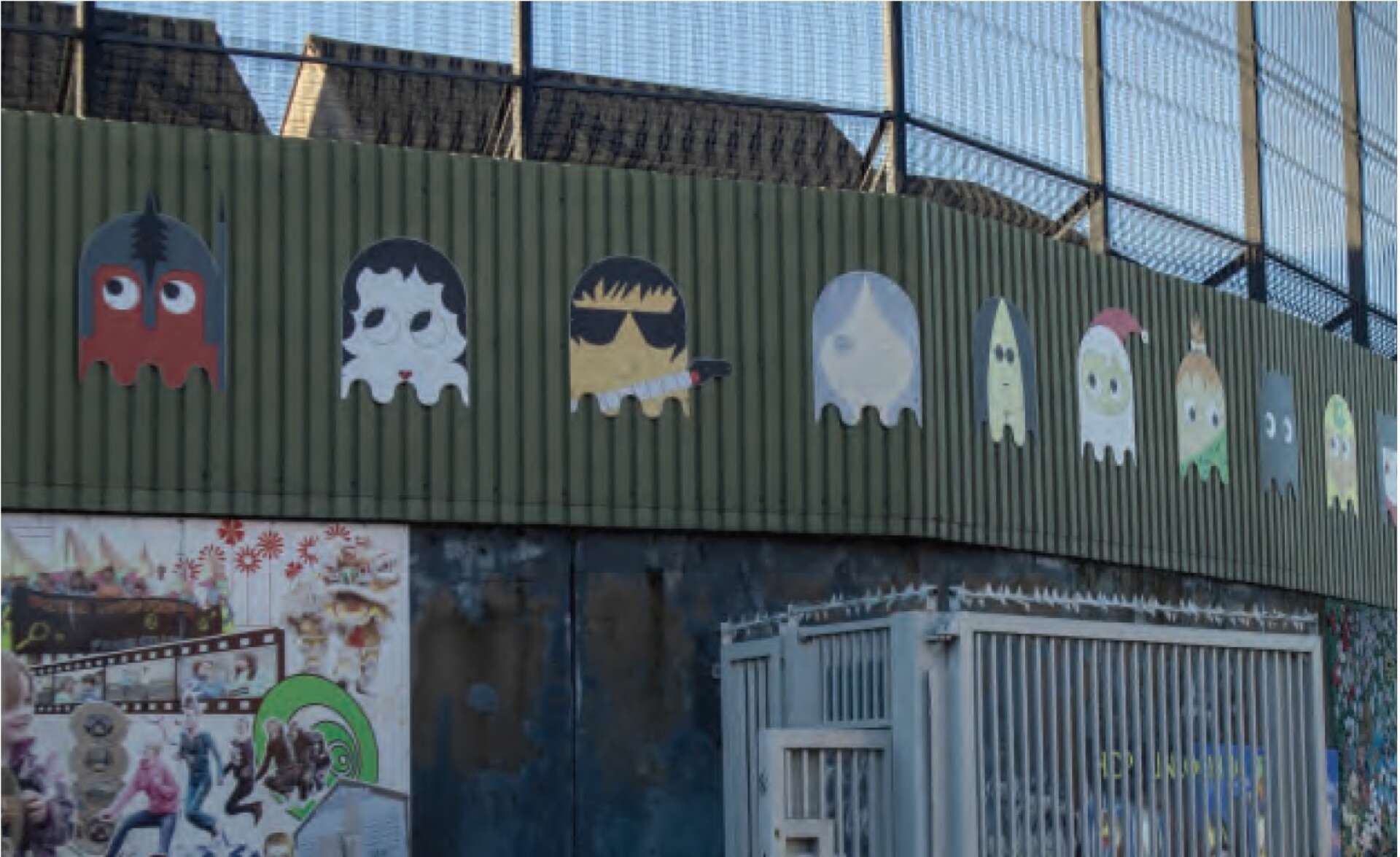
Figure 17: Photo by Holly Carton
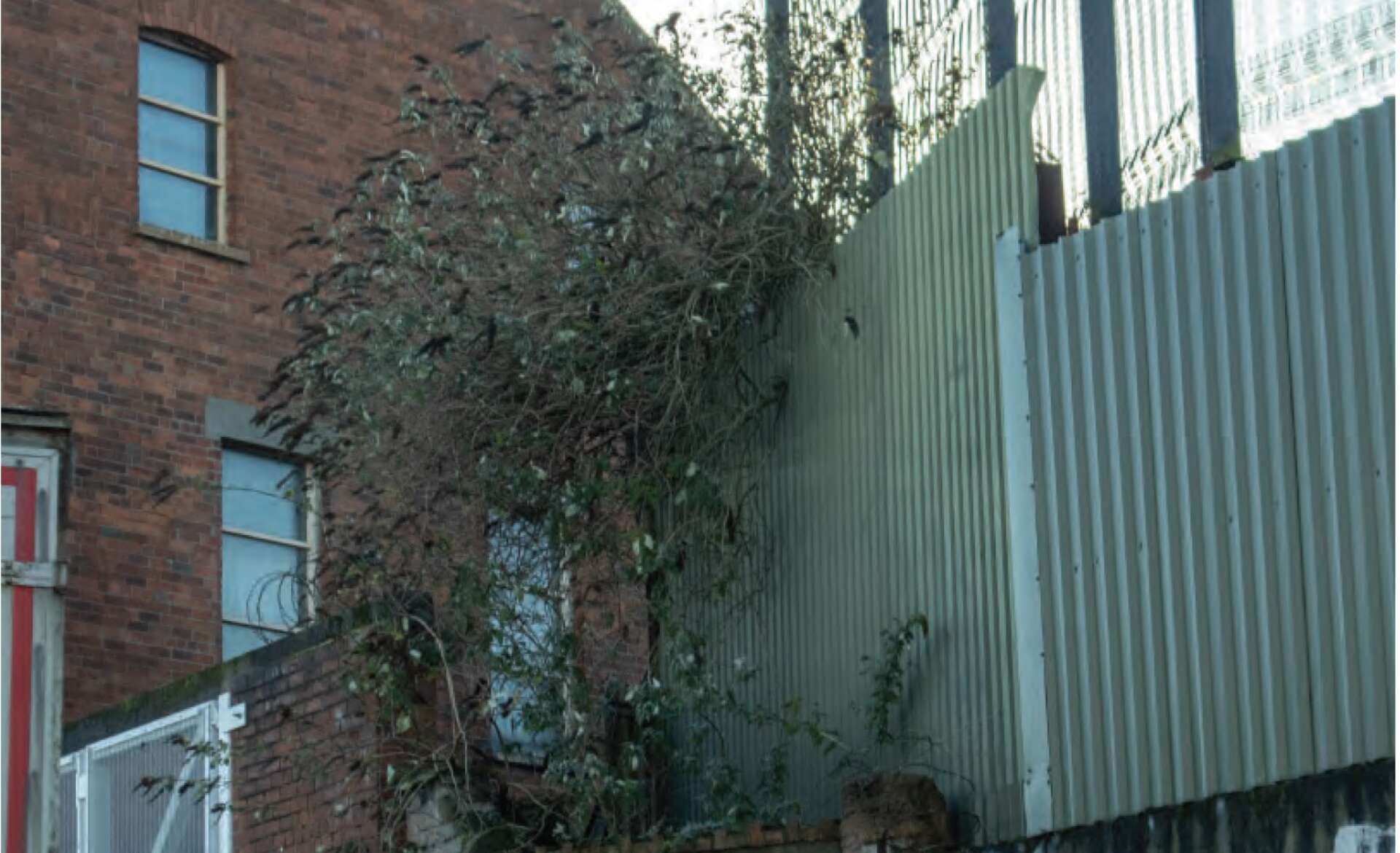
Figure 18: Photo by Holly Carton
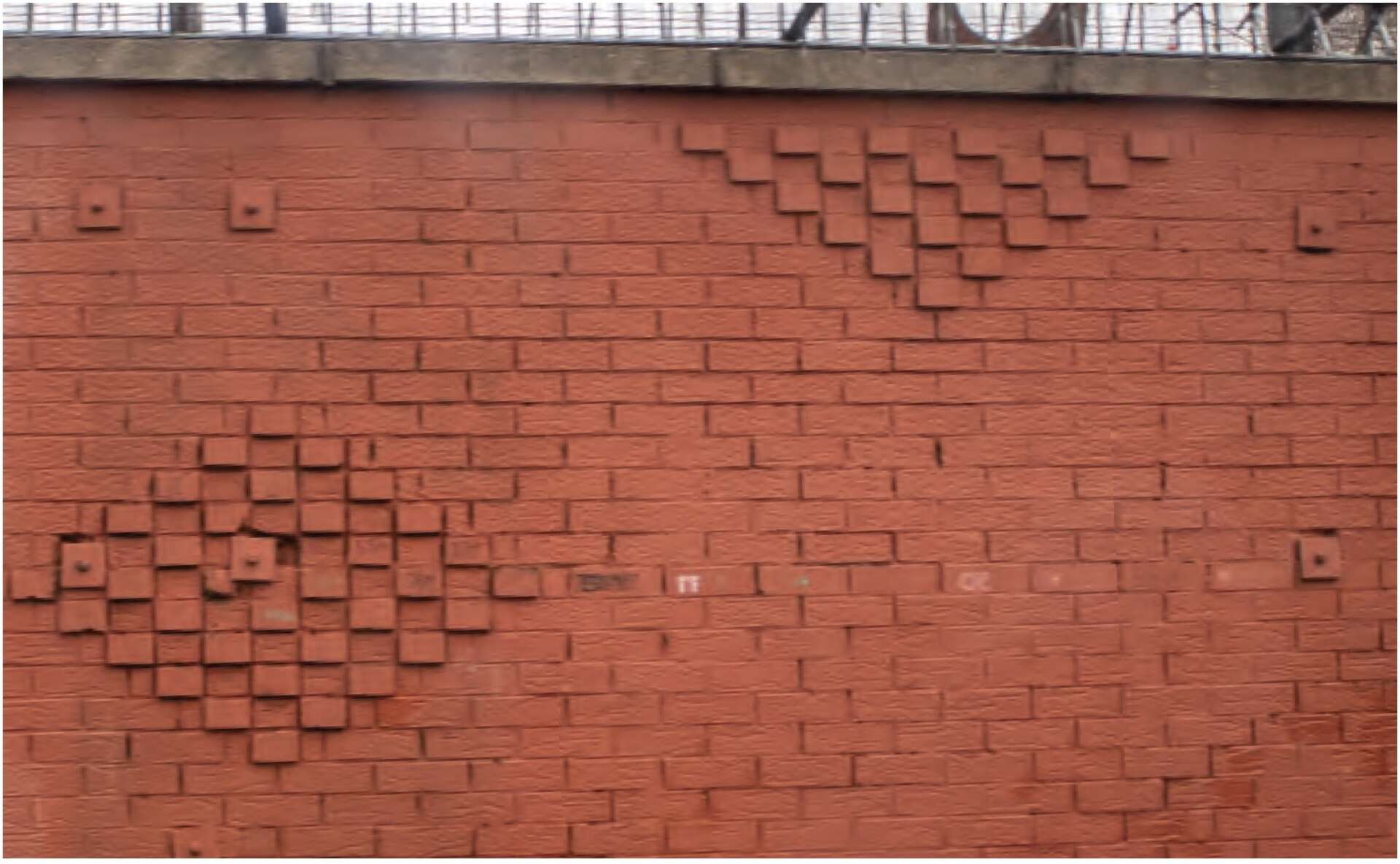
Figure 19: Photo by Holly Carton
Preliminary Findings and Observations
To date, a comprehensive set of data has been gathered, including detailed maps of all study areas, architectural drawings of two principal walls, and physical models constructed at a scale of 1:20. Additionally, all three walls have been recreated as paper models at 1:100, providing a tactile dimension to the analysis. Extensive fieldwork has been conducted across each site, allowing for direct observation and documentation of the walls and their surrounding environments.
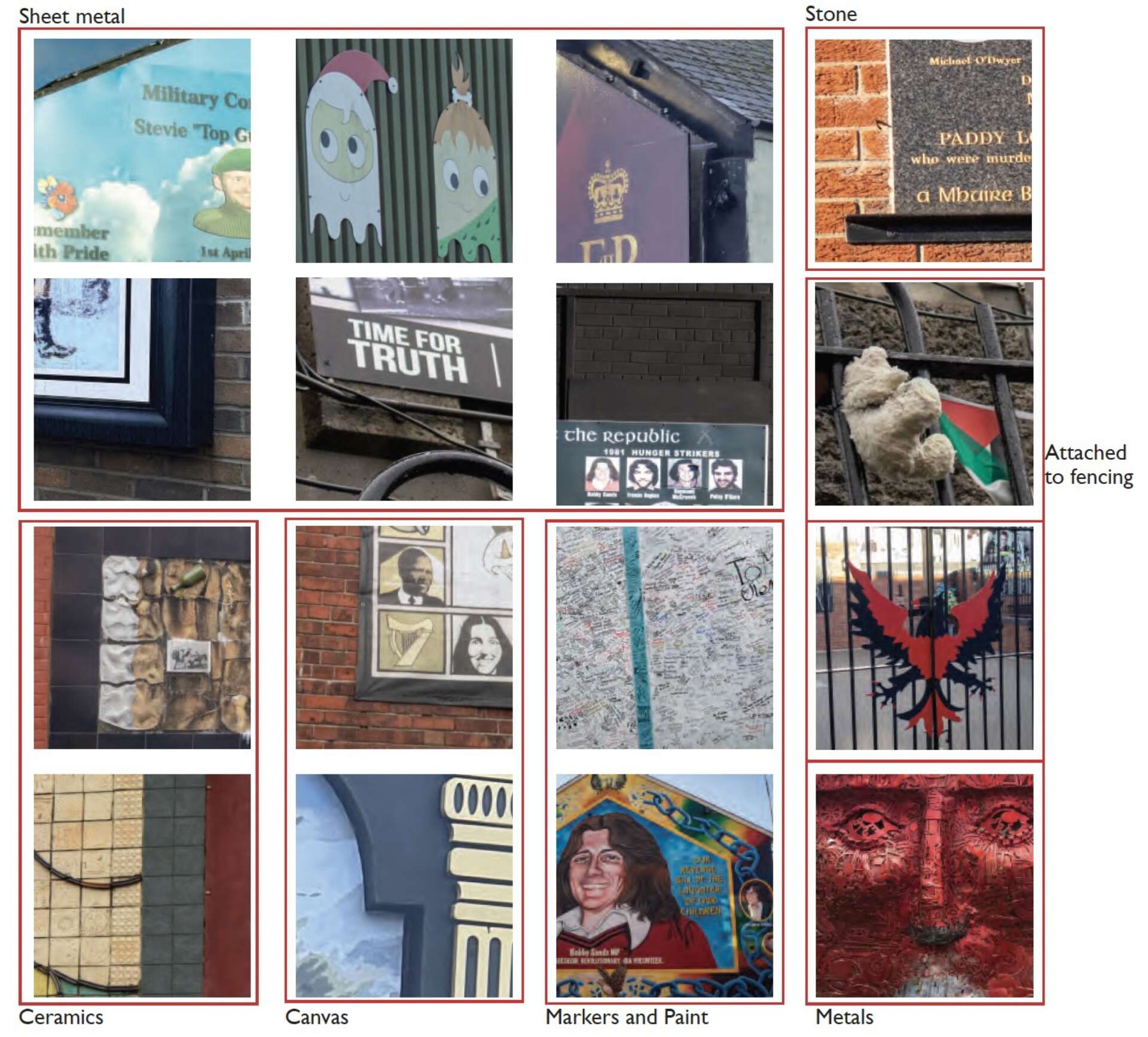
Figure 20: Photo by Holly Carton
Preliminary analysis reveals several recurring themes and notable patterns. Foremost among these is the remarkable diversity in the materiality of the art found on and around the walls. The spectrum includes aluminium sheets printed with plastic coverings, tile and ceramic artworks, granite and metal plaques, other metal art, canvas and framed canvas, banners affixed to fences, painted and spray-painted walls, stickers, and various signs. The breadth of artistic media and the methods used to attach them to the structures are particularly striking. Trace analysis further highlights the presence of litter, dead leaves, spray paint drips on the ground, and evidence of objects thrown at the walls. Both official and unofficial signage is prevalent, with the addition of Irish Gaelic on republican signage underscoring the cultural divisions present
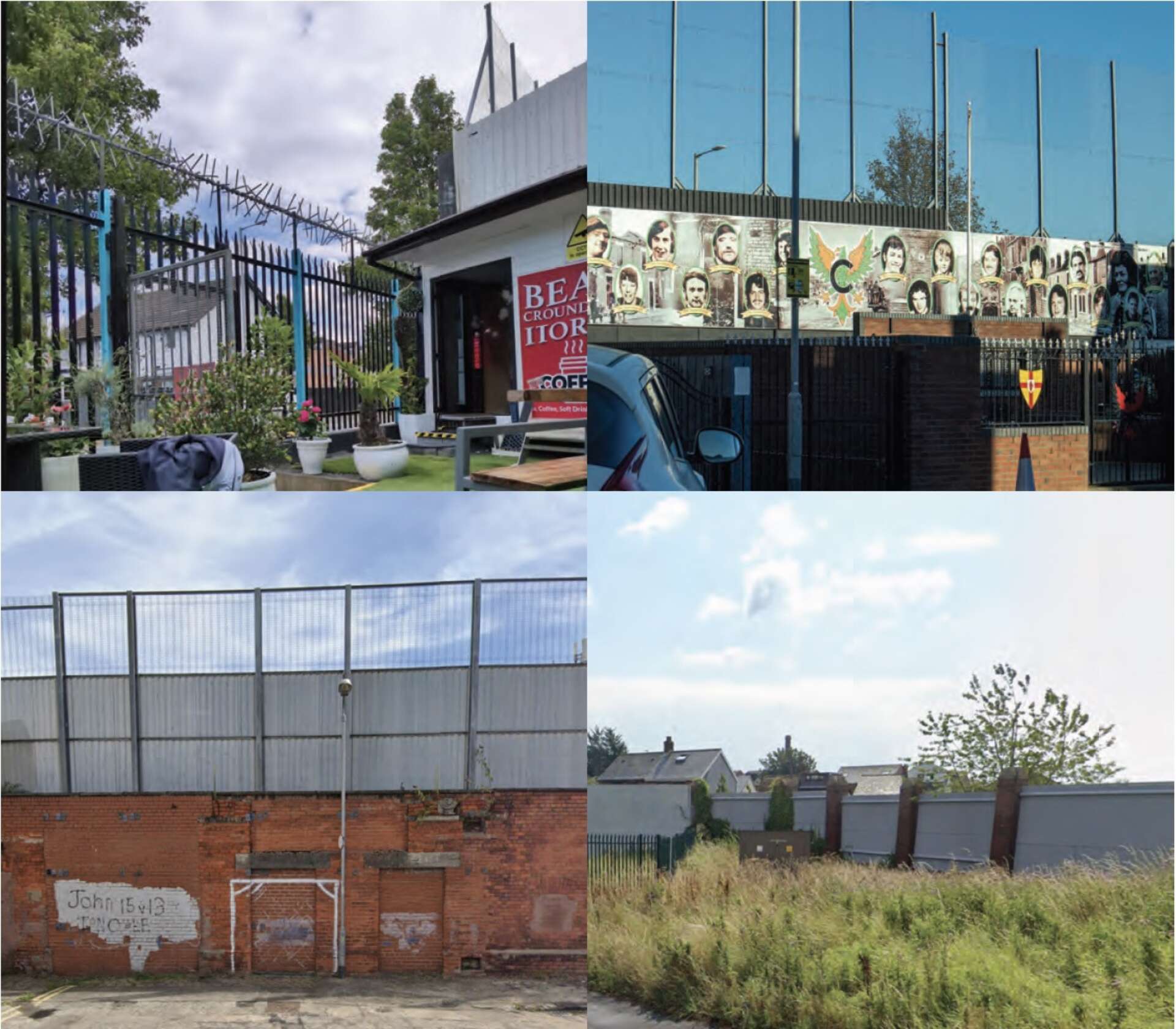
Figure 21: Photo by Holly Carton
Each site exhibits unique characteristics. The pop-up café adjacent to the Falls wall stands out as a focal point for “dark tourism,” with tours deliberately incorporating breaks at this location. Artistic traces differ between the republican and unionist sides: the former displays more brushstroke drops, while the latter shows greater evidence of spray techniques. Both sides feature canvas works and aluminium printed sheets. The Falls side provides areas for tourists to sign and larger spaces for non-political graffiti, whereas the Shankill side is dominated by murals depicting various political conflicts. Memorial gardens are present on both sides, with the Shankill garden abutting the wall itself. Notably, the Falls wall was the only site where birds were documented sitting atop the structure. At Shore Strand, ceramic-based art predominates, with fewer painted or aluminium works. There is clear evidence of older walls being repurposed or extended, such as bricked-up openings and modifications to increase wall height. Auditory evidence of birds was noted, though not visually confirmed. The Ardoyne area features murals and aluminium sheets, but fewer installations directly on the walls. Signs of dereliction, litter, and leaves accumulating in corners, as well as abandoned spaces, are more pronounced here.
The findings regarding the art are consistent with themes identified in previous research (McAtackney 2014; Dahdal 2017). However, the wide variety of materials used for artistic expression has not been extensively documented in the literature, marking a novel contribution of this study.
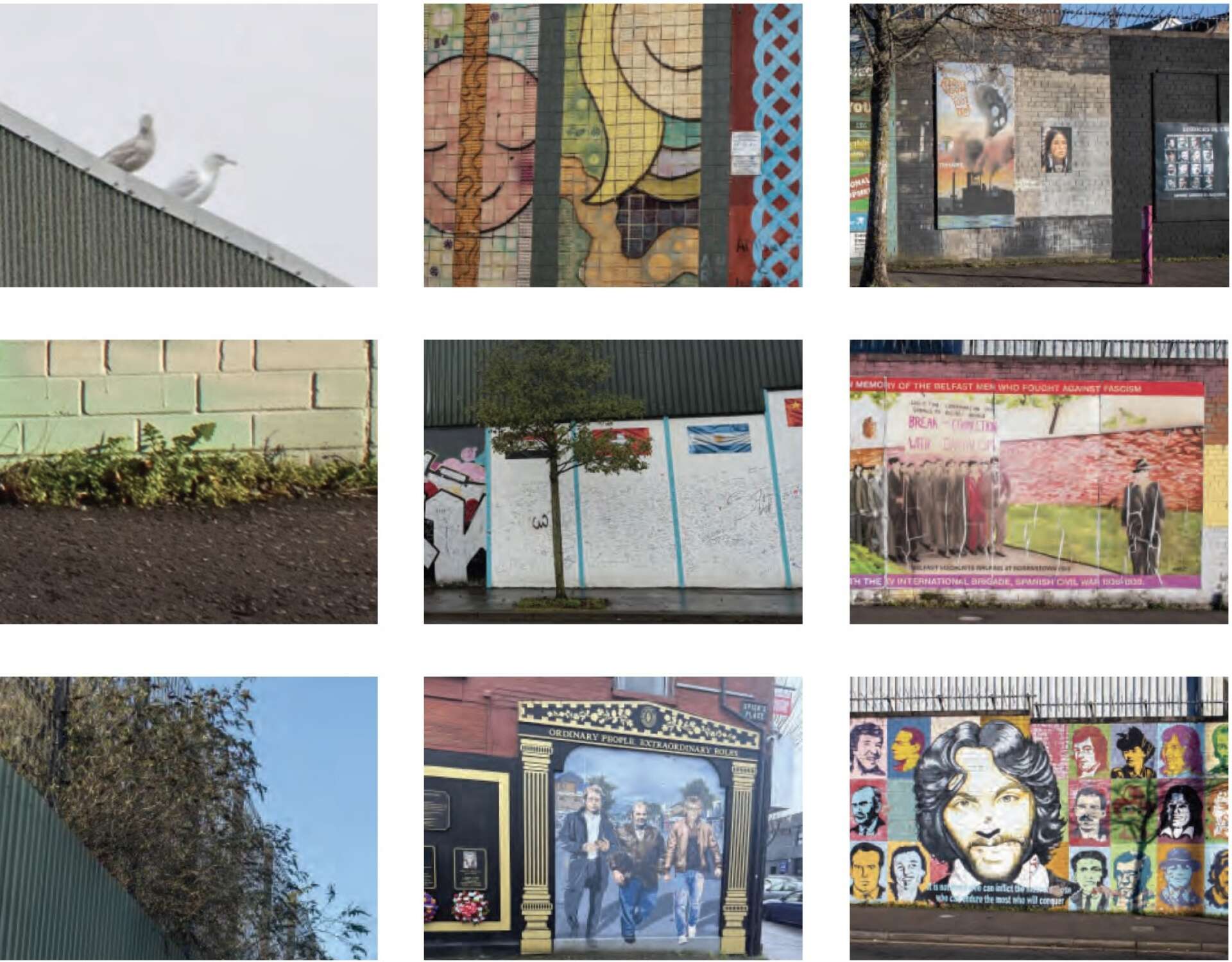
Figure 22: Photo by Holly Carton
Challenges during initial data collection included inclement weather, technical difficulties with equipment, and the social dynamics of working within unfamiliar communities. These constraints have informed adaptive strategies for future fieldwork.
The preliminary findings highlight the diversity of artistic and ecological interventions on Belfast’s post-conflict walls, the influence of materiality and construction techniques, and the persistent impact of environmental and social factors. These insights lay the groundwork for deeper analysis and the development of frameworks to guide future interventions. Further analysis suggests that the transformation of these walls is not solely a product of intentional design but is also shaped by spontaneous and sometimes unpredictable processes. For example, the proliferation of weeds and moss is closely linked to microclimatic conditions and the physical properties of the wall surfaces. The durability of ceramic and metal installations contrasts sharply with the rapid deterioration of canvas and plastic-based artworks, indicating that material choice is a critical factor in the longevity of interventions. The ecological dimension is further illustrated by the presence of birds, insects, and other fauna, which contribute to the dynamic character of the wall environments. These findings underscore the importance of considering both human and non-human actors in the analysis of post-conflict urban spaces.
Overall, the preliminary observations provide a nuanced understanding of the complex interplay between materiality, artistic intervention, ecological processes, and community agency. These insights will inform the next phase of research, which will focus on developing practical guidelines and frameworks for future interventions
Discussion
The interpretation of my finding thus far are as follows:
How does materiality impact the types and nature of interventions that occur in and around post-conflict walls?
The findings indicate that the materiality of post-conflict walls exerts less influence on the types and nature of interventions than initially anticipated. Instead, climatic factors appear to play a more significant role in shaping both artistic and ecological interventions. While the physical properties of the walls do affect the methods by which art is attached or affixed, such as the suitability of surfaces for painting or mounting installations, the presence of similar flora across different wall types suggests that materiality does not substantially impact plant growth. Notably, the height of the walls may be a more critical factor influencing local fauna, as it affects the accessibility and habitat potential for birds and other urban wildlife.
How does time affect the materiality of post-conflict walls and the interventions enacted upon them?
Time emerges as a crucial variable in the transformation of post-conflict walls. The duration required for certain species, such as buddleia, mosses, or lichens, to establish themselves underscores the importance of temporal processes. Prolonged exposure to climatic conditions accelerates the degradation of artistic interventions, with materials such as canvas and plastic coverings showing visible signs of wear over time. Additionally, there is evidence that the walls themselves undergo physical modifications, such as being made taller, which further influences the trajectory of interventions.
To what extent do various actions, whether political, economic, policy-driven, artistic, or ecological, influence the materiality and the range of possible interventions on these walls?
Various actions, political, economic, policy-driven, artistic, and ecological, collectively shape the materiality and range of possible interventions on these walls. For example, shifts in political climate have led to changes in the content and medium of wall art, such as the replacement of violent imagery with depictions of community service, often rendered on more durable materials like aluminium sheets. The evolution of artistic expression is thus closely tied to broader societal trends and the ongoing negotiation of meaning within these contested spaces.
The findings corroborate and extend existing theoretical frameworks, such as those proposed by N. Kliot and Y. Mansfield, situating the current state of these walls at the juncture of “Unification” but prior to becoming “uncomfortable monuments” as described by Kowarik. Although the walls may be politically unified, underlying tensions persist, as evidenced by media restrictions and the continued negotiation of their symbolic significance. This research thus contributes to the understanding of post-conflict urban spaces as dynamic and evolving entities, rather than static memorials.
From a practical perspective, the durability of artistic materials varies considerably. Ceramic installations demonstrate superior resilience to weathering, with little to no visible damage, while canvas and plastic coverings are prone to fading, cracking, and deterioration due to sun and rain exposure. Paint is also susceptible to environmental degradation. Ecological interventions, such as the growth of weeds, moss, and lichen, persist regardless of material type, suggesting that future design guidelines should account for both artistic and ecological processes in the transformation of post-conflict walls.
One of the most surprising outcomes was the sheer diversity of materials used in artistic interventions. This variety appears to be a response to local climatic conditions and community efforts to preserve art for extended periods. Additionally, the physical modification of walls, such as the extension and fortification observed in Shore Strand, highlights the ongoing evolution of these structures beyond their original function.
The study’s findings align with existing research regarding the themes and functions of wall art in post-conflict settings. However, the extensive range of materials employed for artistic expression has not been widely documented in previous literature, marking a novel contribution of this research. This underscores the importance of materiality not only in architectural analysis but also in understanding the socio-cultural dynamics of urban transformation.
Several constraints were encountered during the research process, including inclement weather, technical challenges with photographic equipment, and the complexities of conducting fieldwork in unfamiliar communities. These limitations have informed adaptive strategies for future research, such as improved logistical planning and methodological flexibility. Continued fieldwork is planned to address gaps and further refine the analysis.
In synthesising these findings, it becomes clear that the transformation of post-conflict walls is a multifaceted process shaped by the interplay of environmental, social, and political factors. The research highlights the importance of adopting a holistic approach to the study of urban barriers, one that integrates material analysis with ecological and community perspectives. The dynamic nature of interventions, both intentional and spontaneous, suggests that post-conflict walls are not merely relics of past violence but active sites of negotiation, creativity, and renewal.
The discussion highlights the complex interplay between materiality, climate, time, and societal influences in shaping the evolution of post-conflict walls. The research advances understanding of these structures as dynamic sites of artistic and ecological intervention, with implications for theory, practice, and policy. These insights set the stage for further investigation and the development of frameworks to guide future transformations.
Conclusion
This research has systematically examined the materiality, artistic interventions, and ecological processes associated with post-conflict urban dividing walls, with a particular focus on case studies in Belfast. The findings reveal that while materiality influences the methods by which art and interventions are affixed to walls, climatic factors and timing dynamics play a more significant role in shaping both artistic and ecological outcomes. The diversity of materials used in artistic expression, the persistence of flora across sites, and the evolving nature of interventions underscore the complexity of these urban structures.
By integrating qualitative and quantitative methodologies, this research advances the field of architecture through its comprehensive analysis of post-conflict walls as dynamic entities. The study contributes new insights into the interplay between materiality, climate, and social context, highlighting the importance of considering both artistic and ecological interventions in the transformation of urban spaces. The development of a research-through-design framework will offer practical guidelines for future art installations and ecological reclamation, supporting the evolution of these walls from security infrastructure to cultural and ecological landmarks.
Building on the preliminary findings, future research should expand the comparative analysis to additional post-conflict sites across Europe and beyond. Longitudinal studies are recommended to monitor the temporal evolution of interventions and to assess the long-term impacts of material choices, climate, and community engagement. Further investigation into stakeholder perspectives and policy implications will enhance the applicability of the research framework and inform adaptive strategies for urban transformation.
In closing, this research has laid the groundwork for a deeper understanding of post-conflict urban walls, emphasising the significance of interdisciplinary approaches and community involvement. The insights generated here are intended to inform both academic discourse and practical policy, fostering the development of urban environments that reflect and enrich the diverse values of their communities. The study’s emphasis on the integration of ecological and artistic perspectives positions it at the forefront of contemporary architectural research. By foregrounding the agency of both human and non-human actors, the research challenges traditional narratives that treat walls as static relics of conflict, instead presenting them as evolving sites of negotiation, creativity, and renewal.
Looking ahead, the recommendations and frameworks developed through this research can serve as valuable resources for policymakers, urban designers, and community leaders seeking to address the challenges and opportunities presented by post-conflict walls. The adaptability of the research-through-design approach ensures that it can be tailored to diverse contexts, supporting the creation of inclusive, resilient, and culturally resonant urban spaces.
Literature
Mohamed Gamal Abdelmonem, Rachel McWhinney (2015) In Search of Common Grounds: Stitching the Divided Landscape of Urban Parks in Belfast, Cities 44,pp. 40–49,
Alpar Atun, R., & Doratli, N. (2009) ‘Walls in Cities: A Conceptual Approach to the Walls of Nicosia’, Geopolitics, 14(1), pp. 108–134.
Brown, W. (2010) Walled States, Waning Sovereignty. New York: Zone Books.
Bonthoux S., Voisin L., Bouché-Pillon S. & Chollet S. (2019) ‘More than Weeds: Spontaneous Vegetation in Streets as a Neglected Element of Urban Biodiversity’, Landscape and Urban Planning 185, pp. 163-172.
Brown, W. (2014) Walled States, Waning Sovereignty. Massachusetts: MIT Press.
Calame, J. & Charlesworth, E. (2009) Divided Cities: Belfast, Beirut, Jerusalem, Mostar, and Nicosia. Pennsylvania: University of Pennsylvania Press.
Calame, J. (2010) ‘The Pillory: Minority Containment in the Urban Domaina’, Politique étrangère, Winter Issue(4), pp. 783–797. https://doi.org/10.3917/pe.104....
Casey, E. and Watkins, M. (2014) Up Against the Wall. Austin: University of Texas Press.
Cooper, A. & Tinning, S. (2020) Debating and defining borders. London: Routledge
Dahdal, S. H. (2017) The Rhetorics of Political Graffiti on a Divisive Wall. Doctoral Dissertation, Arizona State University.
Donnan, H. and Wilson, T.M. (2012) Borderlands: Ethnographic Approaches to Security, Power, and Identity. Lanham: University Press of America.
Flyvbjerg, B. (2001) Making Social Science Matter. Cambridge: Cambridge University Press.
Gordon, L. E. (2019) Real Research: Research Methods Sociology Students can use (2nd ed.). SAGE Publications.
Gosseye, J., Stead, N. & Plaat, D. (2018) Speaking of Buildings. Princeton: Princeton Architectural press
Gurung, A.B., Bokwa, A., Chełmicki, W., et al. (2009) ‘Global Change Research in the Carpathian Mountain Region’, Mountain Research and Development 29(3), pp. 282–288.
Hasan,D.; Bleibleh,S. (2023) ‘The Everyday Art of Resistance: Interpreting “Resistancescapes” against Urban Violence in Palestine’, Political Geography 101, 102833.
Hickey, R. (2014) ‘The Psychological Dimensions of Shared Space in Belfast’, City, 18(4–5), pp. 440–446. https://doi.org/10.1080/136048...
Hocking B. T. (2012) ‘Beautiful Barriers: Art and Identity along a Belfast "Peace" Wall’, Anthropology Matters Journal, 14(1), pp. 1–12.
Jepson, P. (2016) ‘A Rewilding Agenda for Europe: Creating a Network of Experimental Reserves’, Ecography, 39:. https://doi.org/10.1111/ecog.01602
Jones, R. (2016) Violent Borders: Refugees and the Right to Move. London, New York: Verso.
Jones, Reece(2019) Open Borders: In Defense of Free Movement. Athens: University of Georgia Press.
Kindon, S., Pain, R. & Kesby, M. (2007) Participatory Action Research Approaches and Methods. London: Routledge.
Kliot, N., Mansfield, Y. (1997) ‘The Political Landscape of Partitions’, Political Geography, 16 (6), pp. 495–521 doi:10.1016/s0962-6298(96)00020-0
Koolhaas, R. (1995) S,M,L,XL. New York: Monacelli Press.
Kowarik,I. (2019) ‘The “Green Belt Berlin”: Establishing a greenway where the Berlin Wall once stood by integrating ecological, social and cultural approachess’, Landscape and Urban Planning 184, pp. 12–22.
Law, J. (2004) After Method mess in social science research. London: Routledge.
Leavy, Pa. (2010) Method Meets Art: Arts-Based Research Practice. 3rd volume. New York:The Guilford Press.
Loveless, N. (2019) How to Make Art at the End of the World: A Manifesto for Research-Creation. Durham: Duke University Press.
Lucas, R. (2016) Research Methods for Architecture. London: Laurence King.
McAtackney, L. (2011) ‘Peace Maintenance and Political Messages: The Significance of Walls During and After the Northern Irish "Troubles"’, Journal of Social Archaeology, 11(1), pp. 77–98. https://doi.org/10.1177/146960...
McAtackney, L. (2015) ‘Memorials and Marching: Archaeological Insights into Segregation in Contemporary Northern Ireland’, Hist Arch 49, pp. 110–125. https://doi.org/10.1007/BF0337...
McCord, J. A.; McCord, M. J.; Davis, P. T.; Haran, M. E.; and MacIntyre, S. (2017) ‘The Political Cost? Religious Segregation, Peace Walls, and House Prices’, Peace and Conflict Studies: Vol. 24: No. 2 , Article 1.
McLintock, M. (2020) Peace-walls, Flags, and Dark Passages. Materia Arquitectura, (20), pp. 118–121. https://doi.org/10.56255/ma.v0...
McLintock, J. (2020) The Fight against Food Shortages and Surpluses: Perspectives of a Practitioner. CABI Publishing.
Mell, I. (2019) ‘Beyond the peace lines: conceptualising representations of parks as inclusionary spaces in Belfast, Northern Ireland’, Town Planning Review, 90(2), pp. 195–218. Available at: https://doi.org/10.3828/tpr.2019.13.
Monticelli, D. (2020) ‘Thinking the new after the fall of the Berlin Wall: Juri Lotman’s dialogism of history’, Rethinking History, 24(2), pp. 184–208. https://doi.org/10.1080/136425...
Morris, A.E.J. (1994) History of Urban Form: Before the Industrial Revolutions. London: Longman.
Mumford, L. (1989) The City in History. New York: Harcourt.
Nagle, J. (2009) ‘Sites of Social Centrality and Segregation: Lefebvre in Belfast, a “Divided City”’,,Antipode, 41(2), pp. 326–327.
Pallister-Wilkins, P. (2022) Humanitarian borders: Unequal mobility and saving lives. London: Verso Books.
Photiou, M. (2015) ‘Be/Come Closer to Home: Narratives of Contested Lands in the Visual Practices of Katerina Attalidou and Alexandra Handal’, Third Text, 29(4–5), pp. 340–355. https://doi.org/10.1080/095288...
Rael, R. and Cruz, T. (2017) Borderwall as Architecture. 1st ed. Berkeley: University of California Press.
Rose, G. (2016) Visual Methodologies. London: Sage.
Rowland, I.D. (2014) Vitruvius: Ten Books on Architecture. Cambridge: Cambridge University Press.
Semper, G. (1851) The Four Elements of Architecture.
Shulyk, V. et al. (2024) ‘About the Concept of Improving Border Defense Lines by Means of Landscape Architecture’, Landscape Architecture and Art, 24(24), pp. 89–96. Available at: https://doi.org/10.22616/j.landarchart.2024.24.12.
Silver, H. (2010) ‘Divided Cities in the Middle East’, City & Community, 9(4),pp. 345–357. https://doi.org/10.1111/j.1540...
Summa, R. (2019) ‘Inventing Places: Disrupting the "Divided City" ’, Space and Polity, 23(2), pp. 140–153. https://doi.org/10.1080/135625...
Vallet, E. (2014) Borders, Fences and Walls: State of Insecurity. London, New York, Routledge, Francis Taylor Group.
Vitruvius & Rowland, I.D. (2014) Vitruvius: Ten Books on Architecture. Cambridge University Press.
Webster, C., & Timothy, D. J. (2006) ‘Travelling to the "Other Side": the Occupied Zone and Greek Cypriot Views of Crossing the Green Line’, Tourism Geographies, 8(2), pp. 162–181. https://doi.org/10.1080/146166...
Zeisel, J. (2006) Inquiry by Design: Environment/Behavior/Neuroscience in Architecture, Interiors, Landscape, and Planning. New York: W.W. Norton.
Zetter, R. & Blitz, B.K. (2014) ‘Contestation and Reconstruction: Natural Capital and Post-Conflict Development in Borderland Regions’, Stability, 3(1), Article: Art. 32.
Zmelik, K., Schindler, S., & Wrbka, T. (2011) ‘The European Green Belt: international collaboration in biodiversity research and nature conservation along the former Iron Curtain’, Innovation: The European Journal of Social Science Research, 24(3), pp. 273–294. https://doi.org/10.1080/135116...