Reorienting the Project Reuse as a Critical Practice
Abstract
The article investigates the architectural competition as a potential instrument of scientific advancement, capable of producing not only design outcomes but also verifiable knowledge about contemporary disciplinary processes. From this perspective, the research is situated within the field of research on design, treating the project as an empirical object and attributing epistemic value not to the result, but to the traceability of decisions, deviations, and operative conditions that guide its development.
By considering uncertainty, negotiation, and adaptation as constitutive parts of the project, non-standardized processes can be read as a field of inquiry rather than as anomalies to be corrected.
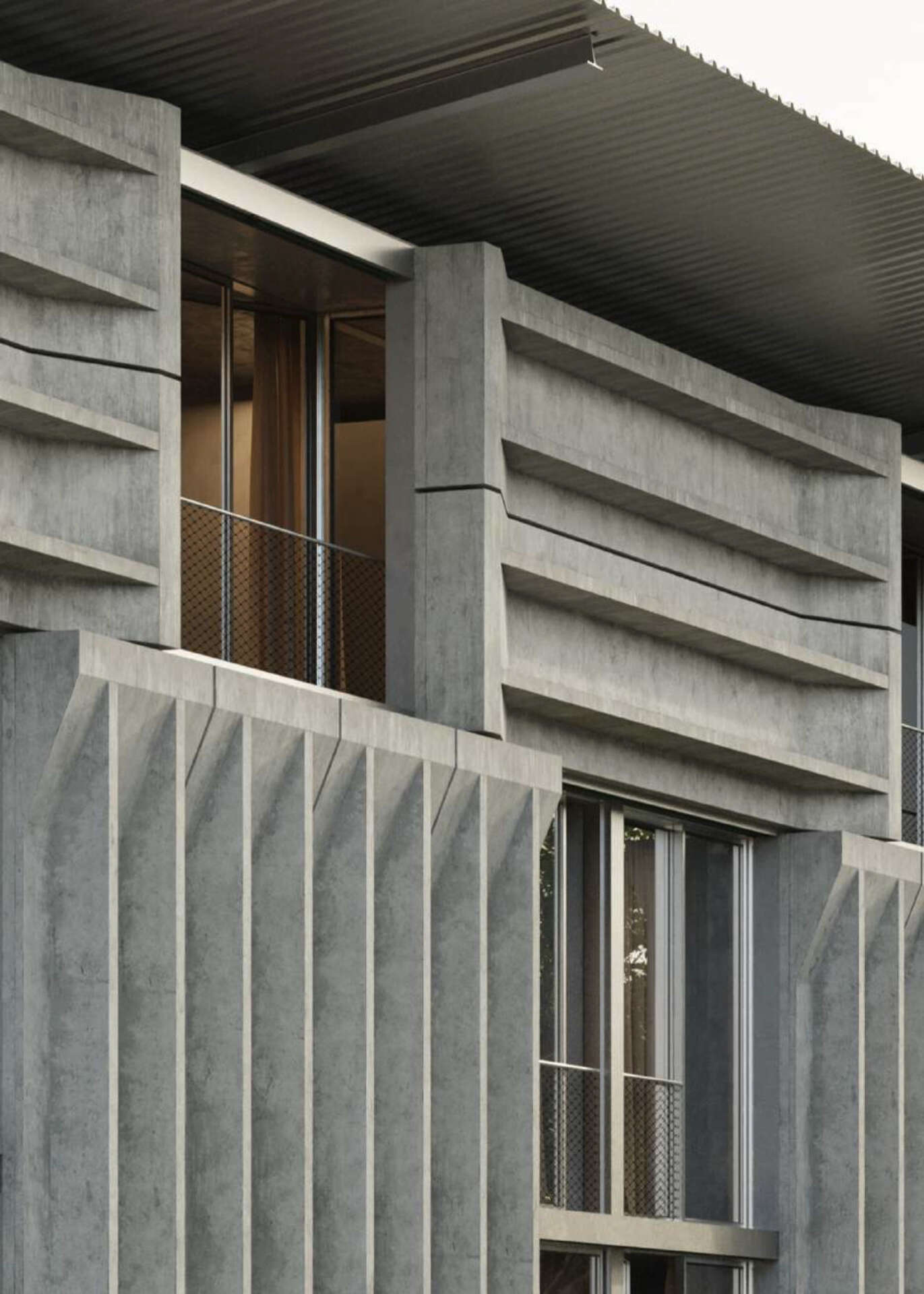
Within this framework, Elementa, a project by the practice Parabase, is examined as a case study. Developed within the context of public policies of the Canton of Basel-Stadt, Elementa is based on the assumption of the reuse of building components—particularly structural and façade elements derived from the dismantling of the Lysbüchel Coop parking garage (1970)—as an initial design condition. In the competition under analysis, sustainability is not defined as a qualitative objective, but as a set of measurable constraints that affect the technical configuration of the project and the evaluation criteria from the earliest design stages. On this basis, the article reconstructs the initial conditions and an intermediate stage of the project through competition documentation and interviews with the actors involved.