To Take a Risk of Creating new Knowledge
Reflecting upon the Ca2re Conference Trajectories in Hannover, our perspectives stem from the intersection of artistic and academic fields in Architecture. While Dr. Andgelka Bnin-Bninski (ABB) is an architect, lecturer and researcher at the Faculty of Architecture - University of Belgrade and coordinator of ARENA, Boštjan Botaš Kenda (BBK) works in visual communication design in public spaces and leads Design+Science and Interactive Design programs at the Academy of Fine Arts and Design at the University of Ljubljana.
In order to discuss three major subjects: design-driven research (1), trajectories (2) and spaces (3), we propose a dialogical discussion in three steps: statements, questions and re-reviews. There are three statements per person defined by three subjects; questions are raised and substantiated through the exchange of statements, and the reviews consist of a review of the statements and questions, resulting in a joint review. Additionally, we propose a graphic representation of this three-folded process. The idea was to appropriate and re-invent the format in order to fit our needs to share, exchange and think together. While floating in the unstable field of design related research trajectories, deeply inspired by the CA²RE event in Hannover, we continue our lines of thought and emerge with the ideas started during this community gathering earlier this year. Without ambitious conclusions, we decide that it is necessary to take the risk for creating new knowledge in our fields and we invite you to write on margins, so we can continue to draw trajectories together, during the next CA²RE event.
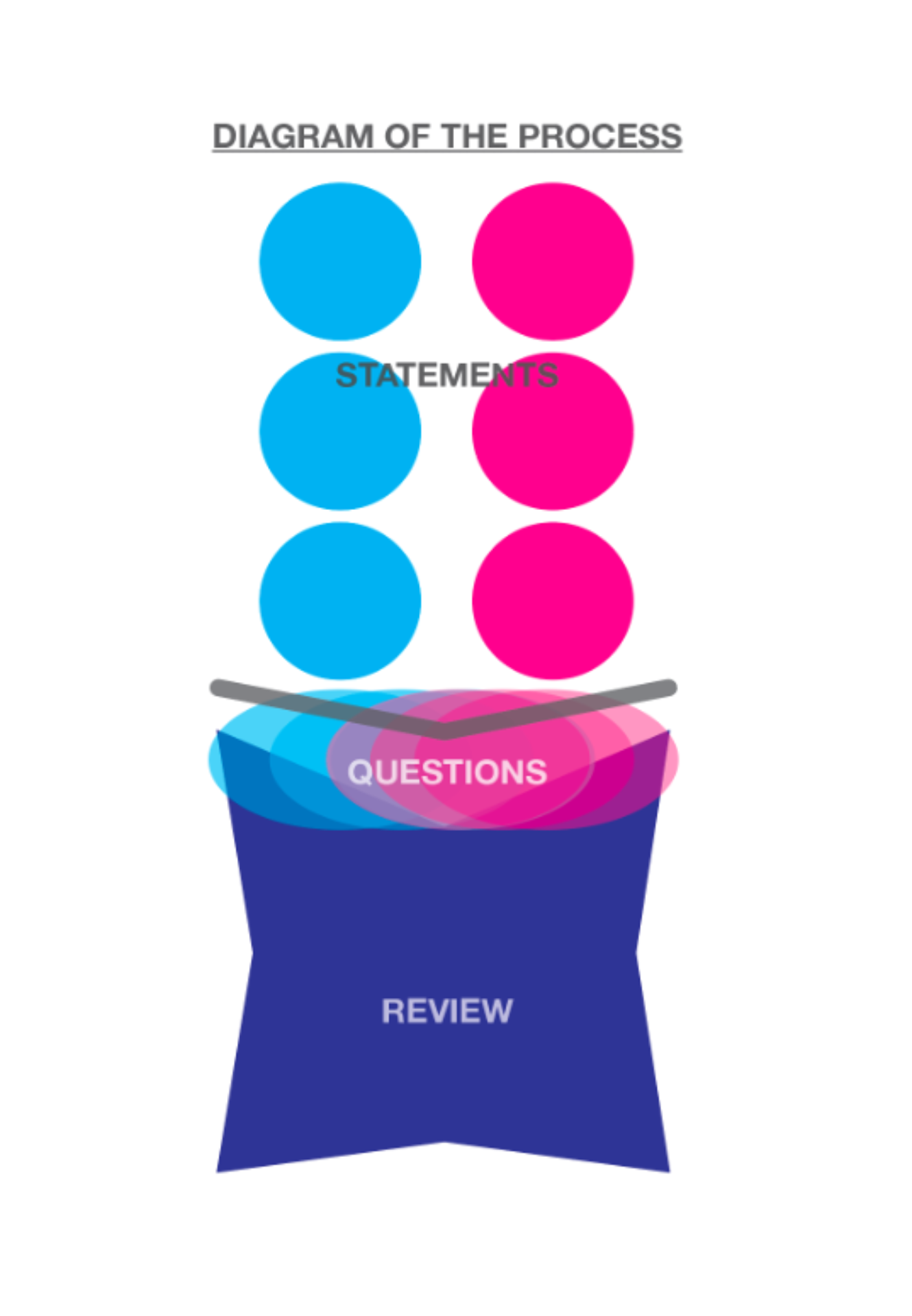
Figure 1: Scheme of approach, Image by the authors
Statements
Anđelka Bnin-Bninski (ABB): Is a design-driven research radical? PhD and beyond (1)
Practices of architecture are dominantly seen as solution providers − offering stable and clear responses to spatial demands of the building industry. Envisioned ‘architectural solutions’ are highly conditioned by the global market, quests for speed, financial efficiency and investors’ benefit. Auxiliary, university education and academic research are often detached from these issues and sometimes even mutually non-aligned. This situation is resulting in simplifying and undermining the overall capacity of architectural creative thinking and its imaginative force.
How do we operate within contradictions between the three major fields of the architectural profession: the building industry, university education and academic research? Is it possible to create an advantageous interplay? And finally − is, at this time the imaginative force of architecture considered as a radical practice?
My positioning is based on design-driven research as a radical practice of imagination intersecting the three major professional streams. The initial argument is anchored in Tim Ingold’s recent publication “Architecture educates!” where he points out the specificity of architectural and artistic education and the urge to lean on its creative and imaginative potencies. Ingold elaborates that education in science, techniques and mathematics is submissive to strict demands of the neoliberal knowledge economy. In these circumstances, students are considered as consumers and lecturers as service providers, responsible for the knowledge-product delivery. Following his observation, a doubt occurs: the creative thinking and its imaginative potential is not needed nor desirable in the dominant economical systems, yet it remains essential for our resilient and meaningful future.
In order to address the raised questions and doubts, I suggest discussing design-driven research as an experimentation field that may bridge industry, education and research. The design-driven PhD, (even though it is not a mandatory as a design-related research trajectory), disposes a potential to act as a relational bridge that is able to engage with the profession a whole. CA²RE experience largely implies that the role of an artefact in a design-driven approach is essential as the artefact is able to preserve not just a stable links between the industry, education and research, but also contradictions embedded in these three fields. The design-driven research might be a radical practice as in its very nature it is investing creative potencies as a critical actor and in such a way it is able to open a chance for our profession to nurture, to question and reinvent itself and to thrive.
Boštjan Botaš Kenda (BBK): Artistic doctorates: the significance and value of research through practice (1)
We constantly ask ourselves about the meaning and role of practical research in the arts. The very premise that art is something broad, all-encompassing, and noble makes research in these contexts seem too mundane, direct, and perhaps even pointless. What are you going to research if it’s something intangible? It’s as if you were trying to make the abstract concrete.
No, the problem lies in the interpretation of the term. Is research truly the exclusive domain of science—a set of methods based on the processes of artistic creation that connect the conscious and the unconscious? The interweaving of interdisciplinary content enriches and broadens the fields governed by these processes.
This intertwining—this principle of affirming absolute values between art and science, which we have known since the dawn of civilization—enables us today to reestablish the foundations that affirm and enhance both activities. Has the reinterpretation of the roles of art and science—with a tendency toward synergistic activities—introduced an element of research into art?
ABB: How to face the unease in design-driven research trajectories? (2)
Design-driven research can be confusing and very difficult at times, form the within (as a researcher) and from the outside (as peer or a reviewer). It is mostly due to the interdisciplinarity and trans-disciplinarity of this approach to the research. The engagement with various disciplines implies work on different positions and various media, thus the movements of thoughts and ideas are often non-linear.
In shifting trajectories of design-driven and artistic research in architecture and the arts, practice itself has become a vital form of inquiry. Rather than following only established scholarly routes, these approaches often move in unpredictable ways—surveying boundaries, overlaps, and fissures between fields. Yet this crossing of boundaries carries its own tensions. Jane Rendell has described a persistent anxiety of interdisciplinarity—a deep-seated unease at the edges of disciplines, where enthusiasm for collaboration meets resistance. Drawing on Julia Kristeva, she notes how specialists often protect their domains, and how stepping into the unknown can provoke ambivalence, fear of failure, and the psychic discomfort of surrendering hard-won expertise. In design-driven research this anxiety appears when practitioners move beyond familiar methods or institutional expectations, risking misrecognition or the sense that their work no longer “belongs” anywhere neat.
At the same time, Rendell reframes this anxiety as potentially generative. By paying attention to the emotional and relational (or psychic) dimensions of working across fields—the play, trust, and care required in transitional spaces, inspired by D.W. Winnicott—she suggests that interdisciplinarity can become a site of fragile transformation rather than mere borrowing or conflict. New forms of understanding emerge precisely where disciplines fray and reconnect. For events such as the CA²RE conference in Hanover 2026, which explores specifically trajectories of design-driven and artistic research while fostering a community attentive to how we care for one another’s work and approach with openness, curiosity and empathy: they remind us that the anxious edges of interdisciplinarity and transdisciplinary are not obstacles to avoid but places where more responsive, ethical, and spatially attentive practices can take root.
BBK: Terminology regarding research through practice in art (2)
Is the terminology in this field and for such a method appropriate, or does it even exist? It is already evident from the title itself that the research principles and methods applicable in science are not adequate for research in practice, in art. “Artistic research” is not the correct term… the artist explores and master’s knowledge and insight in order to create, to produce, to express themselves, and to use for this purpose a visible, audible, sensory, and multifaceted materialized language. The power lies not only in the choice or interweaving of expressive languages, but also in artistic interdisciplinarity in its very essence.
Therefore, the term “research” in one’s own artistic practice—which functions merely as a look into one’s own work and processes without involving the broader context—can serve as a re-examination of one’s own work, or rather, a reflection on artistic practice.
ABB: What are the spaces for a cultivation of design-driven research? Formats, people, constellations (3)
CA²RE community has various attempts to accommodate, host and enable the cultivation of design-driven research in architecture and arts. Spatial capacities of different host institutions of CA²RE events are intertwined and challenged with spatial choreographies of this community. Within CA²RE as a community space itself, there is permanent rethinking about the forms and formats, constellations and choreographies of sharing and cultivating design-driven research. Round tables and rounds of tables, lunch and coffee tables, workshops, groups, performances, presentations, walks and talks, chats, online and ofline, exibition tables and walls, panels. These formats are recurrently confronted to traditional ways of doing research and learning about the research.
Jeremy Till dwells the notion of “educating otherwise” to offer a powerful lens for rethinking spaces for education and cultivation. Starting from the observation that architectural education tends to be inherently conservative, bound by longstanding rituals and the reproduction of professional norms, Till calls for alternative approaches that embrace contingency, criticality, and the integration of design practice with ongoing inquiry. In educational organizations this might involve creating environments where inherited methods are questioned, disciplinary boundaries are crossed, and design is understood not as a fixed skill set but as a dynamic way of exploring and contesting the world—precisely the conditions under which design-driven research can be actively cultivated rather than passively and merely taught.
I would suggest that the design-driven research demands a rethinking of inherited and fixed spatial systems in research and practice; spaces we engage with are just a polygon to investigate various forms of interaction and to adapt them to a specific sites for nourishing and cultivation of particular research approaches in a variety of its forms.
BBK: The influence of the environment, or rather, the environment’s influence on art (3)
Practice, education, and reflection are the pillars of all forms of artistic expression, regardless of how they come into being. We understand this when we analyze the specificity of media, which are entirely different from one another—and may even be contradictory—yet enable an influence on the environment, time, and resources in which they are created and in which they operate.
Imagine a closed laboratory process and scientific analytical and research work proceeding in parallel with the processes in the “workshop,” ultimately converging to substantiate the initial thesis. The public learns of the findings indirectly.
Or consider a design, architectural, or perhaps sound project that takes shape in full view of the public—or at least is presented to the public as the result of a process—whether it be a work of art in an urban setting or an intervention in the landscape, which we, as users, gradually accept and evaluate.
Just as the author or collective of authors views it, it establishes an evaluation that enables and provides a platform for new works by others. This is a key point of reflection, re-examination in art.
Questions
BBK: In one of your statements, you describe the state of anxiety in interdisciplinarity: Is the anxiety caused by interdisciplinarity a state that enables development and progress?
ABB: I understand an anxiety in this context of interdisciplinary research as a necessary form of unease and discomfort in crossing into more or less friendly discipline. As someone from interdisciplinary background, I think that the real research adventure lies in cautious curiosity towards the other discipline. If we are rigorous, this displacement embodies the ambivalence and the fear of failure; and we really need to be rigorous and honest because the mere borrowing from another discipline (to dwell further on Randall’s assumption) is inappropriate, useless and may appear as violent and un-fair. And to refer to the notion of progress from your question, I am not convinced that progress as such is what our societies need, but more a site for fragile transformation where we all reflect and evolve. I believe that the real field of interdisciplinarity is demarked by fragile and vulnerable research trajectories that can result in the precious new knowledge.
BBK: The term that defines the position of processes within the environmental system is “Alternative Education.” Does it offer open possibilities for rethinking spaces for education and personal development? Could this be linked to “the ergonomics of learning and teaching”?
ABB: When I was saying about the need to rethink spatial concepts of how we share, teach and evaluate design and practice led research, I was thinking more about spatial constellation of people, objects and artefacts involved, about constructing the site-specific situation that fits the best for the specific persons and research moment, because I am convinced that this spatial situation can play additional role and maybe contribute to the research, learning and knowledge production. I do not know how the ergonomics of learning and teaching could be approached on this note, but I find your perspective very intriguing, will definitely think more about that. Maybe to underline that the comfort would not be the objective of my idea, but more a proposition to involve space as another research medium, as an additional question into the equation. Again, maybe also in this sense, the real quest is in the right measure between the personal and collective experience, personal development and common knowledge production.
ABB: I have noticed in your statements a clear distinction betwen the architectural and the artistic design-driven research, did I understand correctly? Can you elaborate further on this distinction or the relation between the two?
BBK: The answer lies precisely in the relationship between the two fields. Scientific research and artistic inquiry differ; they do not share common starting points. They do not employ the same methodologies for carrying out their processes. They yield different results. However, they share an identical goal: contributing to the discipline. This distinction, nevertheless, dissolves when we introduce the fact that architectural design embodies both approaches—scientific inquiry and artistic questioning. These must remain separate.
ABB: When you explain the collision between the artistic research and scientific vocabulary and methods, you suggest the artistic research needs its proper "rules"? I wonder how subjective these proper vocabulary and methods can be relating to the specific practice and how we deal with the shareability of artistic research in this sense?
BBK: Precisely because of its own structure, its methodologies, and concrete, already existing practices, the process of developing artistic inquiry operates completely autonomously, thereby ensuring the continuous expansion of the body of content and the establishment of values for the development of the fields in which it manifests itself.
Review
The questions that shed light on key areas of activity within the processes—specifically those of the architectural profession—are its practices, education, and research.
Of course, architecture, like design, positions itself in relation to artistic processes as a hybrid structure that is not limited to the natural sciences or the arts, but encompasses all forms.
Naturally, we ask ourselves whether the definition of creativity is merely a connection to artistic processes, or whether creativity can be the domain of empirical structures and ways of thinking. In the form of three questions:
- Is design-led research radical? The Doctorate and Beyond.
- How can we address the discomfort inherent in design-led research processes?
- What are the spaces for cultivating design-led research? Forms, People, Constellations
Here are the answers regarding the meaning, role, and relationships in the emergence and development of research processes through practice in relation to the form of the artistic doctorate. Or rather, the deconstruction of key questions is this form, which we replace with—or define through—the term “re-examination of work in practice” as research in science.
Are the art and science that different and confrontational? We would like to challenge this one. Without an extensive elaboration, the creativity is the key force for both, personal and collective creativity; and there is also the trans-generational knowledge deeply embedded in both – that notion Ingold highlights as a treasure of our educational systems. In the world of creativity, the trans-generational knowledge exchange strongly differs form traditional forms of teaching and conservativism of academic education. This opposition implies rethinking the politics of design-driven research in art and architecture. Here is the subtle tension defined as a “re-examination of work in practice” as “research in science” and we would like to propose another couple of terms to “replace with—or define through”: “re-examination of work in science” as a “research in practice”. As Rendall suggests with the anxiety of the interdisciplinarity, what would you think about the cautious leap into another in order to take responsible risk for a creation of a new knowledge?
Literature
Ingold, T. (2024) Architecture Educates! Annecy: ESAA éditions.
Rendell J. (2004) ‘Architectural Research and Disciplinarity’, Architectural Research Quarterly 8/2, pp. 141–147.
Till, J. (2018) Educating Otherwise. The Bartlett International Lecture Series (21 February 2018) http://www.jeremytill.net/architectural-education (accessed: 23th June 2026).
Kisangala, G. and Otieno Odoyo, C. (2026) ‘Rethinking Information and Communication Technologies (ICT) for Development: A Philosophical Reexamination’, African Journal of Empirical Research, Vol. 7/1, pp. 1174–1186.