When Methodology shapes the Artistic Process
Idensitat is an arts project whose trajectory is defined by an ongoing investigation upon the impact of creative practices on the public sphere, considering the ways in which these practices engage with sites and locations in their spatial, temporal, and social dimensions. Over time, Idensitat has evolved into a complex system which incorporates other projects, actions, and interventions, progressively expanding across multiple local contexts.
Throughout its development, Idensitat has fostered a wide range of creative strategies which bring together research, production, and cultural experimentation. Its trajectory is rooted in collaborative dynamics, in order to create an intersection between contemporary artistic practices and other disciplines, connecting with specific layers of social space.
Under the maxim “experimenting with places to transform artistic practices, and experimenting with artistic practices in order to transform places”, Idensitat highlights the active role of art within social contexts, while reinforcing the capacity of art to disseminate cultural content across a wider social environment. Over the years, the project has consolidated a long-term strategy focused upon strengthening social interaction, collaboration, content production, and knowledge exchange.
In the following we delve into IDENSITAT´S ways of working, reflecting upon the production of social space as a positioning within spatial practices, and looking at three projects realized together with invited artists.
Idensitat investigates the Connection between Arts and the Production of Social Space
Idensitat’s roots lie in the rural setting of the village of Calaf. In 1999 it held its first edition, focusing upon artistic practices linked to its local context, with the aim of expanding the concept of public space. We have focused subsequent editions on this task, always within the framework of a dialogue between the rural and the urban, which has enabled us to engage in the redefinition of, and experimentation with the concept of ‘social space’. We have continued to work with this concept to the present day, convinced that culture and art contribute to the creation of other social spaces built upon critical imagination.
Sometime later, we found ourselves enlightened by Bruno Latour’s actor-network theory, in which he stated that there is neither a specific thing nor a specific property that can be called ‘social’. Latour suggests that there should be a redefinition of the social as the result of a process of associations and connections, of actors and networks, and we felt ourselves to be in profound agreement with this conception of the construction of the social. Actors are those who establish relationships between entities which are not in themselves social.
This way of defining the emergence of the social—as a kind of assemblage arising from a connection between a variety of elements—helps to explain how we conceive of the creation of social space and how we understand artistic practice as it takes shape in relation to a specific context; a practice immersed in a process that seeks to make sense of an interaction between heterogeneous elements and agents—both human and non-human—which form part of a territory, inhabit a specific ecosystem, and in which they take shape.
The desire to shape complex, heterogeneous, interrelated, and symbiotic ecosystems, drawing upon dialogue and reciprocity, with the aim of overcoming the rural-urban dichotomy, stems from cultural discourse and aligns with the ecosystemic vision proposed by Latour. But can we make it a reality? When culture emerges from the place itself, working from a sense of proximity, situated knowledge, contextualised practices, and generating long-term connections, perhaps we are moving closer to this idea, or illusion. But culture is complex; sometimes it operates from a local perspective and at other times from that of the visitor; it is often peripheral, yet cannot be disconnected from the centre; it explores collaborative strategies, yet unfolds within competitive contexts. Throughout our journey, we have not managed to resolve these conflicting tensions, although they have given us the energy to work at the boundaries of these tense spaces, trying to envision heterogeneous relationships which allow us to build other possible social spaces.
Below, we present a few of our projects which demonstrate how our methodology shapes the processes, and how the outcomes become methodological reconfigurations in their own right; in other words, seeking to transform places by transforming practices themselves.
Transversal Aesthetics
Transversal Aesthetics (Idensitat, n.d.-a) is a programme for research and experimentation on the intersection between art, mediation, and social space. It represents a place of confluence between artistic practices as a vehicle for critical research, mediation activities as a vehicle for the production of content, interaction, and learning transfer, and the urban context as a vehicle for connecting specific themes of work to a specific active social space relevant to these themes. The programme is based upon the cross-disciplinary dimension of art, combining experiences and activities which impact upon common themes and strategies shared among various participating agents. There have been seven editions of the Transversal Aesthetics programme by Idensitat and Centro Huarte, each focusing upon a specific theme: "Peripheral Ecosystems", "Ecosystems of Leisure", "Ecosystems of Fiction", "Immunity ~ Community", "In the Air", and “Silenced ~ Reactivated”.
Transversal Aesthetics Methodology. Transversal Aesthetics methodology follows three main strands: organising temporary artistic residencies with the participation of an artist or a collective as creator and researcher within the local context; setting up a temporary node involving various active local agents; and educational interaction as a transfer of knowledge and learning from other fields and subjects, with activities that allow for the expansion of creative practices in a multidimensional space. These three strands may cross over, they may work in unison, they may coexist in parallel, or they may intertwine with others, so that in this symbiosis of possibilities, all the elements that come together undergo an alteration or mutation, allowing them to relocate to other spaces of critical knowledge.
The context of thought and action activated during Transversal Aesthetics may comprise a number of agents, organisations, and individuals with an interest in participating from the artistic, social, political, or research spheres. To cultivate the local context prior to activating the residencies, or to open up spaces for thought and encounter in parallel with the artistic practice, it is necessary to engage with, and care for, the local context in which the residency takes place. Participating artists or collectives must propose a project which involves the node, and must add their own agents to the network, agents who may become more or less involved, depending upon their role within the project’s framework. Projects are carried out using open formats of production, proposing activities or interventions in public space, or in educational and social environments, and presenting the results publically.
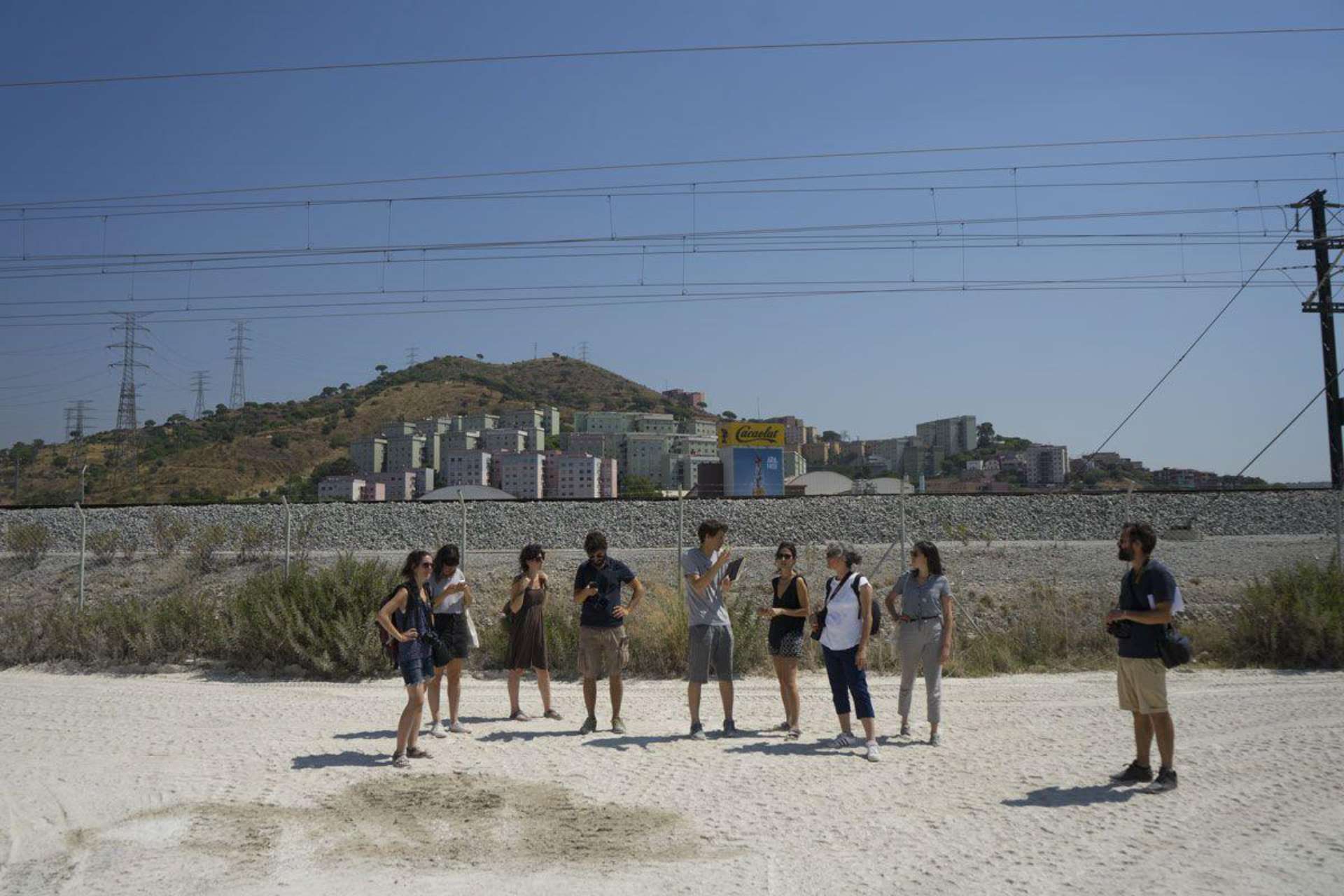
Figure 1: Intermediate zone | E-SPACE. Workshop by Ángela Bonadies and Idensitat
WHO CARES? as part of Transversal Aesthetics
The Who Cares? programme, defined care as a shared responsibility towards our local and global communities, to whom we address our work as organisations dedicated to artistic production. It created spaces for dialogue and processes for expanding the social impact of artistic practice, envisioning collective futures and presents in which mutual care and care for our environment are central.
Within the framework of Who Cares?, we aimed to revisit the relationship between immunity and community, approaching these concepts from the perspective of artistic practices, and examining the roles that care plays in this contrast.
With the objectives of further exploring the connection between immunity and community, and of rethinking these concepts after the pandemic, beyond distancing, isolation, digital mediation, fear of contagion, and the pursuit of total immunity, we opened the research towards the changes needed to improve the circumstances of the cultural and artistic sector, as well as to deal purposefully with the problems and inertia which affect the artistic community when in contact with the cultural institution.
Our aim was to envision a common development based upon care, intergenerationality, and the inclusion of a broader range of voices from the sector in decision-making spaces, reviewing concepts such as instability, ethics, inclusion, transparency, the value of work, rights and obligations, community, immunity; concepts which are all linked to the understanding of care as an essential principle of an ethic which should govern professional relationships based upon respect, equality, and mutual support.
The philosophy of care embedded in Idensitat’s contribution to Who Cares?, through the Transversal Aesthetics programme, focused upon envisioning futures in which mutual and environmental care improve relationships and recover the idea of community as res publica: a shared, affective, and learning-oriented space. From this perspective, we created a critical working environment in which artistic processes were developed within institutions and social contexts, enabling new kinds of community to be assembled.

Figure 2: Fuegos de alto grado, Sara García. Transversal aesthetics. Immunity ~ Community. Idensitat and Centro Huarte
Idensitat, together with Centro Huarte, and the Consorci de Museus de la Comunitat Valenciana, developed Transversal Aesthetics: Immunity–Community as part of Who Cares?, implementing three site-specific artistic residencies between 2021 and 2022 :
Fuegos de alto grado by Sara García in Huarte, a project which explored connections with the land through fermented foods, ceramics made with local clay, and collaboration with educational spaces.
Vítol; Laboratorio para resignificar la fiesta by Cúmul and Idensitat in Castellón. This project was an open laboratory to reimagine the public festival, both locally and through its ancestral and communal dimensions.
Equipo interdisciplinario de ensayos malvidentes by Laura Arensburg in Valencia, explored peripheral and shifting visual perspectives, bringing together people with various visual impairments and ophthalmologists.

Figure 3: Vítol. Laboratorio para resignificar la fiesta (Vítol; A Laboratory to Re-define the Public Festival). Cúmul and Idensitat. Transversal aesthetics.Immunity ~ Community. Idensitat and Consorci de Museus de la Comunitat Valenciana.
Sounds of our Cities & Voices
Sounds of Our Cities (Idensitat, n.d.-b) was a Creative Europe-funded project focused on cultural cooperation and based upon research and knowledge transfer within the fields of art, technology, and social space, a critical reflection about cultural identity in relation to the concepts of community and silence. Developed between 2019 and 2021 in the Krottegem district of Roeselare and the Sant Andreu district in Barcelona, Sounds of Our Cities unfolded through hybrid (on-site and remote) artist residencies and public exhibitions. These residencies involved workshops, collaborations with student groups and local participants, and smaller-scale encounters between artists and organisations. In Barcelona, the residencies, some conducted remotely due to the pandemic, generated diverse approaches to sound art practice:
Anne Fehres and Luke Conroy created soundscapes rooted in themes of community during a period of empty, constantly changing public spaces.
Donia Jourabchi developed a site-specific practice exploring acoustic territoriality and the uniqueness of listening experiences.
Zsófia Szonja Illés investigated peripheral zones and marginal voices through sound.
Raphael Daibert examined the River Besòs and the presence of parakeets to address migration and sonic belonging.
In-Dialog Collective analysed movement across the city and the pathways that shape it.
During the aforementioned period, as part of the curatorial work, Idensitat developed VOICES: Visual and Sound Archive, an archive of interviews, sound pieces, and experimental narratives exploring silenced spaces in the urban environment.
Voices opened methodological pathways for hybrid artistic research and digital dissemination. The investigations addressed tensions present in vulnerable, fragile, or unprotected spaces—symbolic, emotional, spatial, economic, social or political—and fostered social interaction in specific local contexts.
The archive is organised around three strands:
Small Talks — conversations with the selected artists about their processes and conceptual frameworks.
Sound as a Form of Connection — documents, stories and sound materials contributed by participants around the concept of “silenced spaces”.
Sound Speculations — imaginative and experimental soundworks created by local artists and university students.
The archive includes multiple perspectives, and calls for new forms of environmental engagement, connecting elements which have rarely been linked together, rather than concluding with certainties. The project leaves open a question: What’s Behind That Silence? a research theme examining cultural identity, community, and silenced spaces, enabling both fictional and non-fictional explorations of urban reality. The city is understood as a traversable and imaginable territory shaped by collective memory, including sites erased from official narratives. Silence, rather than mere absence, may function as resistance or as a form of agency, as Susan Sontag suggested.

Figure 4: What's behind that silence? sound art and public space. Listening workshop with Donia Jourabchi. Sounds of our cities, Creative Europe project. Idensitat
Nosymmetries
Since 2024, Idensitat, as part of the Concentric programme at La Capella Centre d'Art has promoted Nosymmetries, a programme of investigation and activation of artistic processes, focused upon the critical exploration of the concept of democracy, and aiming to impact upon social and cultural contexts. Nosymmetries (Idensitat, n.d.-c) has been conceived as a space for sharing methodologies and knowledge, and for implementing ideas which address the degradation of transcultural diversity, the loss of rights, and the neocolonisation of democratic values.
For the edition 2025-2026 Idensitat has formed a working group composed of seven people, selected by a public call. The participants were tasked with producing a personal or a collaborative project, combining research, production, and the socialisation of processes. During the process, monthly meetings were held with invited guests: Marwa Arsanios, Núria Güell, Adrian Schindler, and Ana Teixeira Pinto. These sessions combined presentations, workshops, and group activities, sharing experiences and knowledge, while also helping participants to define their individual or collective projects. The different approaches to the concept of democracy prompted us to question its relevance, and its deterioration, or whether we must consider its radical transformation, collectively activating an exercise in critical imagination. The resulting productions were presented in a collective exhibition which opened at La Capella Centre d'Art in March 2026.
The exhibition Vuestro orden está levantado sobre la arena displayed artworks by Anna Peixet Calbet, Federica Pagano, Laura Arensburg, Maria Kastillejof, Ramon Parramon, Santiago Echeverri and Santiago Fernández Honrubia, and was curated by Angelica Tognetti, Irati Irulegi and Vanesa Peña Alarcón.
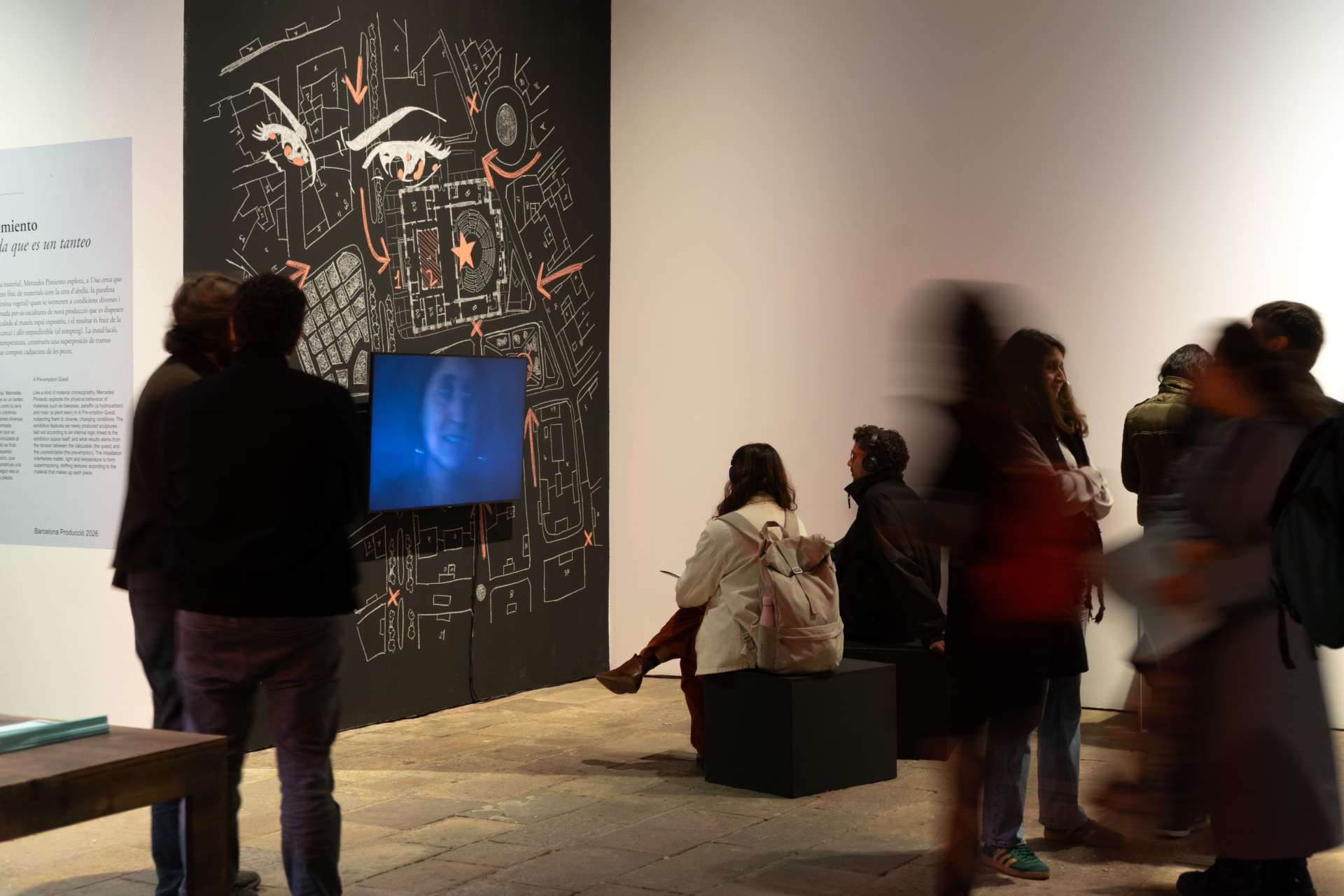
Figure 5: Vuestro orden está levantado sobre la arena. Nosymmetries. Idensitat, La Capella. Photo by Albert Gironès.
In Conclusion
Idensitat’s methodologies combine artistic production, project management, the socialisation of processes, and transversal research, following Bruno Latour’s idea that the social emerges from networks connecting human and non-human elements. This enables engagement with local organisations and interdisciplinary artistic practices which bring together participation, mediation and digital connectivity.
Can art contribute to social transformation? Can it function as activism? Can it influence policies addressing inequality? Starting from these seemingly simple questions, the methodologies employed by Idensitat are rooted in participatory and collaborative structures that seek to position art within broader contexts, expand its relational capacity, and counteract self-referential tendencies. The cases presented demonstrate that methodology, beyond being a mere organisational framework for artistic production, becomes a constitutive element of the process itself, shaping forms of participation, knowledge production, and social transformation. Collaboration is not merely an aesthetic gesture; it must also activate the political potential of collective processes. Ultimately, Idensitat focuses on art's transformative possibilities as part of broader and more complex processes capable of influencing policies, engaging with social realities, and generating systemic change. Transdisciplinarity and collaboration therefore become key strategies, sometimes through silence, and sometimes by revealing the silences that obstruct transformation.
Literature
Burgos, B. (ed.)(2020) Pensar y Hacer en el Medio Rural. Prácticas Culturales en Contexto. Ministerio de Cultura y Deporte. Gobierno de España.
Idensitat (n.d.-a). Transversal Aesthetics. https://www.idensitat.net/en/current-projects/transversal-aesthetics-2
Idensitat (n.d.-b). Sounds of Our Cities. https://www.idensitat.net/en/c...
Idensitat (n.d.-c). Nosymmetries. https://www.idensitat.net/en/c...
Latour, B. (2005). Reassembling the Social. An Introduction to Actor-Network Theory. Oxford: Oxford University Press.