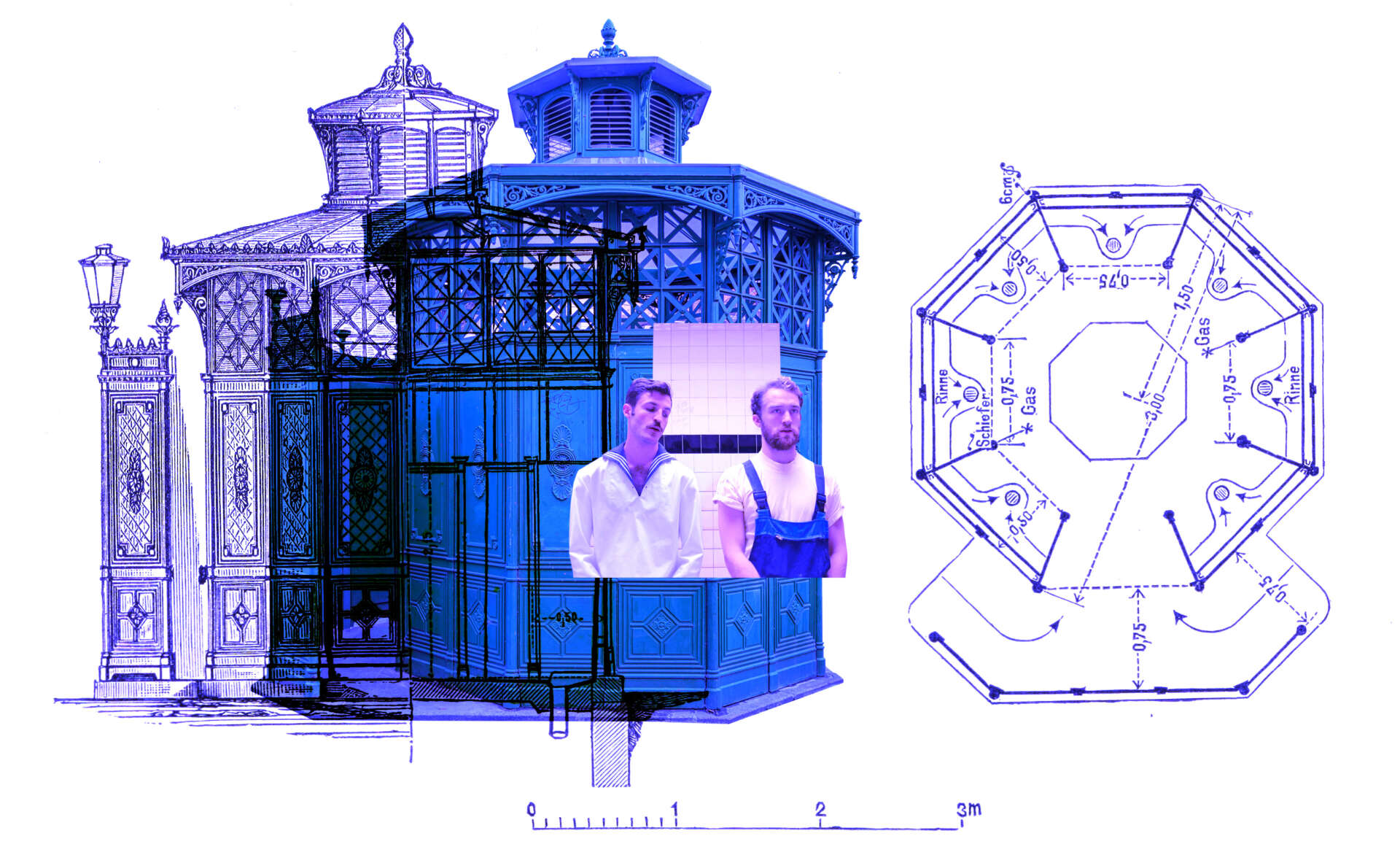
Toilet A Queer Dimension
Abstract
This research repositions public toilets as a central object in the analysis of the built environment, moving beyond their conventional functional interpretation. Conceived as architectural spaces endowed with normative, political, and cultural intentionality, toilets reveal implicit mechanisms of inclusion and exclusion that shape behaviors, regulate access, and participate in the construction of identities. Through a historical and theoretical perspective, the study investigates how the architecture of sanitary spaces has contributed to the normalization of bodies and to the stabilization of the gender binary regime, as also articulated within queer theory. The concept of trajectory is adopted as a key analytical category to interpret space as a dynamic and relational process, produced through the interaction between spatial configurations, embodied practices, and power relations. Public toilets thus emerge as sites of symbolic and political conflict, where issues of gender, sexuality, and accessibility are continuously negotiated. Through case studies and an interdisciplinary approach, the research argues for the integration of queer theories into architectural design, reimagining public toilets as laboratories of inclusion and transformation within public space.