From Hidden Modernism to Hidden Architecture Testing a Rhizomatic Map–Project along the Douro Riverbanks
Abstract
The heritage complex of the Picote Hydroelectric Dam and its supporting village, Barrocal do Douro—known in architectural discourse as Hidden Modernism—was conceived as an “ideal city” during the dam’s construction between 1953 and 1957, designed to support the daily lives of thousands of workers.
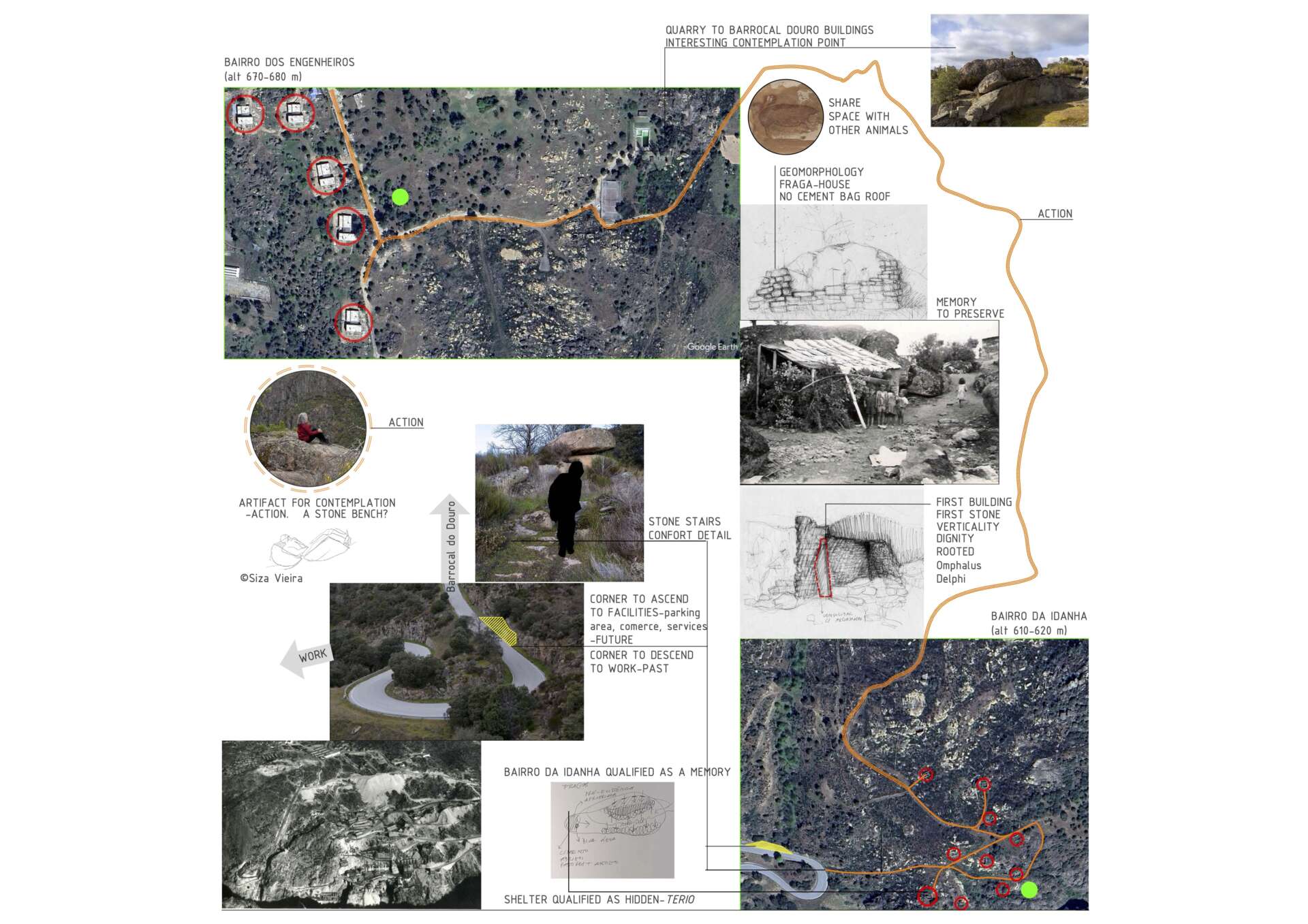
In parallel, spontaneous and precarious constructions emerged—primarily dwellings partially embedded in rocky cliffs and often roofed with cement paper bags. Remnants of these informal structures still coexist with the designed “ideal city,” revealing what may be described as the hidden behind Hidden Modernism.
Lines of flight are adopted as analytical and critical tools to explore this transforming landscape—its aesthetic, social, and ecological layers—and to preserve memory through the creation of visual and written essays that evolve into a map-project for design interventions. Both mapping and process operate in a rhizomatic manner, crossing multiplicities anchored in historical and documentary analysis, site visits, testimonials, affective and aesthetic interpretations, and modernist architectural heritage theory.