Fragmented Trajectories Visualising Ideology, Memory and Spatial Re-Inscription in Skopje
Abstract
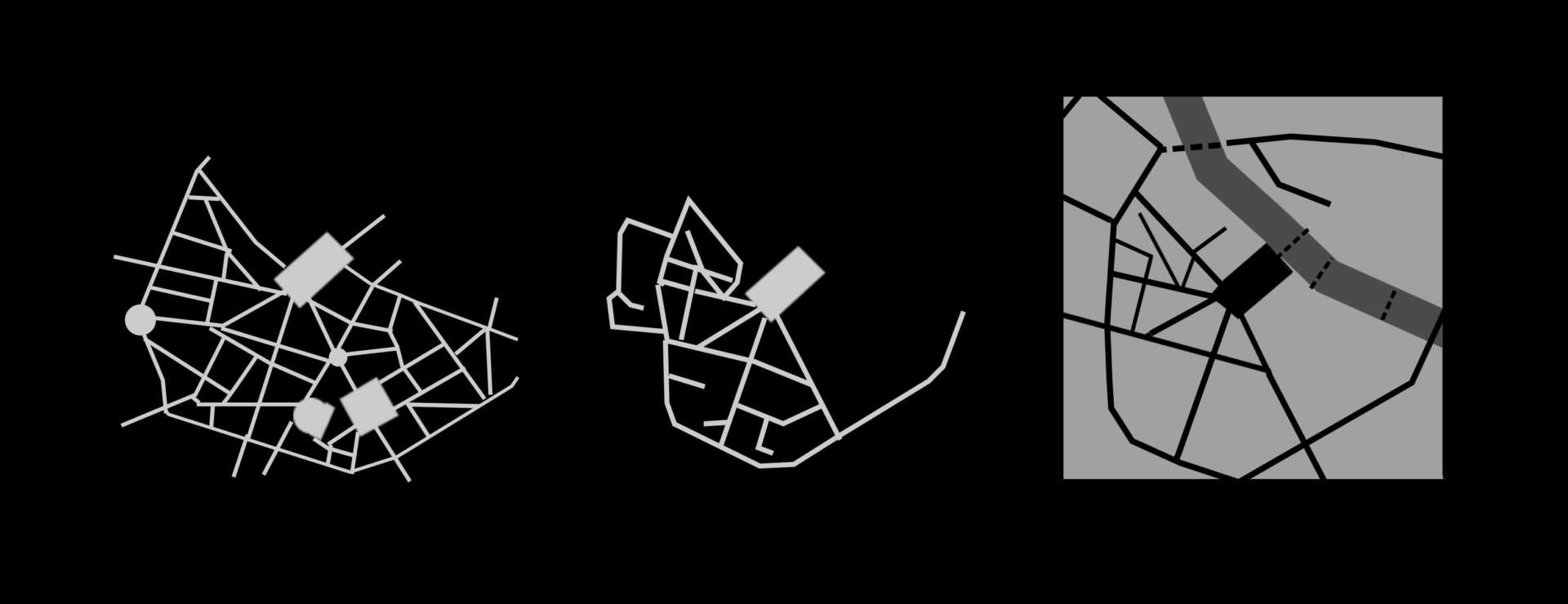
Skopje’s core reveals successive layers of political change, architecture, and new symbols, producing a fragmented urban narrative. Early modernist initiatives, such as Nikola Dobrović’s unrealised Banovina palace, articulated rational ideas of Yugoslav statehood and modernity. Following the 1963 earthquake, the UN and Kenzo Tange-led reconstruction adopted socialist planning for recovery. Subsequent post-socialist developments, particularly the Skopje 2014 project, shifted the city’s ideological trajectory. Over time, the accumulation of styles prevents a unified identity, positioning architecture as a medium for meaning, memory, and contestation. This essay explores these urban transformations through potential design-driven methodologies. Analytical tools such as diachronic maps, diagrams, overlays, and drawings reveal how temporal, ideological, and spatial patterns intersect. Rather than a linear trajectory, Skopje is seen as a palimpsest of ideologies, constantly reinterpreted through the addition, removal, and redefinition of symbols. Architecture both constructs and interrogates collective memory in the post-socialist city.
Keywords: fragmentation, reconstruction, architectural representation, city centre Skopje